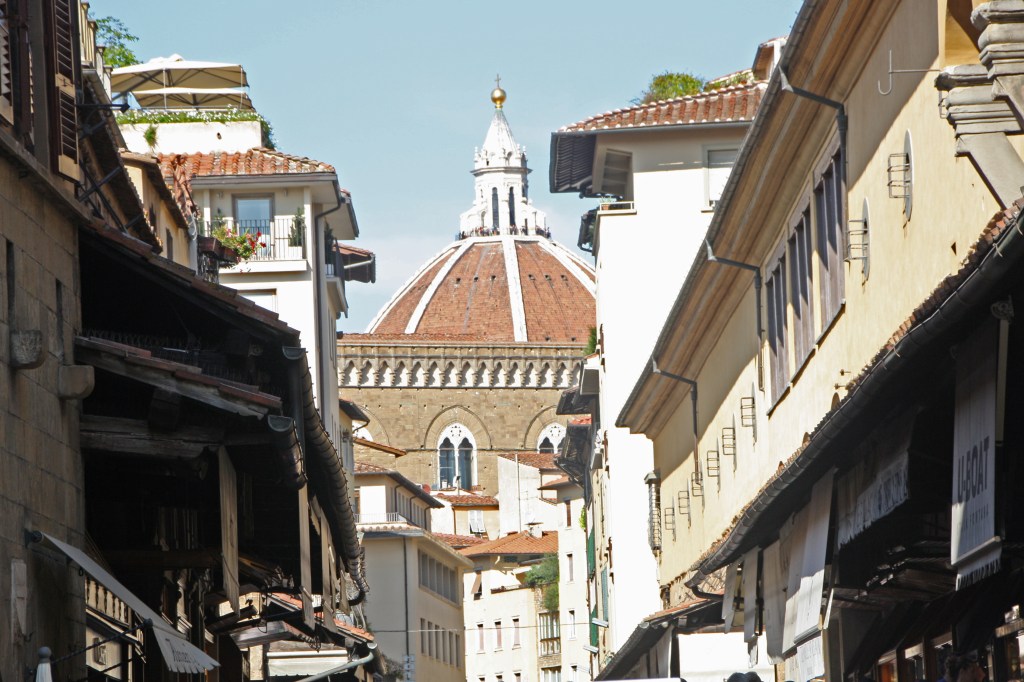
Second time around in this enchanting Italian city
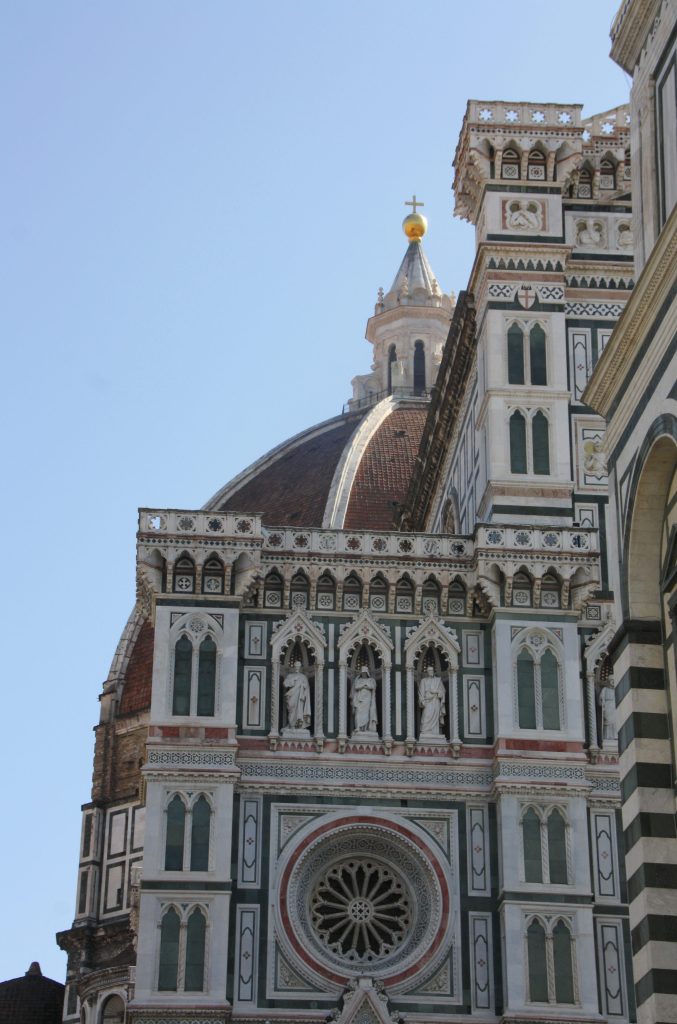
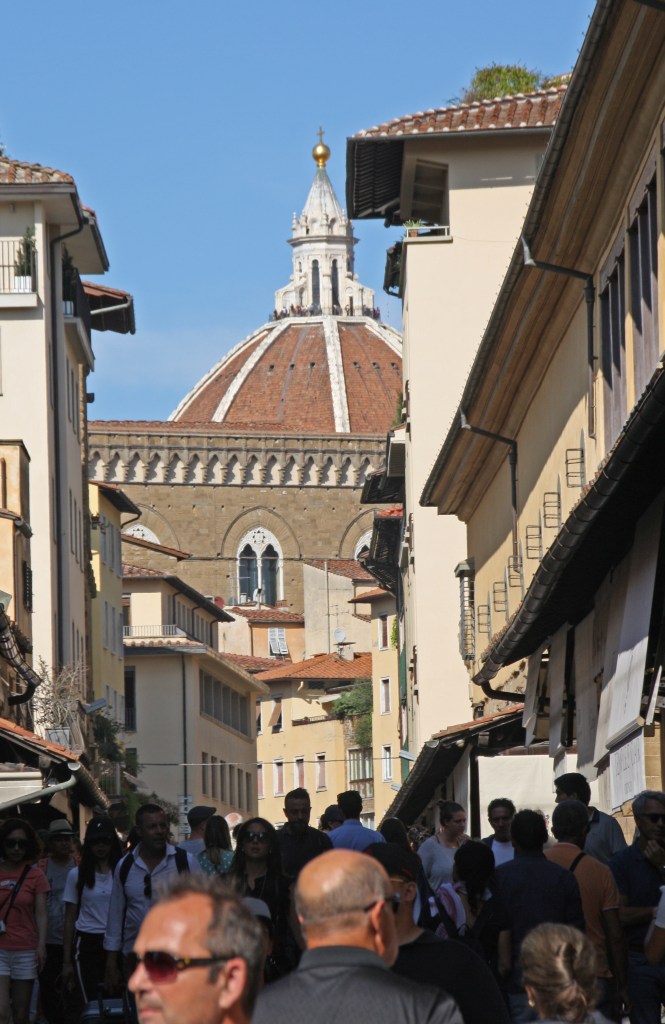
Once you have seen it, you’ll never forget it. Each time you see the Dome and the Cathedral in Florence, the impact is more powerful than the last.
Walking through the streets from the coach, every step is filled with intrigue.
Then you turn a corner. It is there.
Right in front of you. Not just the height of the dome but the massive size of the cathedral.
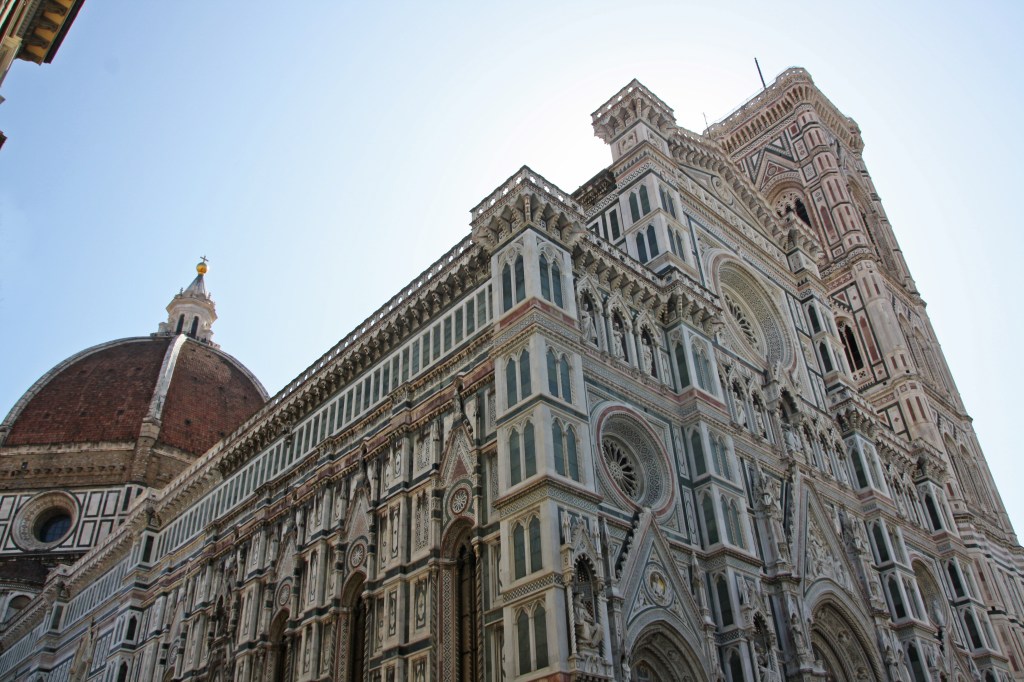
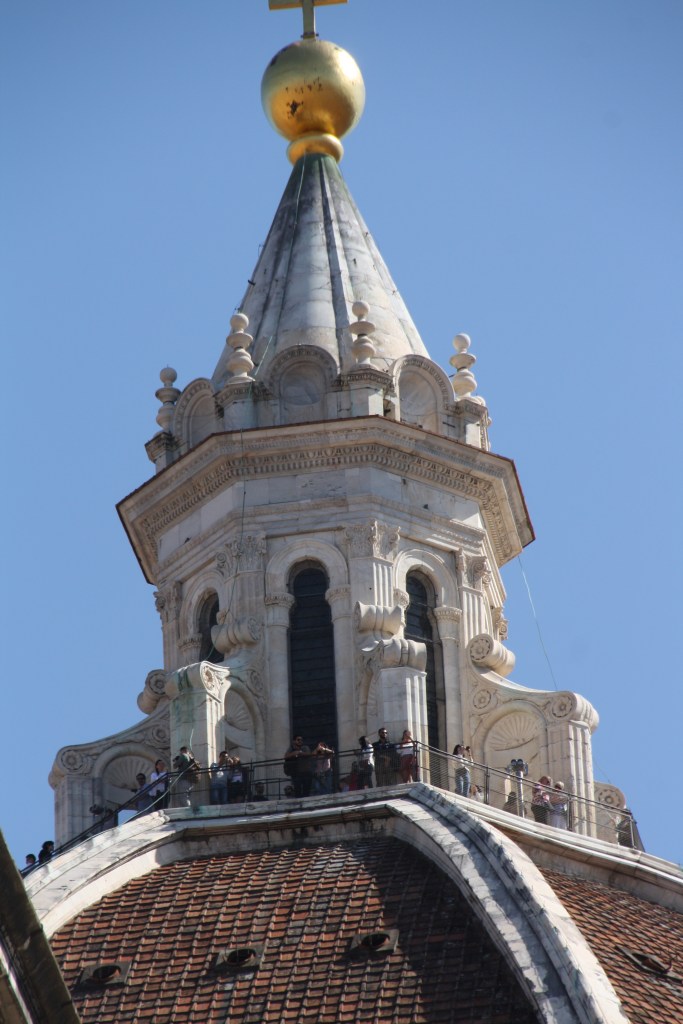
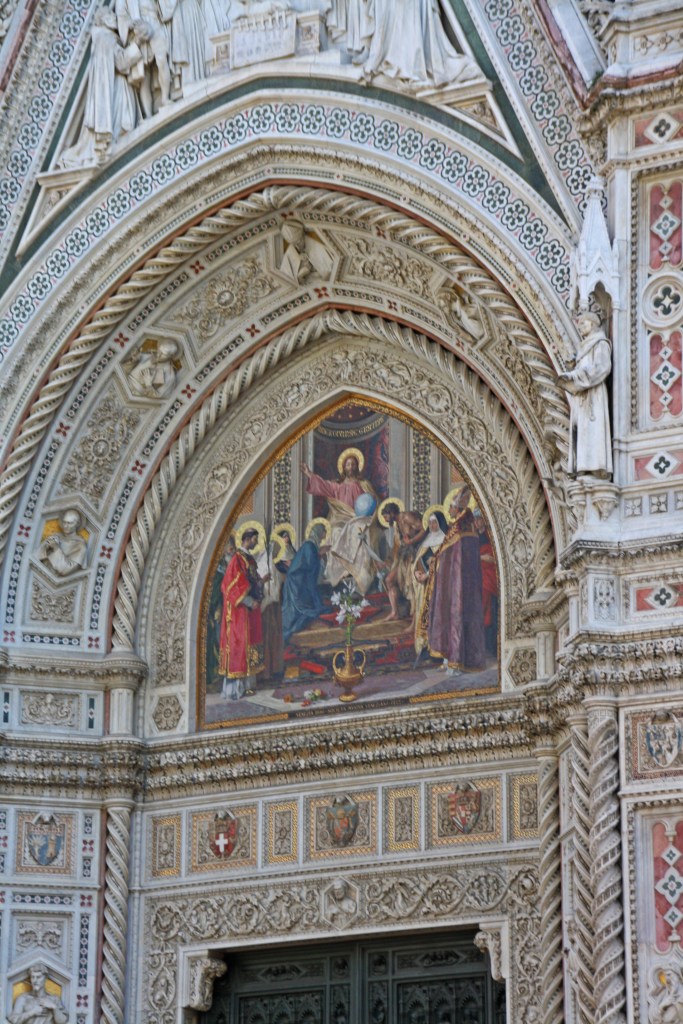
The Florence Basilica, officially the Cathedral of Santa Maria del Fiore, dominates the city skyline.
Located in Piazza del Duomo, it features the world’s largest masonry dome, engineered by Filippo Brunelleschi.
Construction started in 1296 and the basilica was completed in 1436. Since then it has amazed millions by its extraordinary construction, and at the same time provided a place of reflection, solace and sanctuary to so many.
The first time I visited Florence was after an overnight train journey from Venice. It pulled into the main station about 4am – right near the heart of the old town.
We sat on the concrete seats in the cool of dawn for an hour or two before walking into the heart of the city. It was fascinating to watch it come to life.
This time it was part of a coach tour – a day visit as part of a 2019 performance tour of the northern part of Italy by the Sunshine Coast Oriana Choir.
All the way from Australia to the other side of the world. Nine performances in 16 days from Rome to Venice – it started at St Peter’s and would finish at St Mark’s.
The choir was to be based at the historic Tuscan spa town of Montecatini Termi for three nights.
After today’s walking tour of Florence the two coaches would take the entourage of 60 to the hilltop town of San Miniato for a performance with the local choir – Coro Balducci at the historic Chiesa San Domenico.
The host choir’s president Cristiano Benedetti was arranging a traditional Italian supper to be enjoyed after the performance, before returning to the hotel at Montecatini Termi.
Until then, it was to be a day of exploring Florence – a fascinating city.
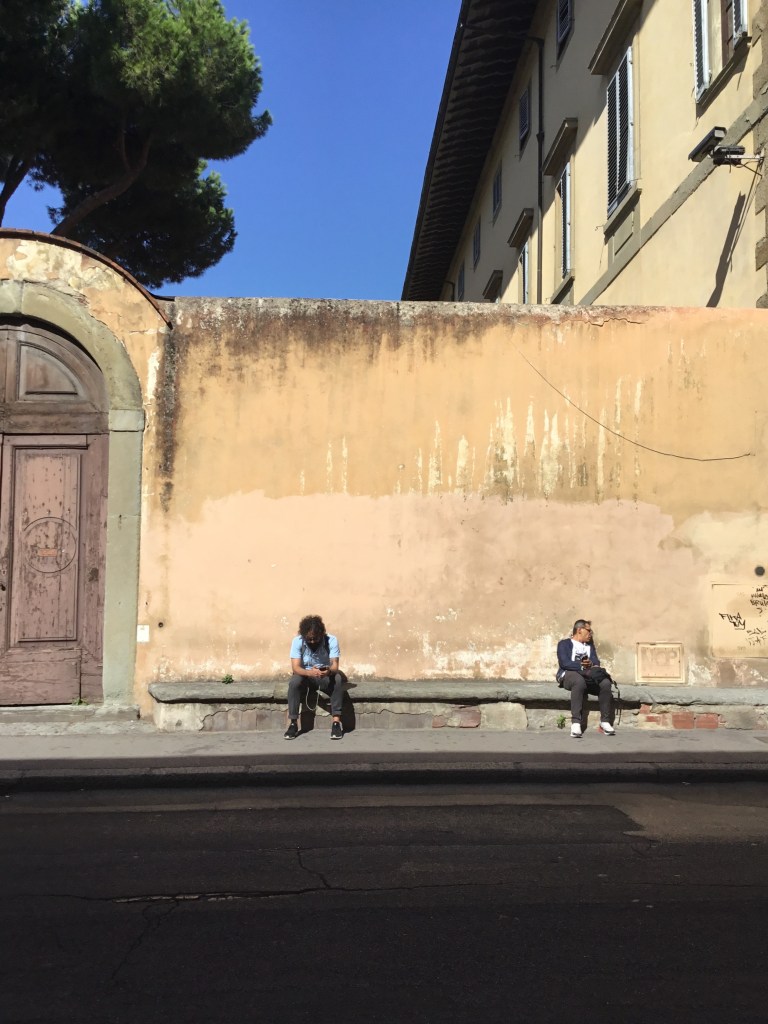
The coaches are parked just outside the old town, leaving about a kilometre walk.
There was a tour guide for each coach and UK-based Jessica advised that Florence was such a special place – don’t expect see it all in one day.
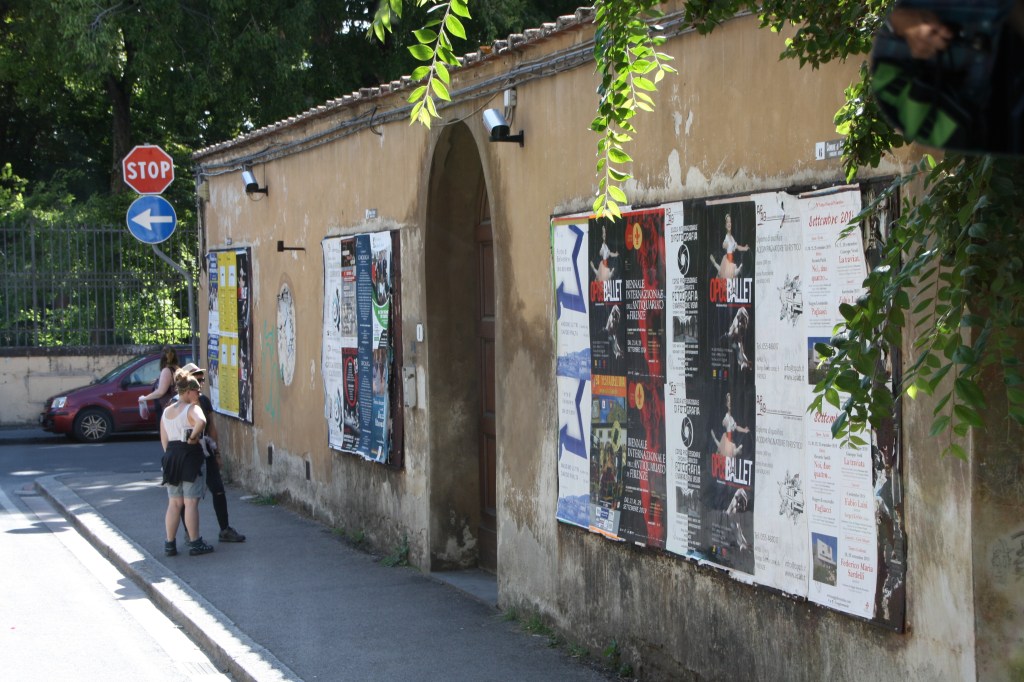
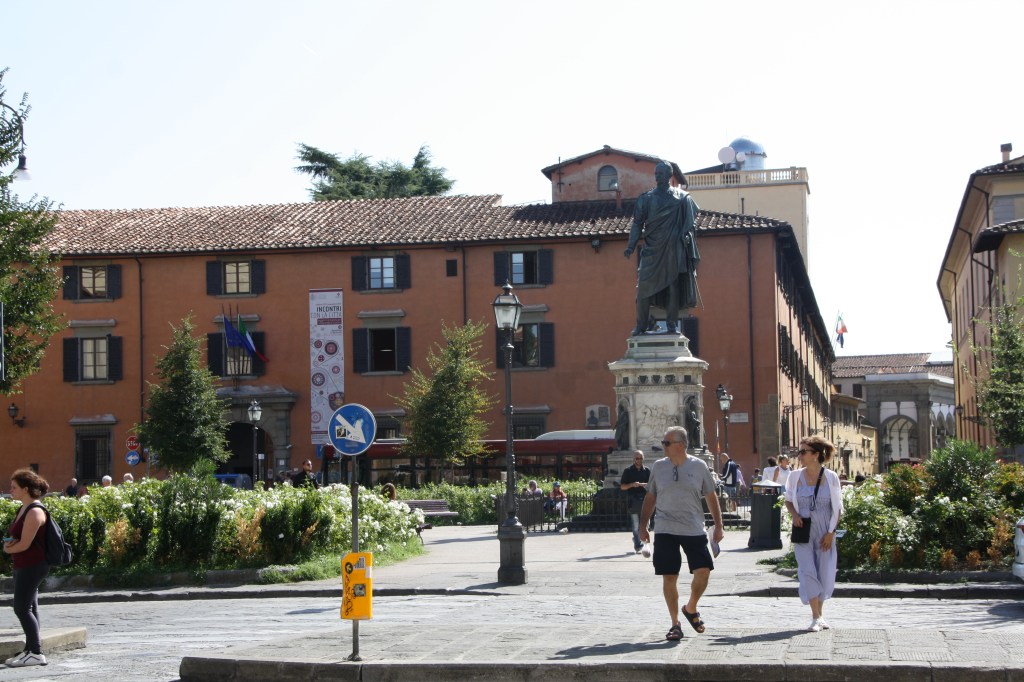
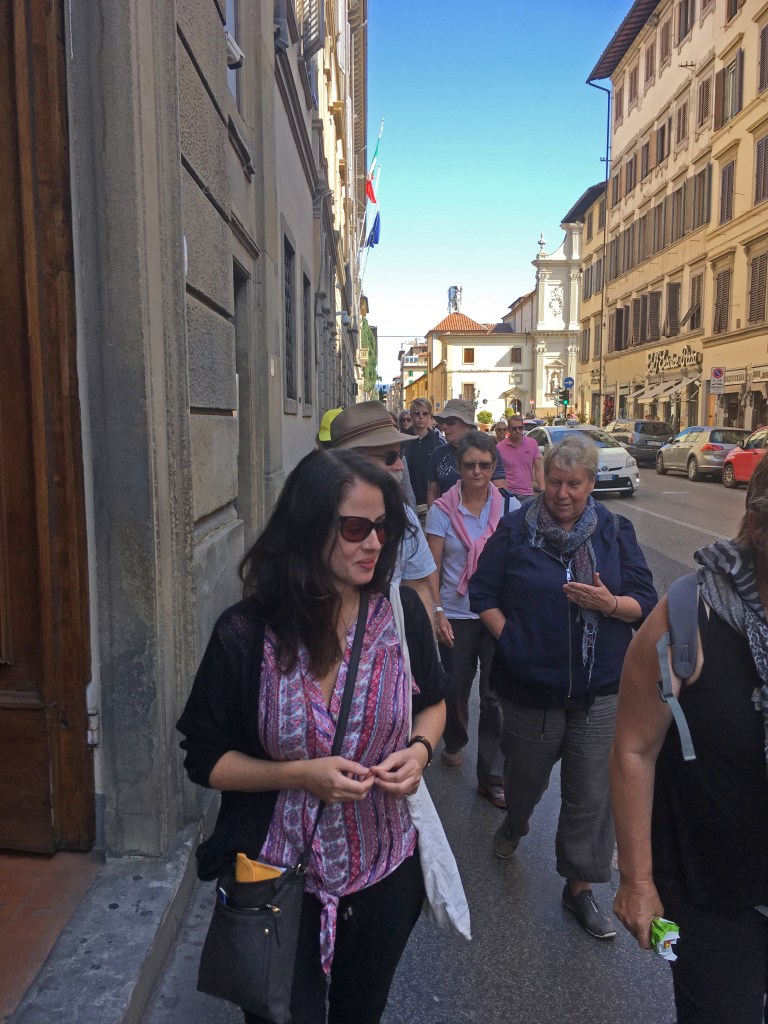
“The cathedral is very central – and it is just a matter of exploring around that.’
“Eat, walk and enjoy.”
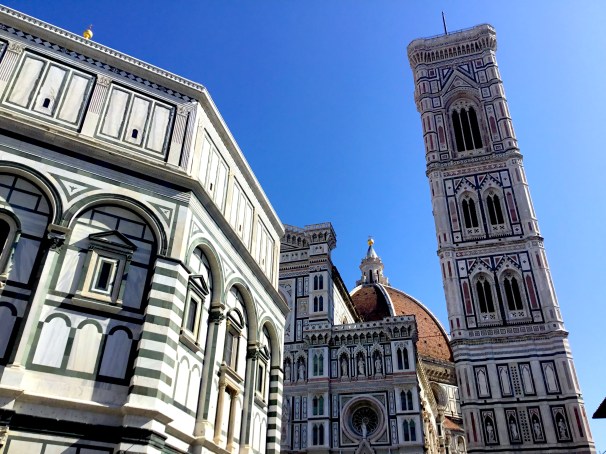
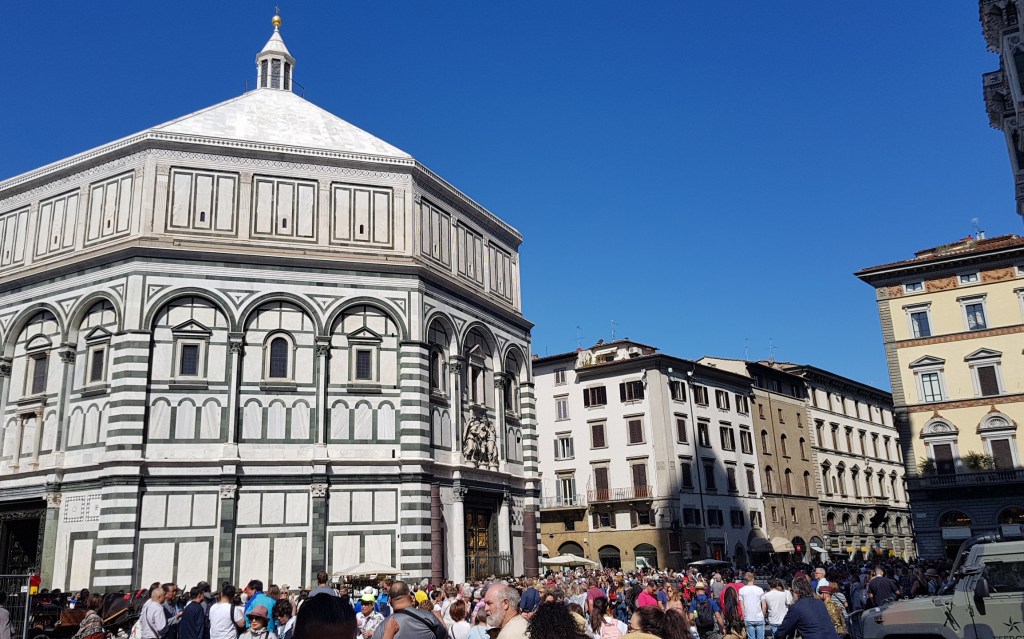
Piazza San Giovanni – St John’s Square – is the religious centre and features the Florence Baptistry and Giotto’s Bell Tower as well as the Florence Cathedral. These three buildings are part of the UNESCO World Heritage Site.
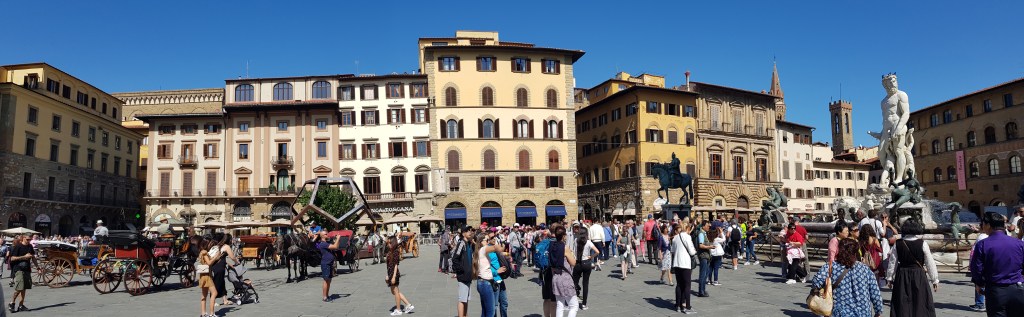
As a group we were not going into the Ufizzo gallery and museum, adjacent to the Piazza della Signoria it derives from the Medici family’s collections.
Today it boasts a collection of inestimable value from ancient statues to contemporary art passing through the iconic masterpieces of Botticelli, Leonardo, Raphael, Michelangelo and Caravaggio.
Florence also gave rise to Michelangelo’s David and Sandro Botticelli’s The Birth of Venus.
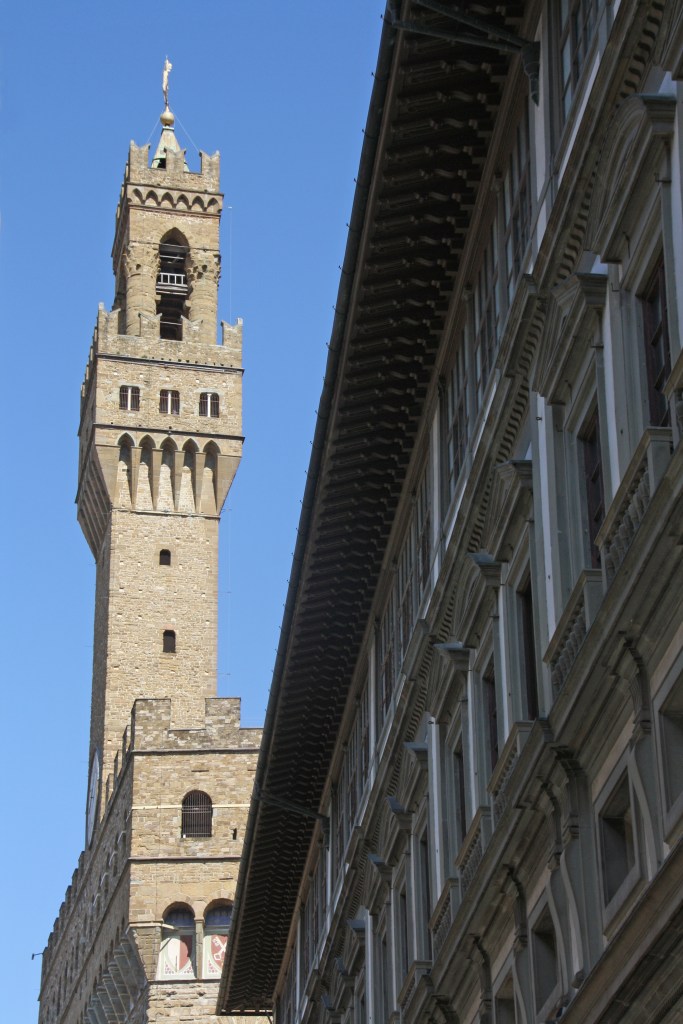
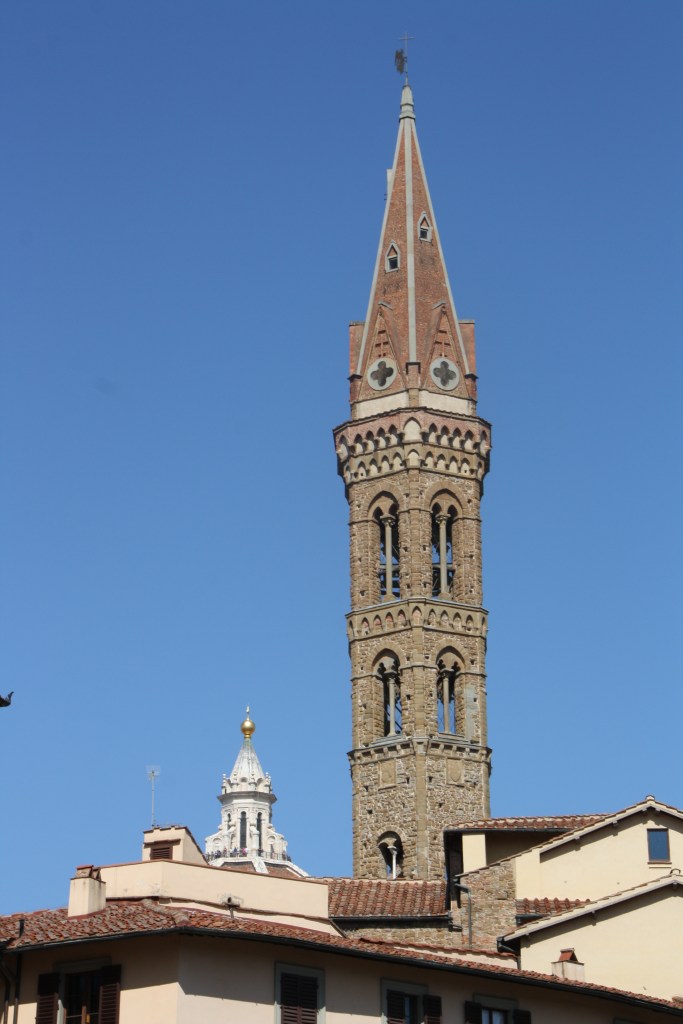
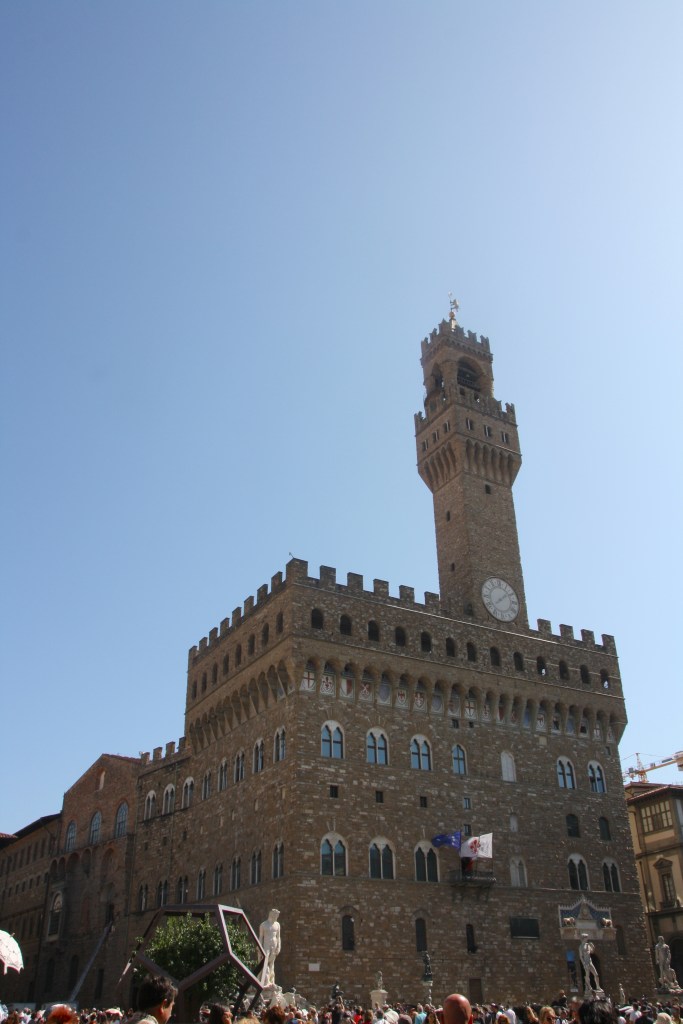
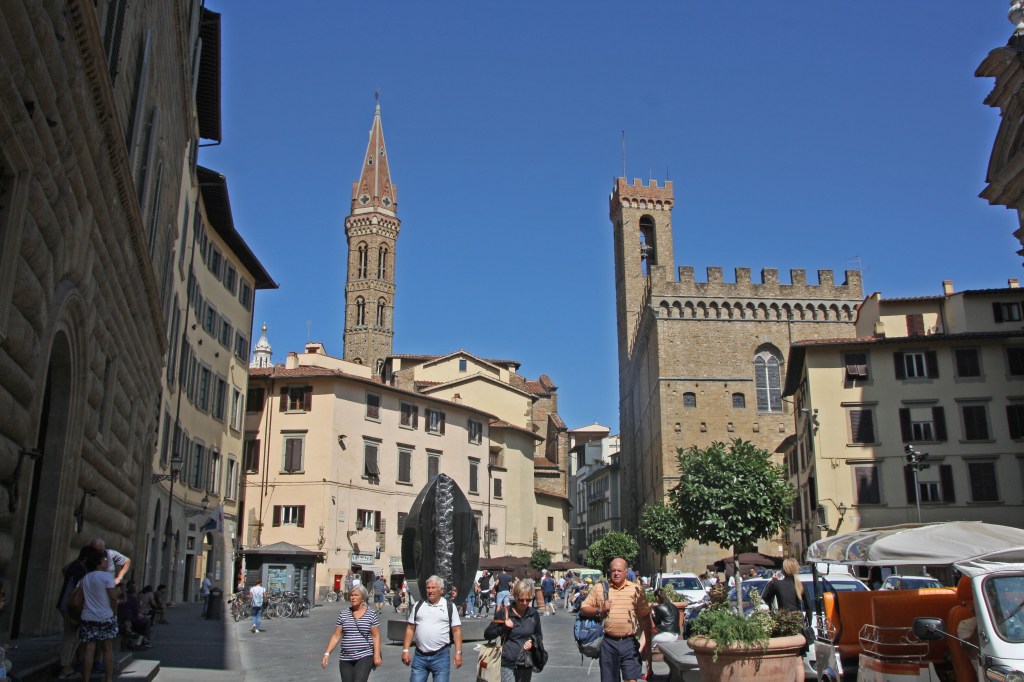
Florence was one of the most important cities in the world, economic golden age 1200-1300AD; then became a cradle of the Renaissance, the cultural golden age.
Artists were also scientists. Michelangelo, for instance, was an artist, sculptor, architect and poet who also learned about the human body.
Da Vinci was painter, draughtsman, engineer, scientist, theorist, sculptor, and architect. His notes on a variety of subjects include anatomy, astronomy, botany, cartography, painting, and palaeontology.
Both were born in or near Florence and their work can be found there.
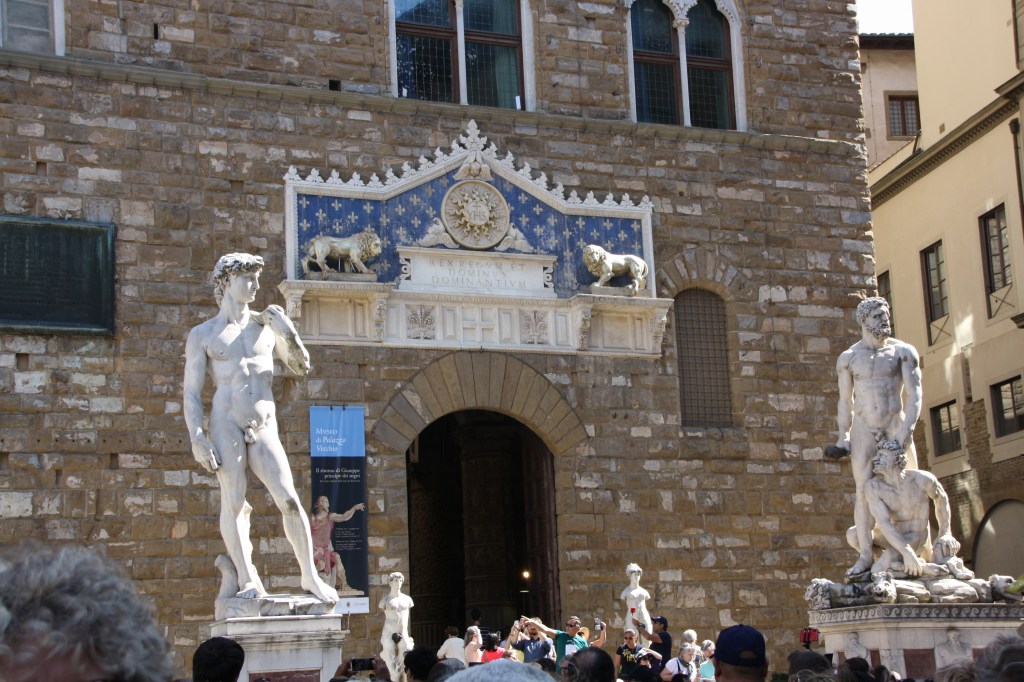
Michelangelo is best known for his masterpieces in sculpture and painting, specifically the statue of David, the Pietà, and the Sistine Chapel ceiling frescoes.
The marble statue of David stands 17 feet tall and was unveiled on 8 September 1504.
In 1873, the statue was moved to the Galleria dell’Accademia in Florence and in 1910 a replica was installed at the original site on the public square.
As for Da Vinci, an early masterwork was the Annunciation – dated 1472-76 and now housed in the Uffizi Galleries.
The Mona Lisa was started in Florence around 1503 before the artist travelled back and forth to Milan and France, where it now hangs in the Louvre.
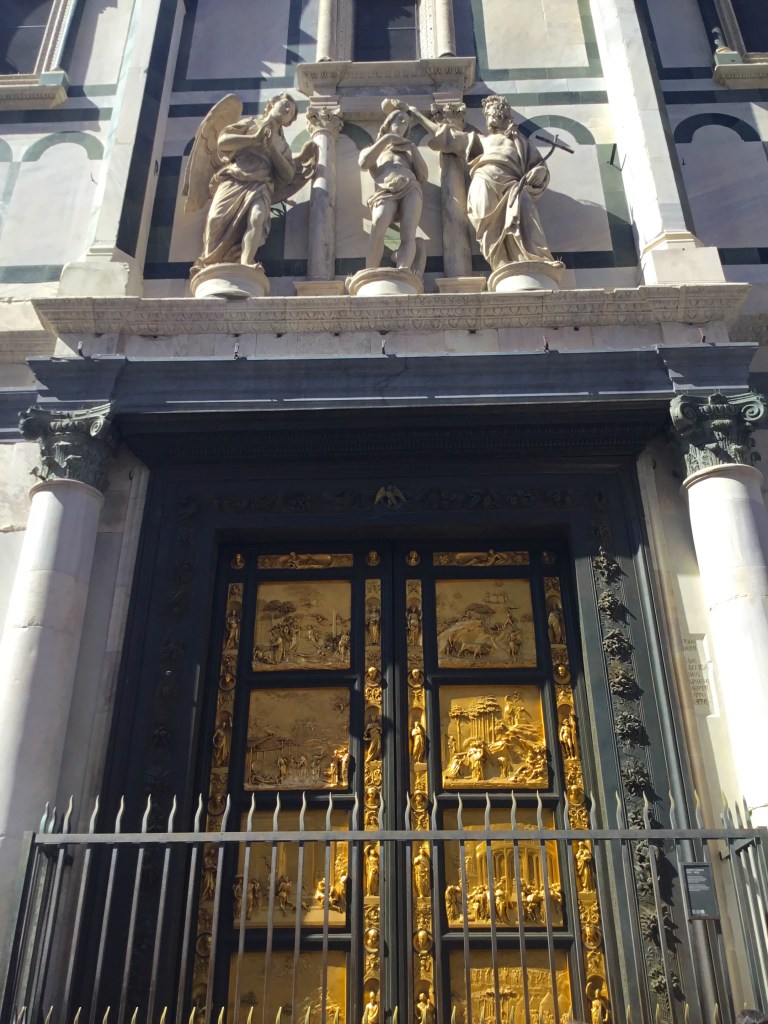
The Gates of Paradise … a set of bronze doors designed by Lorenzo Ghiberti between 1425 and 1452 for the Florentine Baptistery.
The Florence Cathedral (Santa Maria del Fiore) was meant to be biggest church in world but took about 600 years for the facade to be completed.
It is no longer the biggest – one of those cathedrals is St Peter’s in Rome – but Florence is still the fourth biggest by volume.
The dome is considered to be an architectural masterpiece and is the largest masonry dome ever constructed.
Renaissance architect Filippo Brunelleschi projected two domes. An inner and outer shell, with a stairway inside it.
Bricks were laid in a spiralling pattern that locked each course in place, making the rising dome self-supporting without traditional ground-up wooden scaffolding.
Four million bricks were used high into the airself supporting domes, no supports strong enough to support that height.
It rises about 116 metres or 380 feet from the ground to the top of the cross.
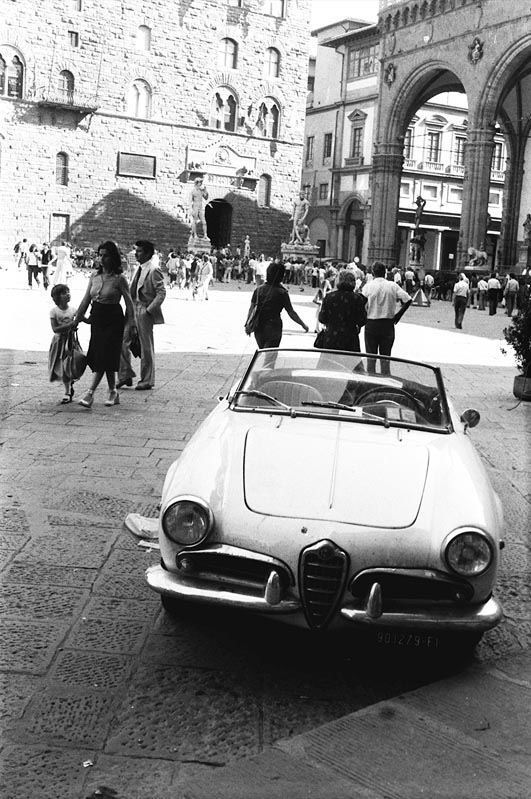
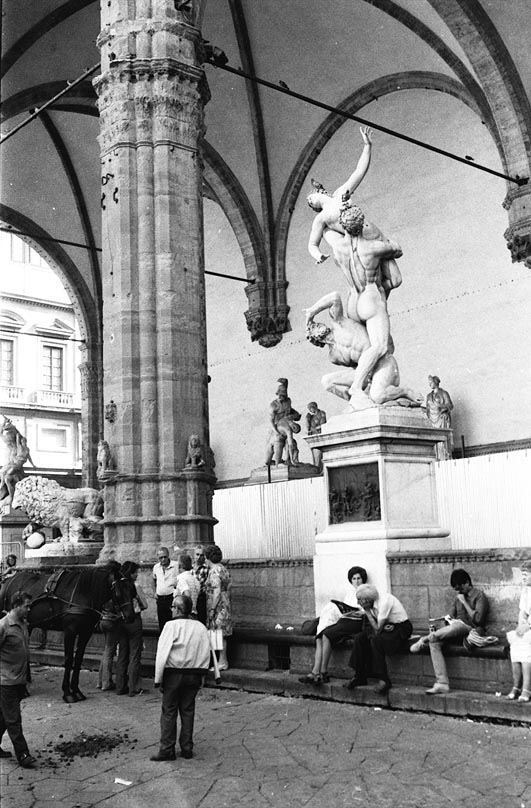
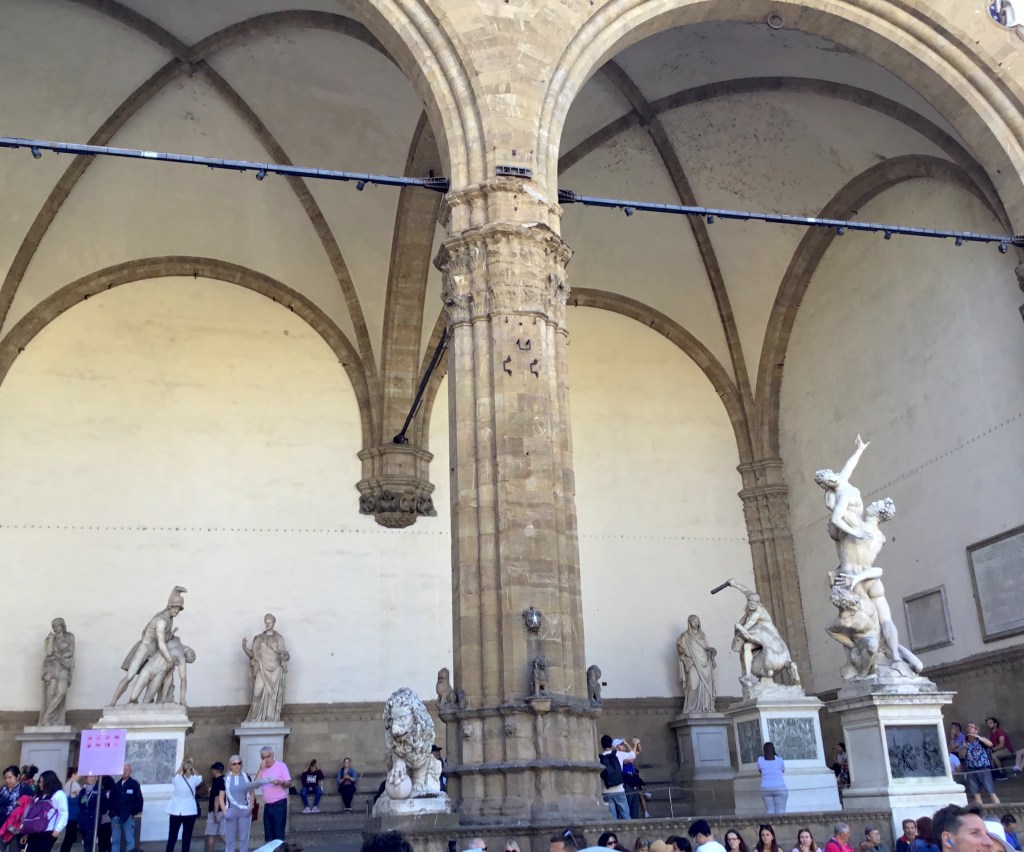
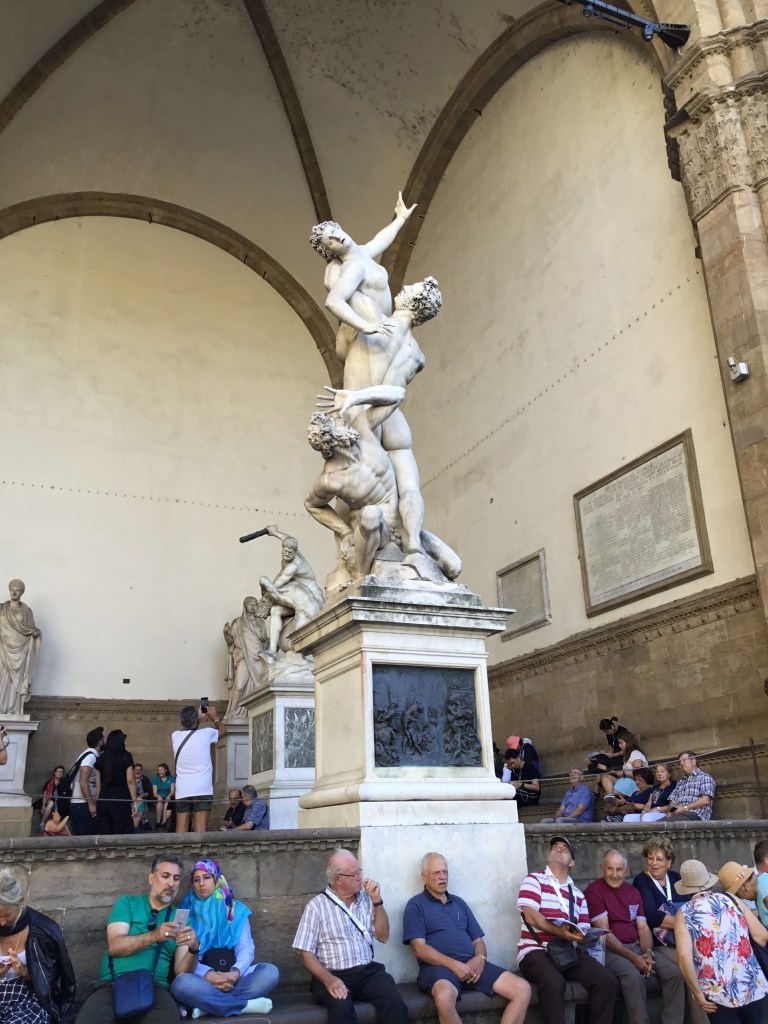
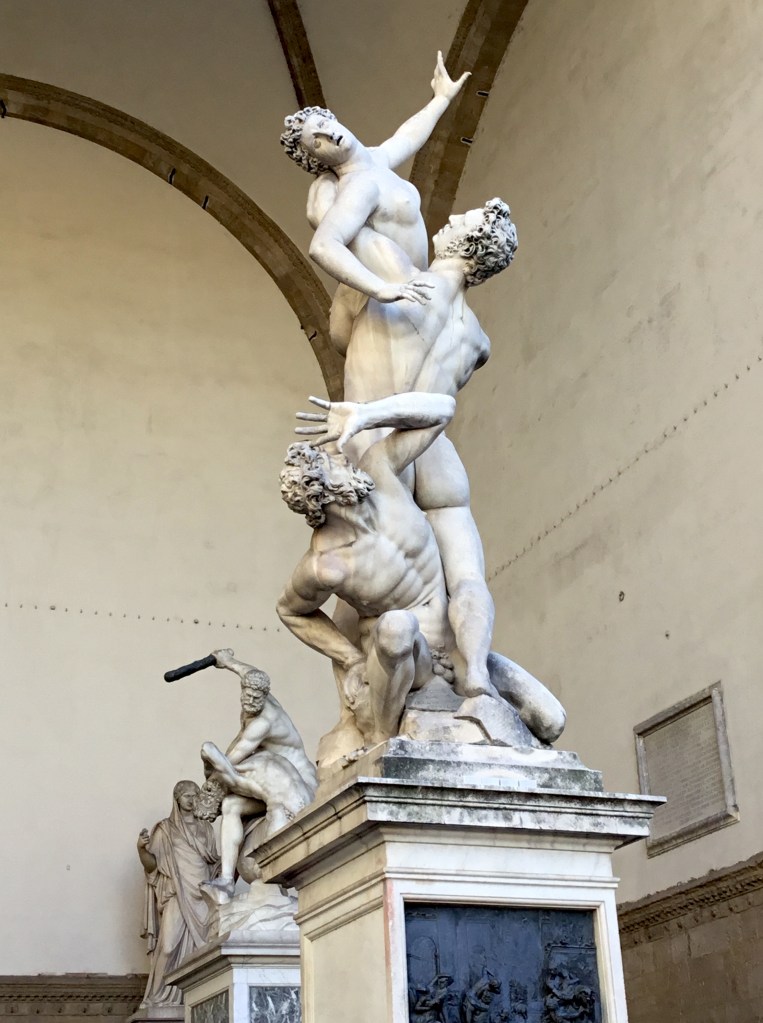
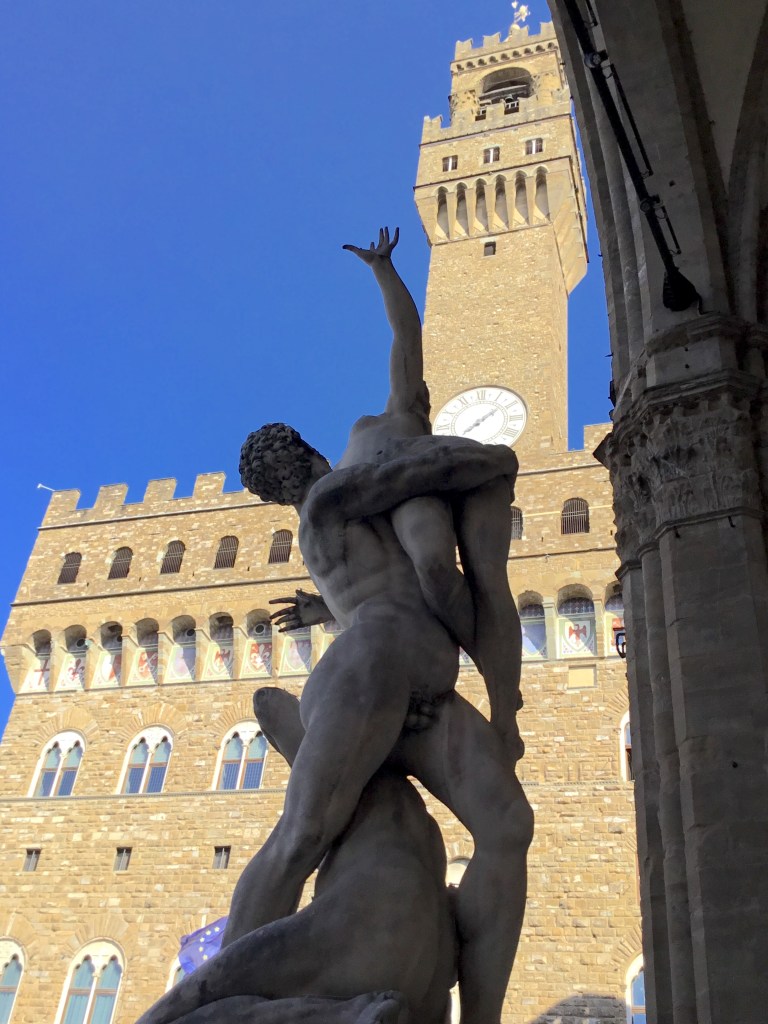
As for our guide Jessica, her father was James – the only son of great Australian artist Arthur Boyd.
At the time we were on tour, Jessica was trying to arrange a retrospective exhibition of his works in Italy as well as in London.
Yes, she had been to Australia, and stayed at her grandfather’s house on the south coast of New South Wales.
And here I had been suggesting she visit the land Down Under.
Arthur Boyd. Painter, potter and printmaker who captured the feeling of Australian bush, and had a strong social conscience – his works engaging deeply with humanitarian issues.
Eventually settling at Bundanon on the Shoalhaven River in New South Wales, Boyd and his wife Yvonne eventually gifted their property, comprising of 1100 hectares, to the Australian people.
It was there that Jessica had stayed. A place that inspired the artist’s paintings of the 1980s the explored constructions of Australian identity.
“Don’t stand in the sun for hours waiting to get into the major galleries,” Jessica advises. “Here, if you have a ticket – three minutes and straight in.”
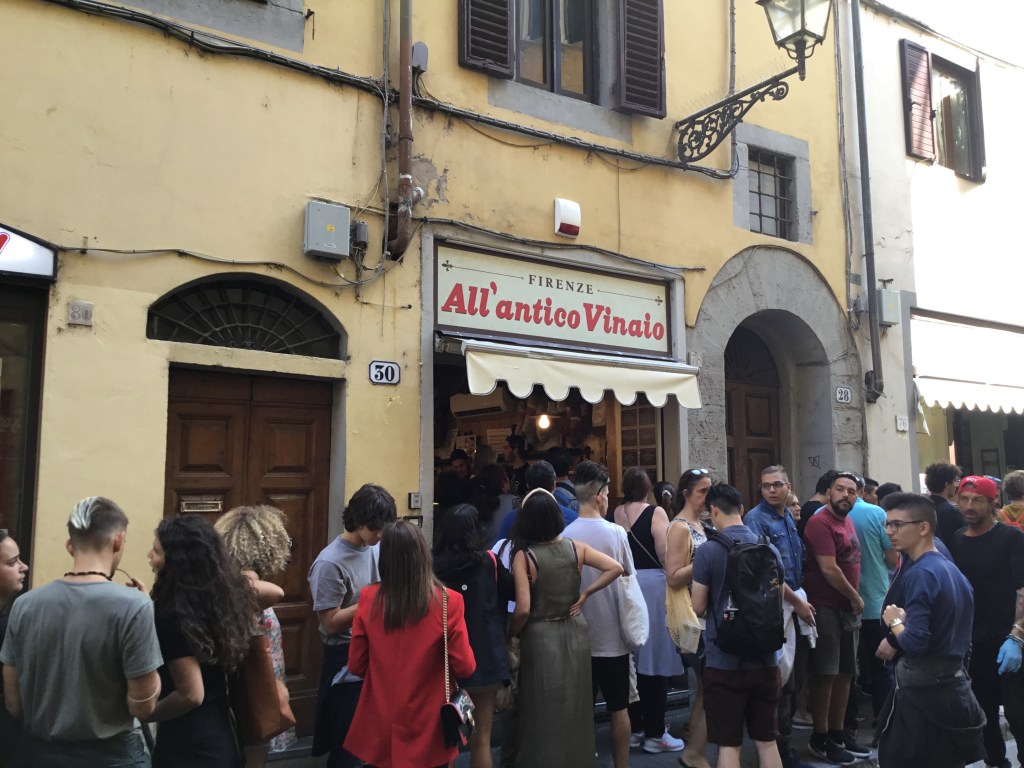
Via dei Neri, Jessica points out, is nearby. A bustling street and home to All’Antico Vinaio – world-famous for its paninis and for its long, winding queues on the sidewalk.
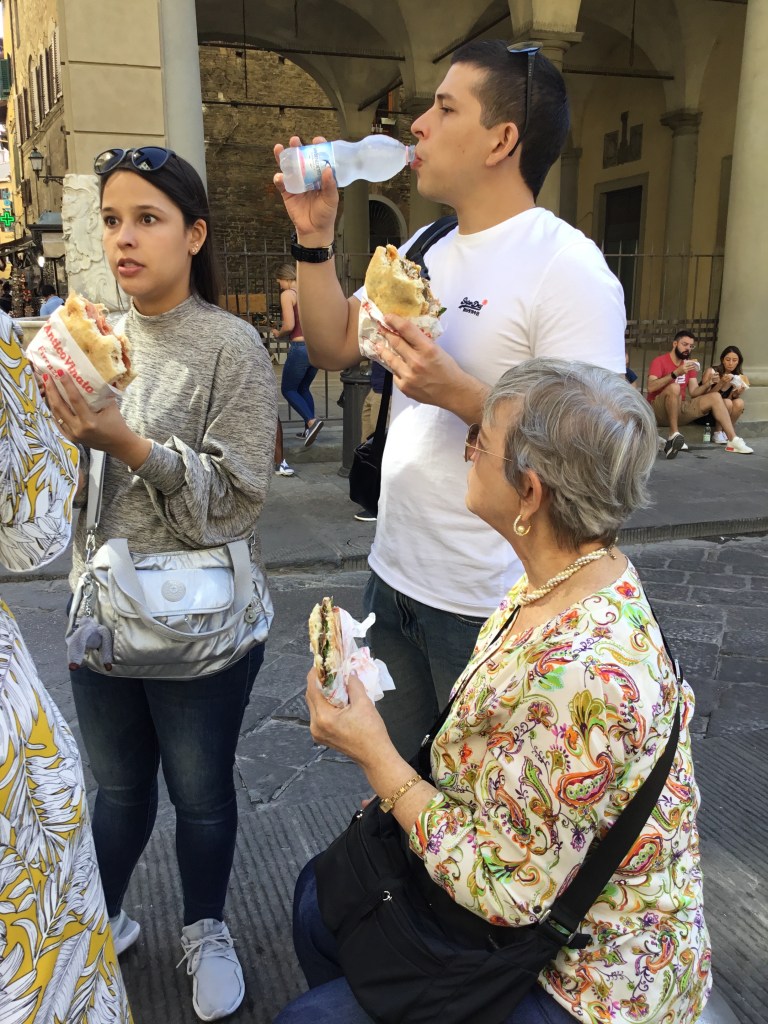
The paninis were five euros at the time – and about a 15 minute wait.
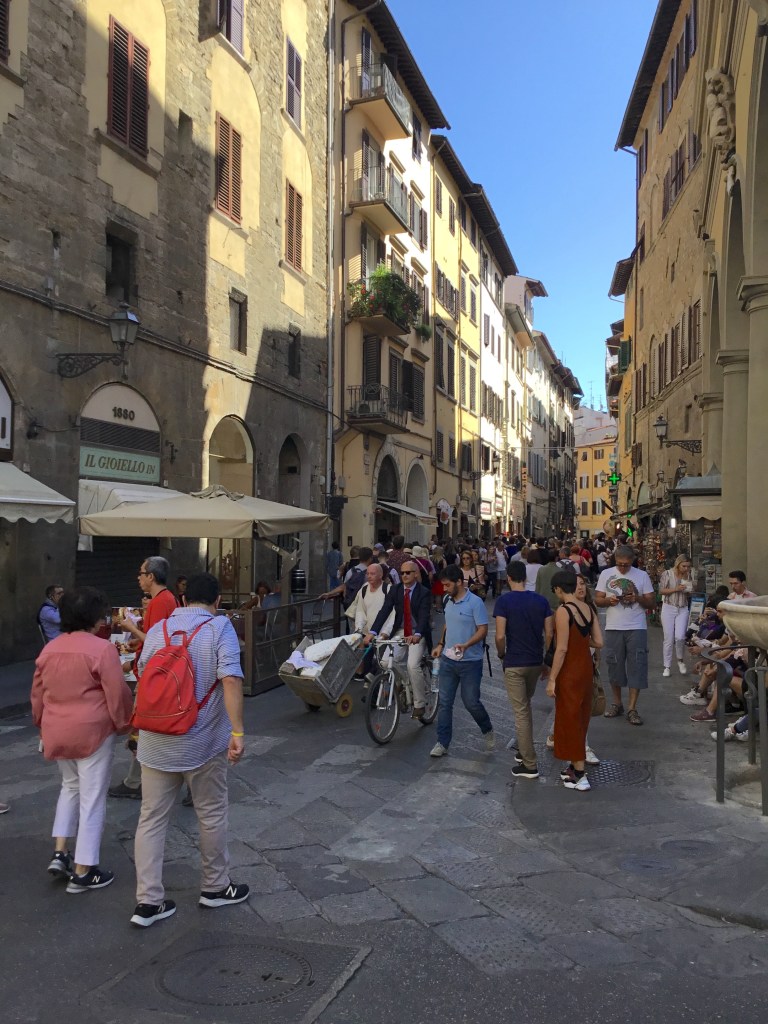
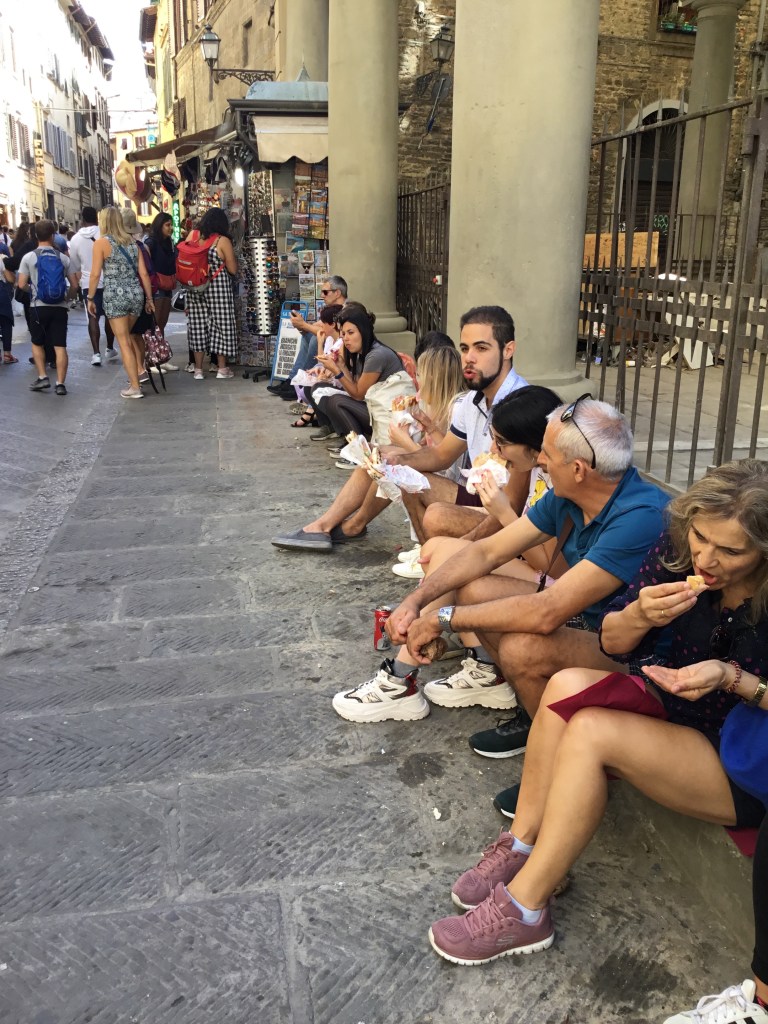
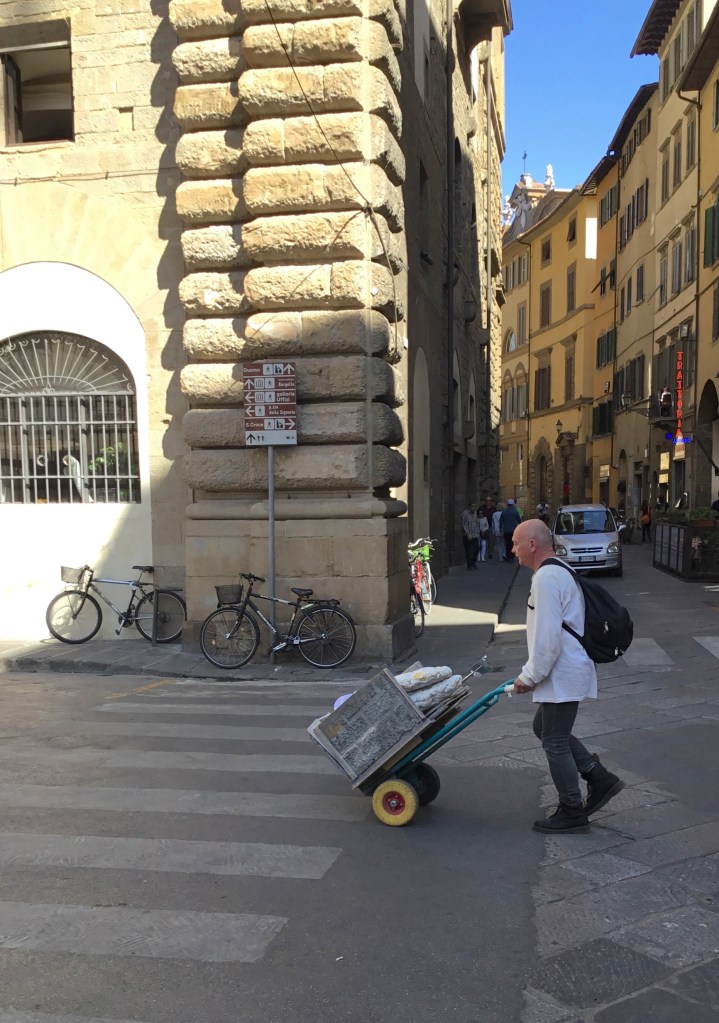
We decide to cross the Arno River that runs through the city and find a place for lunch in the old town.
Ponte Vecchio, the oldest bridge across the river, was originally outside the old city and the only road from Florence to Rome.
Destroyed in 1333, it was the only bridge to survive the bombing in World War Two.
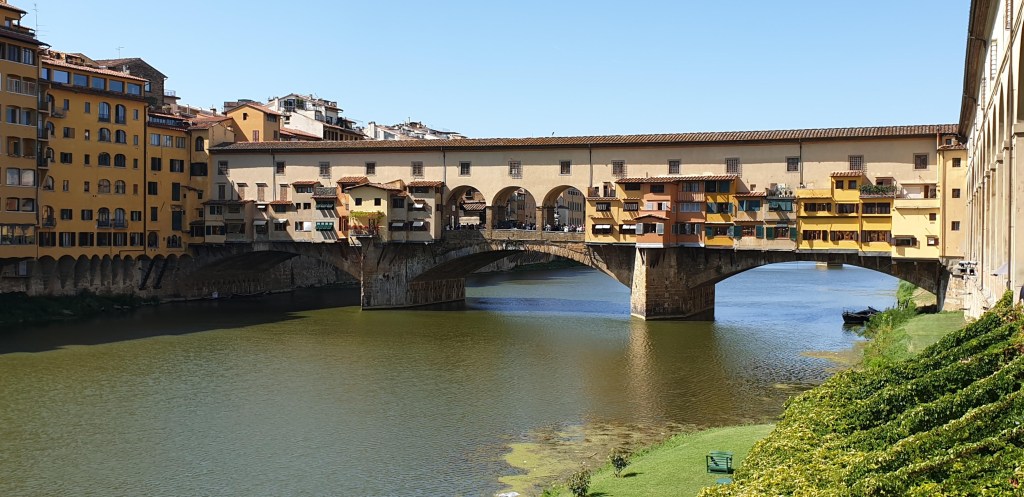
In order to connect the Palazzo Vecchio (Florence’s town hall) with the Palazzo Pitti (Royal palace), in 1565 Cosimo I de’ Medici had Giorgio Vasari build the Vasari Corridor, part of which runs above the Ponte Vecchio.
Only butchers and fishermen had their shops on the bridge. They would toss the leftovers in the river.
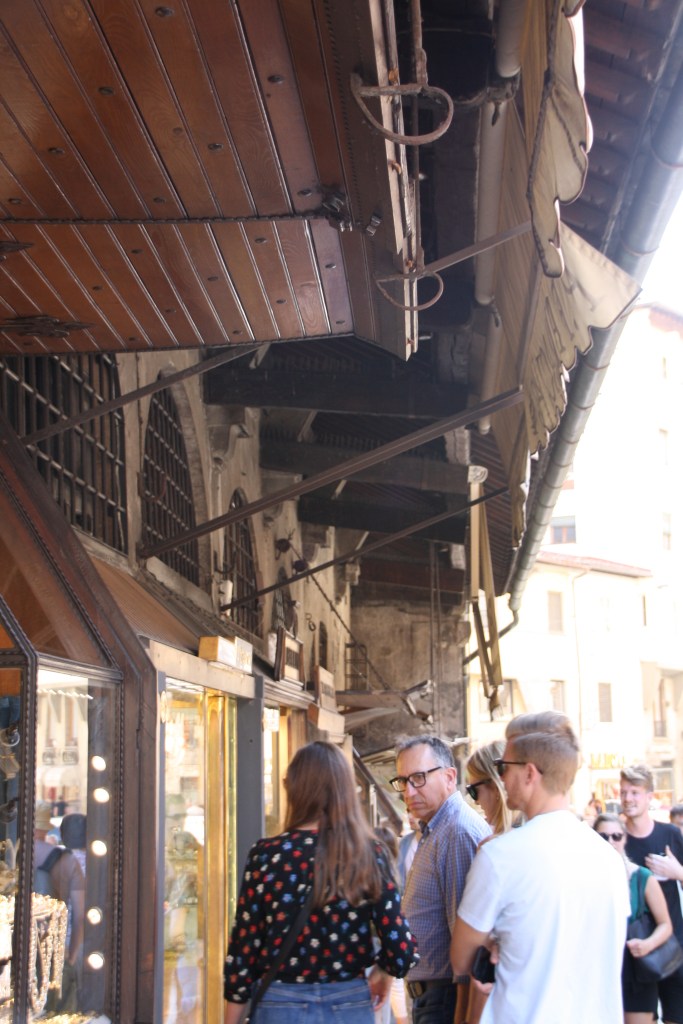
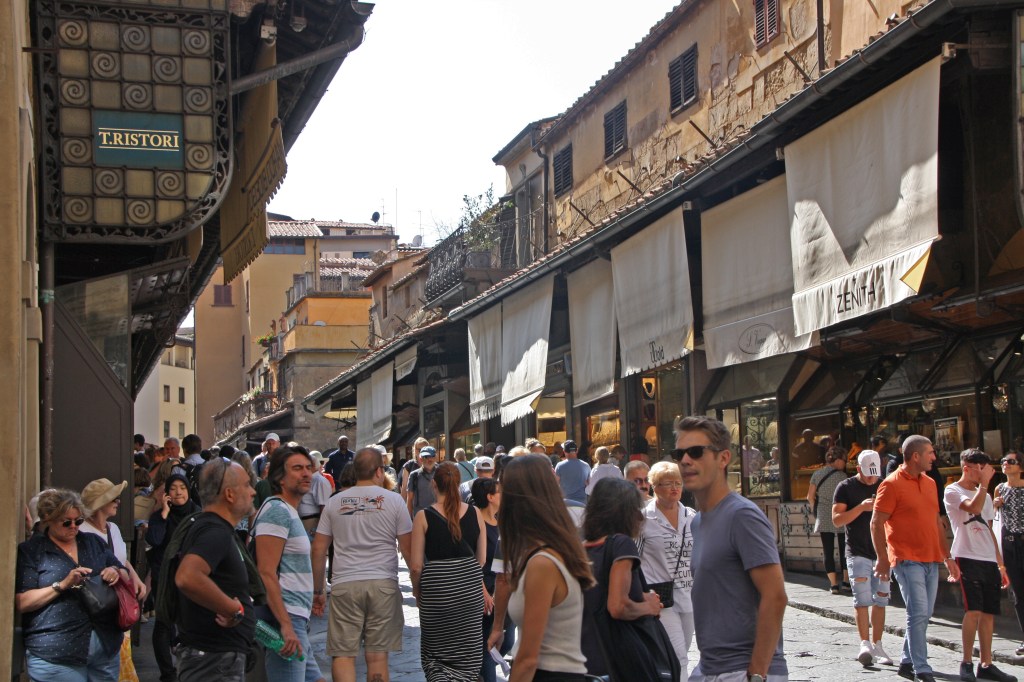
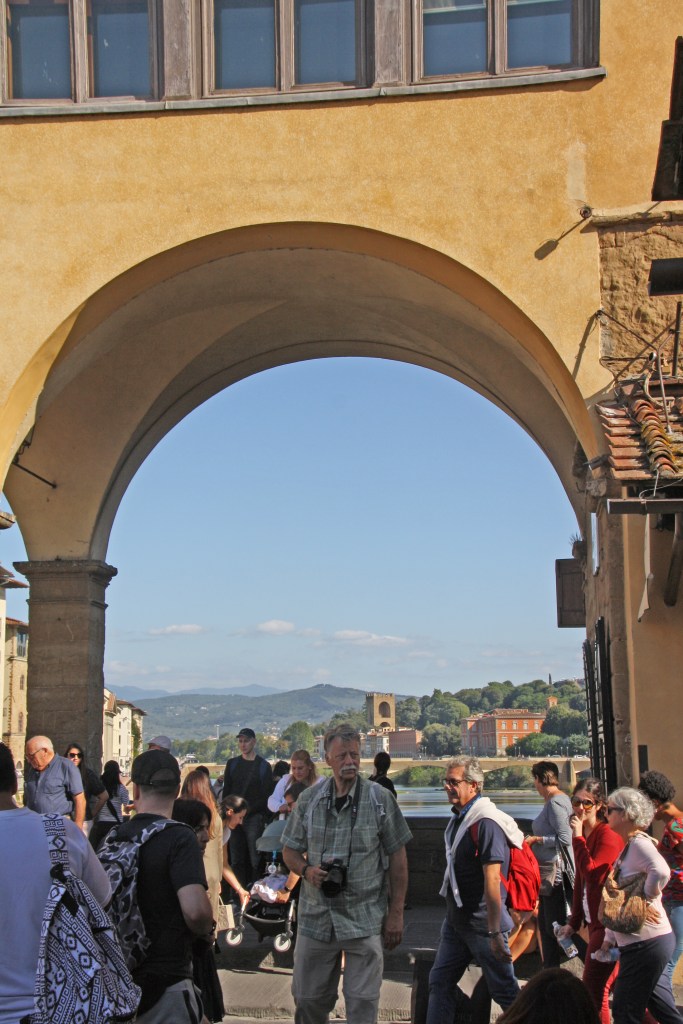
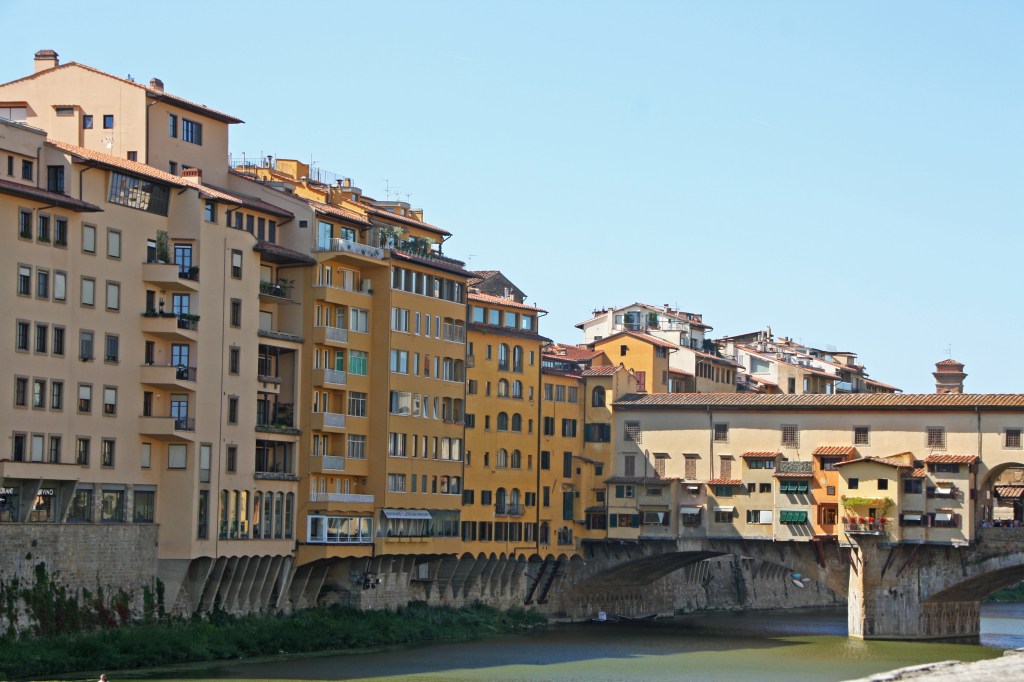
Cosmo the First didn’t want to walk among the common people, nor did he want to tolerate the smell of the leftovers.
To enhance the prestige and clean up the bridge, a decree was made that excluded butchers from this bridge – only goldsmiths and jewellers were allowed and that is in effect to this day.
Crossing the Ponte Vecchio, you can put everything into context – so many feet have trod this path though more than 2000 years.
Commissioned by Emperor Hadrian in 123AD, the bridge connected the road system from Rome.
When the Ponte alla Carraia was built in 1218AD, it was called Ponte Nuovo in contrast to Ponte Vecchio (the old one).
Here, I take time to reflect on the first time in Florence – and early morning walks through the city, across this bridge, excitedly discussing all manner of things with fellow travellers.
That was in the 1970s and more likely than not we would eat in a cafeteria-style establishment … choose what you wanted from the servery and take it to your table on a tray.
But on this day, we push on across the bridge to the old city – away from the crowds and hoping to stumble onto a cafe-restaurant that served cacio e pepe.
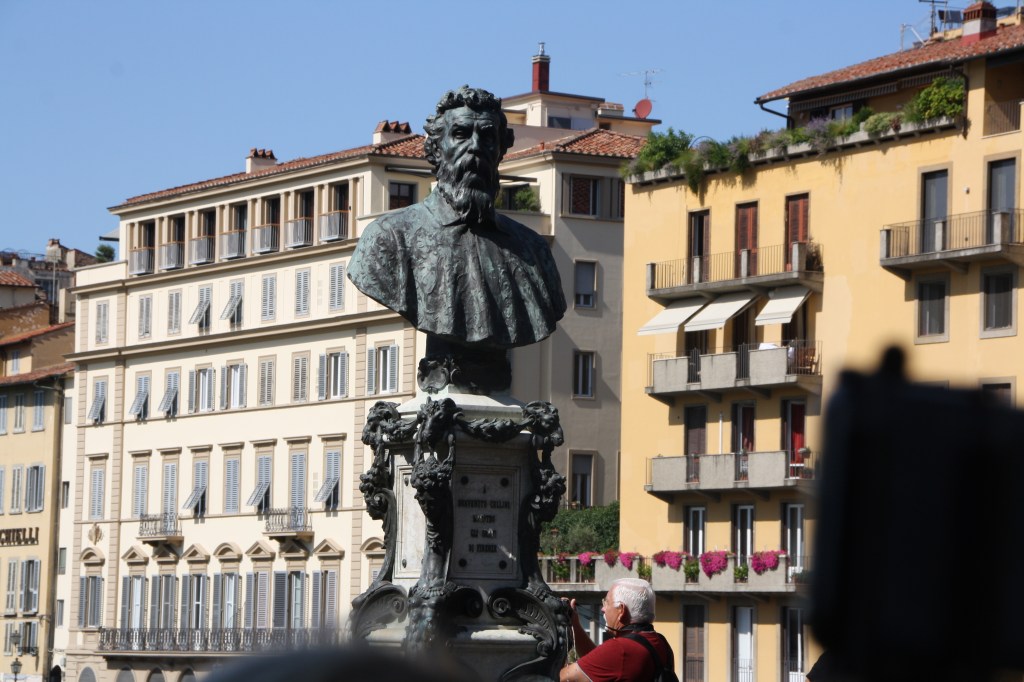
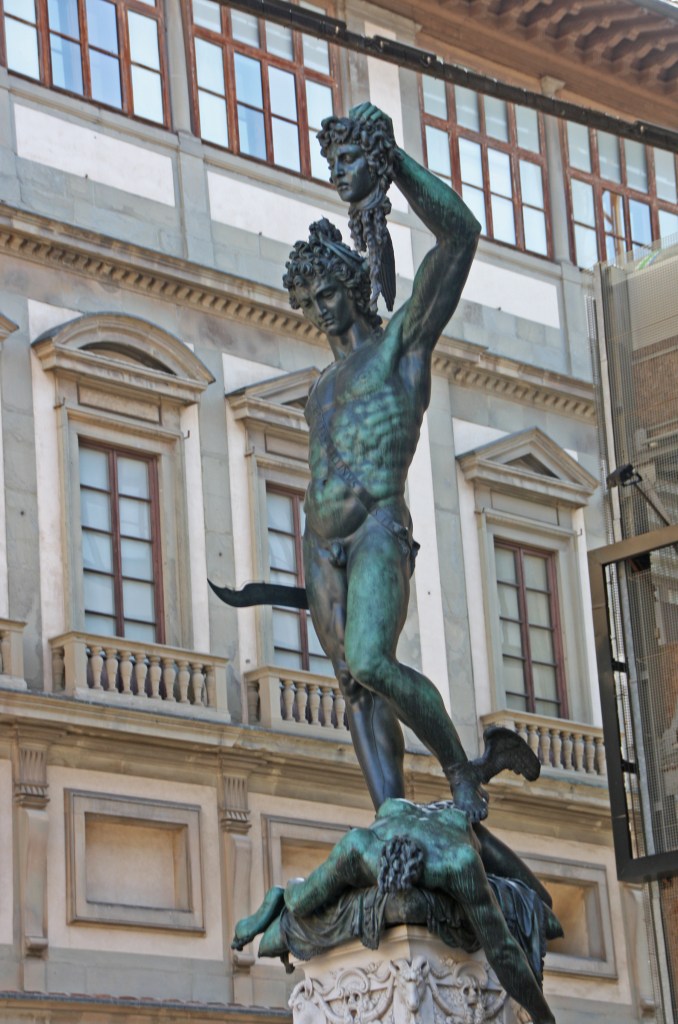
Tribute to 16th century sculptor and goldsmith Benvenuto Cellini.