When a day does not go according to plan
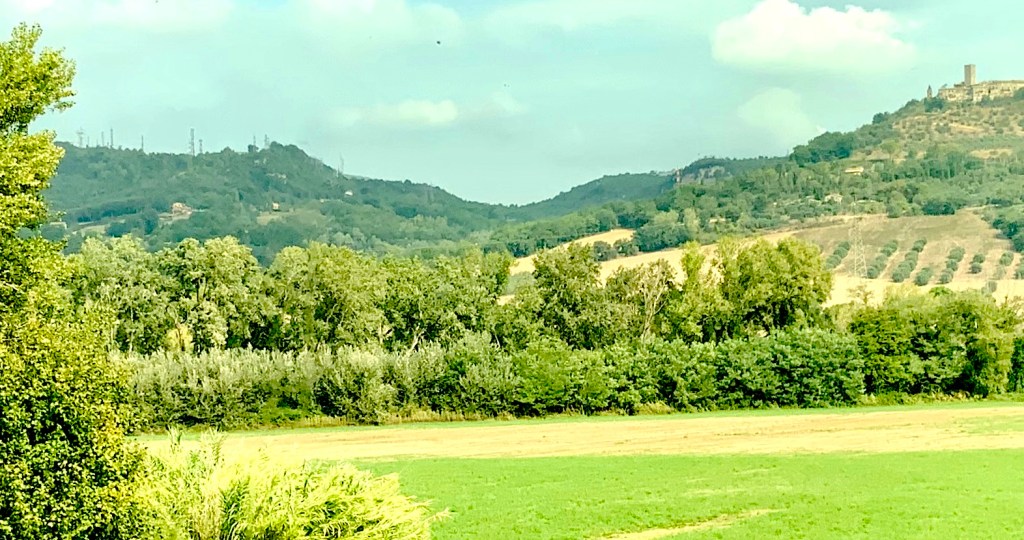
The breeze in the Tuscan countryside embraces you. Fields filled with all the sunflowers and the vineyards. It’s delicious.
The year is 2019 – late September and the Sunshine Coast Oriana Choir is starting a performance tour of northern Italy.
The itinerary is for nine performances from Rome through to Venice in 16 days. A highlight of the tour will be the joining with choirs from some of these provinces in performances at the magnificent cathedrals as well as those churches and halls cherished by the regional towns.
Another feature is to be the way a number of the local choirs will welcome the 60-something members of the touring group into their communities.
The first performance was singing mass at St Peter’s Basilica, the burial site of St Peter and the largest church in the world by internal measurement.
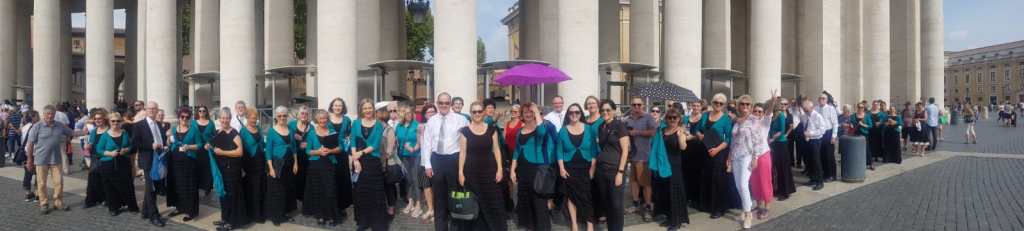
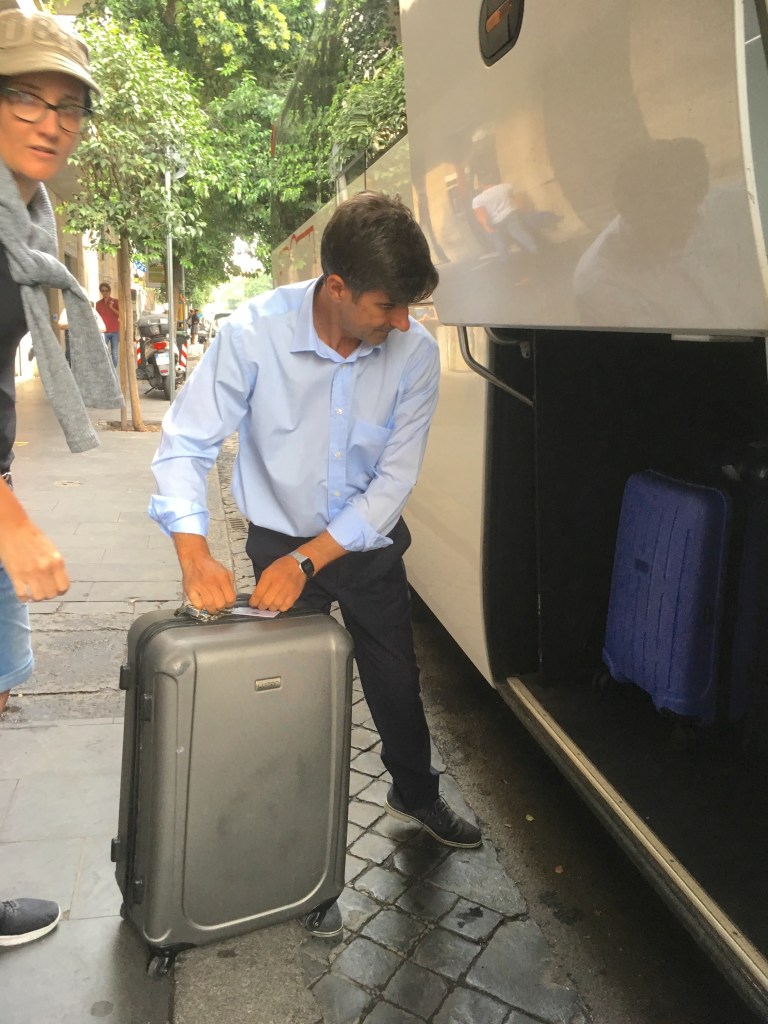
Two coach-loads of Oriana Choir members left Rome early in the day, heading north towards the thermal spa town of Montecatini Terme that is to be the tour base for a few days.
Little did we know what adventures – and challenges – were ahead.
Bus 1 made its way to the classic town of Arezzo, the eastern-most province in the Tuscany region.
The city is depicted more as a charming medieval village and is famous for many things but most recently it was the setting for Roberto Benigni’s Oscar-winning film La Vita è Bella, It’s A Beautiful Life.
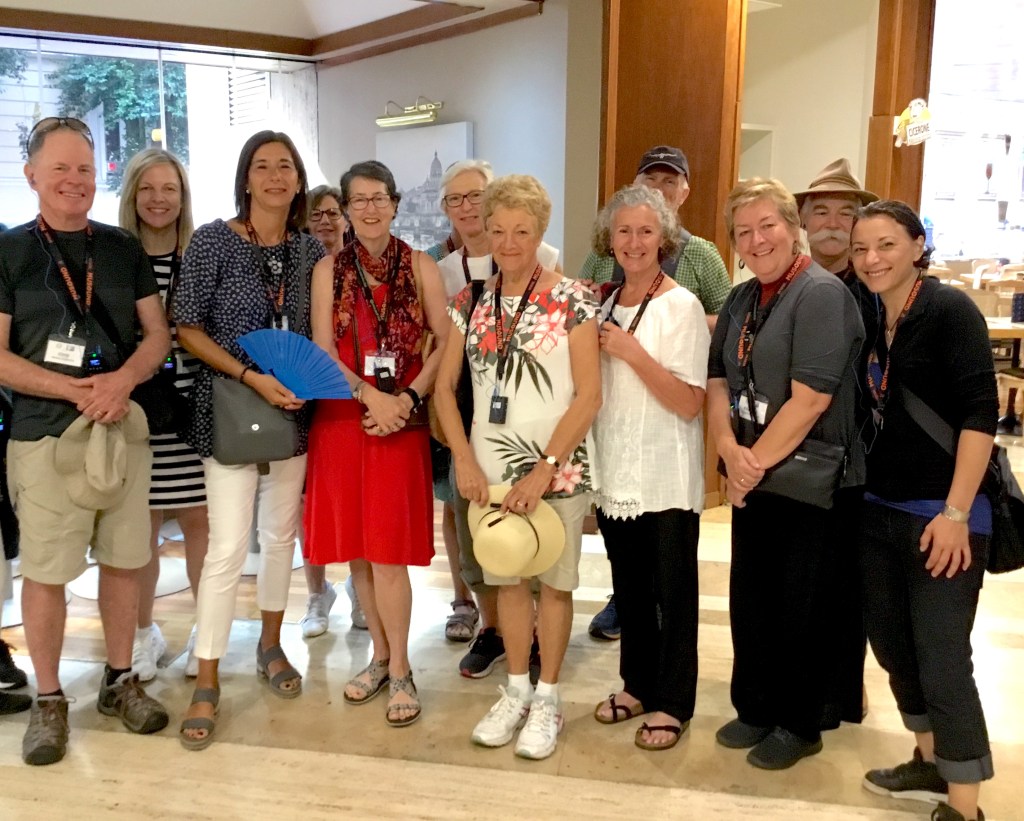
Bus 2, on the other hand, started its penchant for following a road less travelled.
The coach was new – but not performing as it should – so plans of a lunchtime stop at Arezzo were changed to Orvieto and the chance to swap buses.
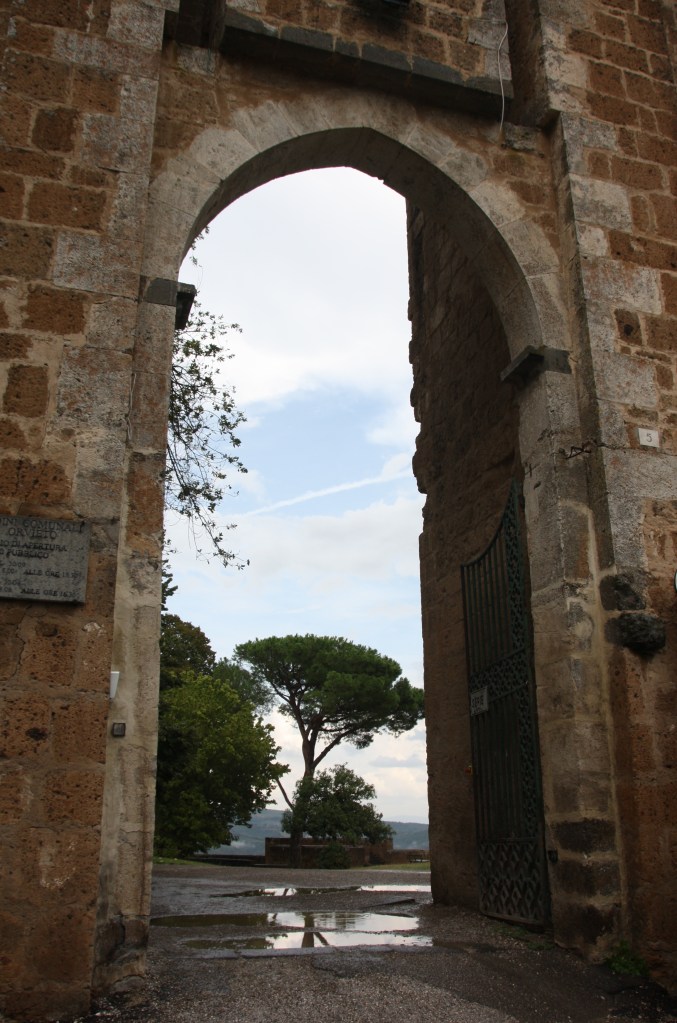
Historic Orvieto, with its cathedral, funicular, and its arts and drama festivals. What a delight – still in the Umbria region and with a hilltop town dating back about 2500 years to Etruscan times.
From the bus parking area near the railway station on the rich alluvial plains we were given tickets to take the furnicular up to the old town on top of the rocky outcrop like so many Italian towns and villages are situated on.
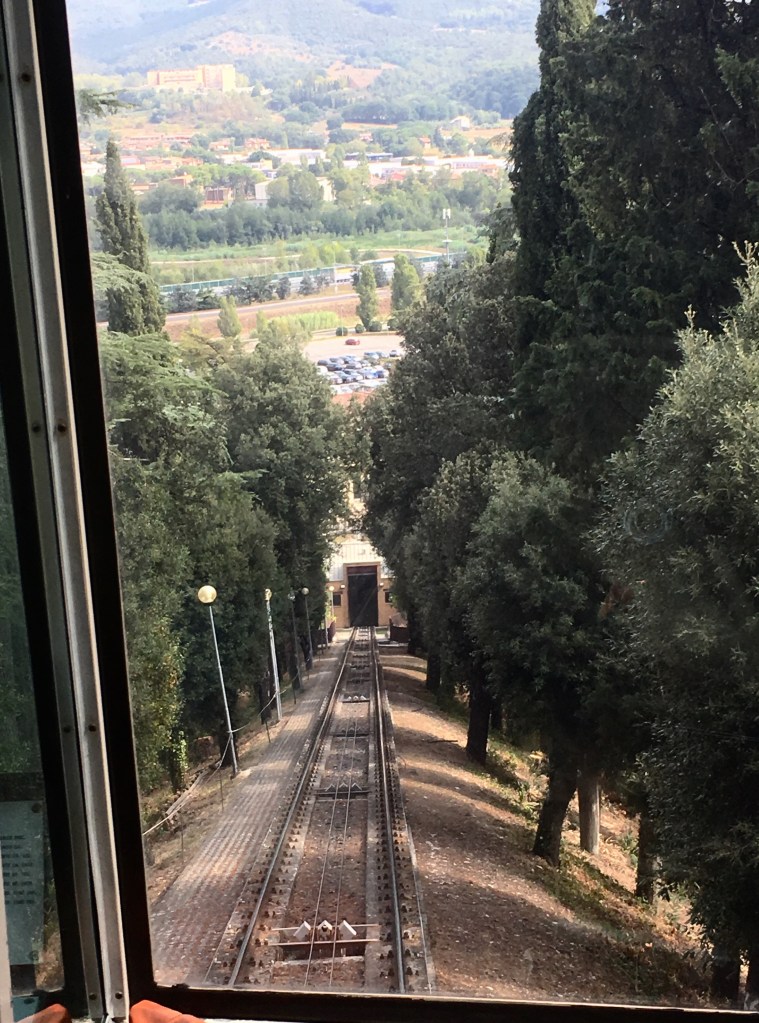
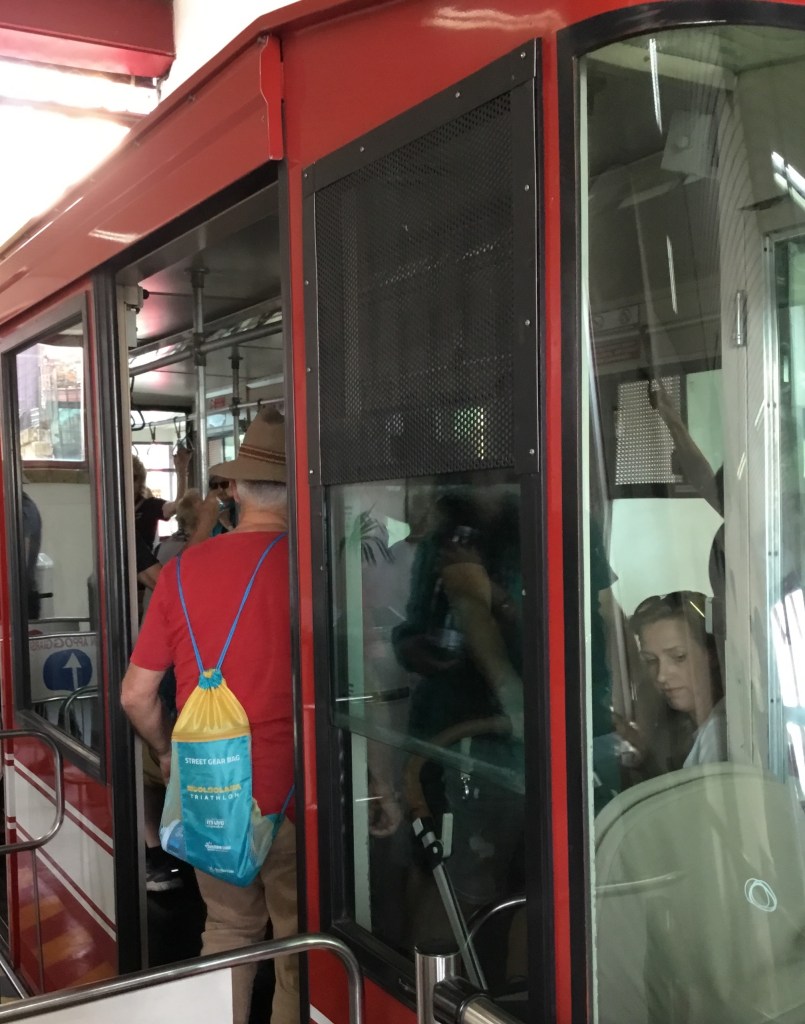
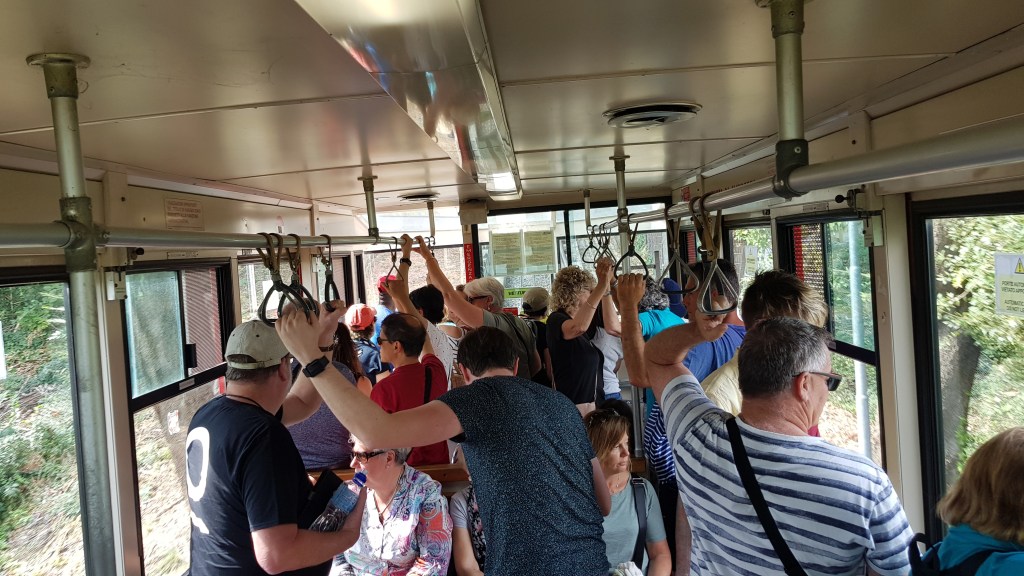
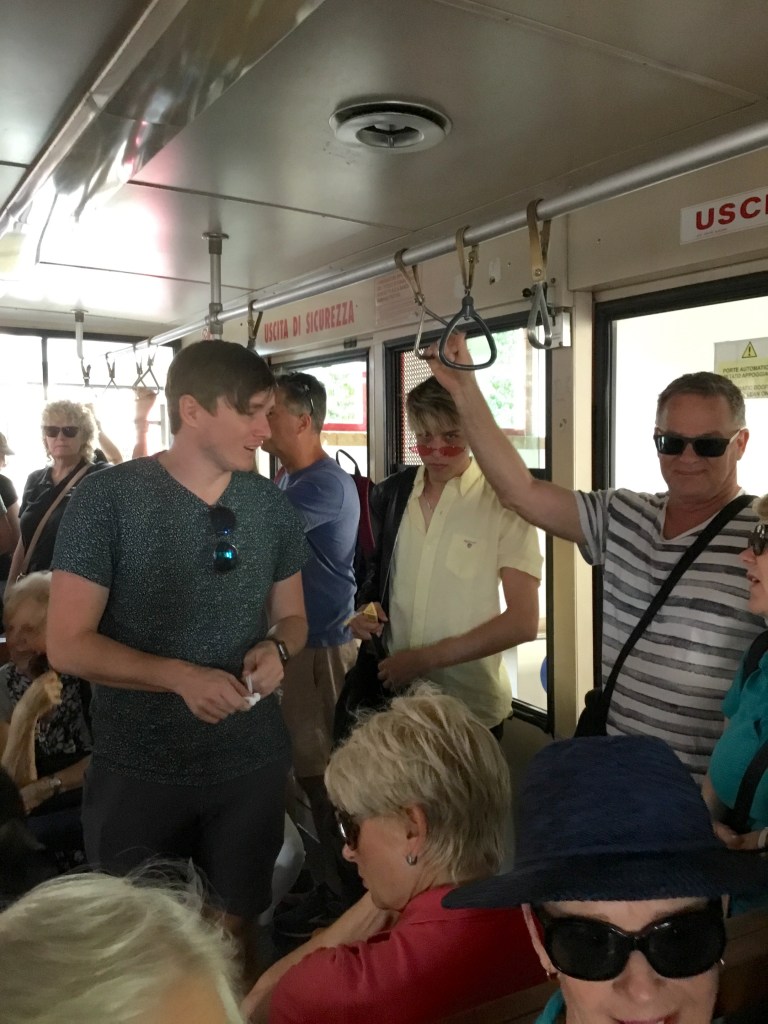
Orvieto is the capital of the “Città Slow” movement, meaning the epicentre of the Slow Food cities, and enjoys a centuries-old connection with the land.
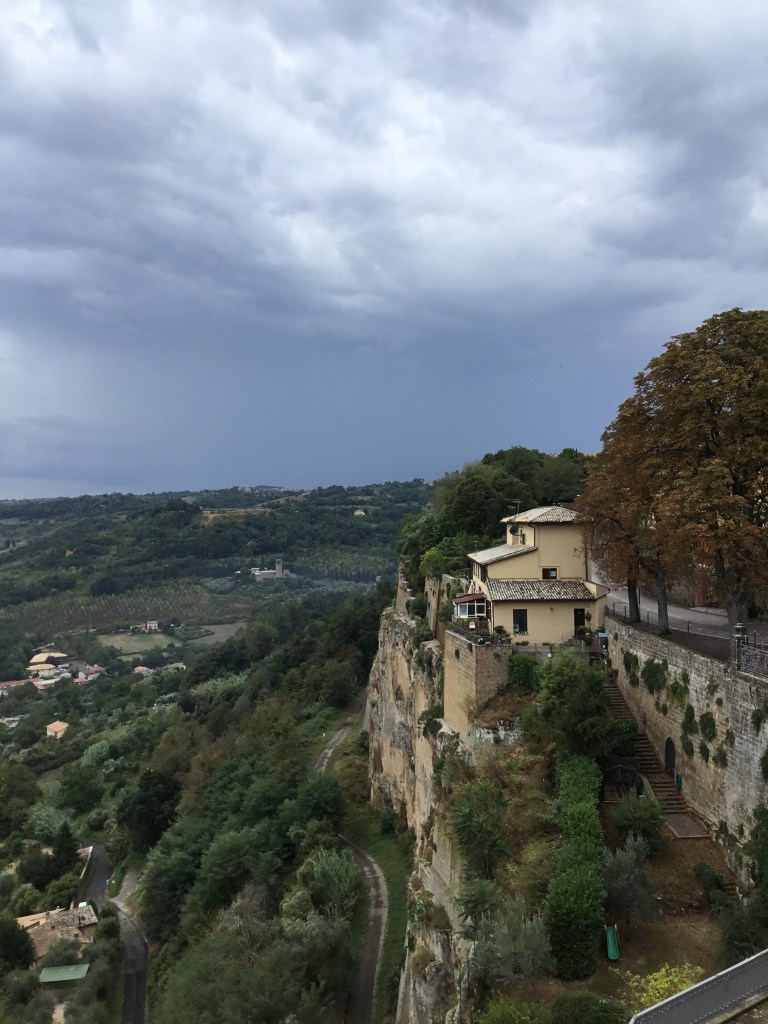
It is 195 m above the junction of the Paglia and Chiana rivers. The park at the top of the furnicular leads to cobbled streets winding further uphill between stone cottages and shops.
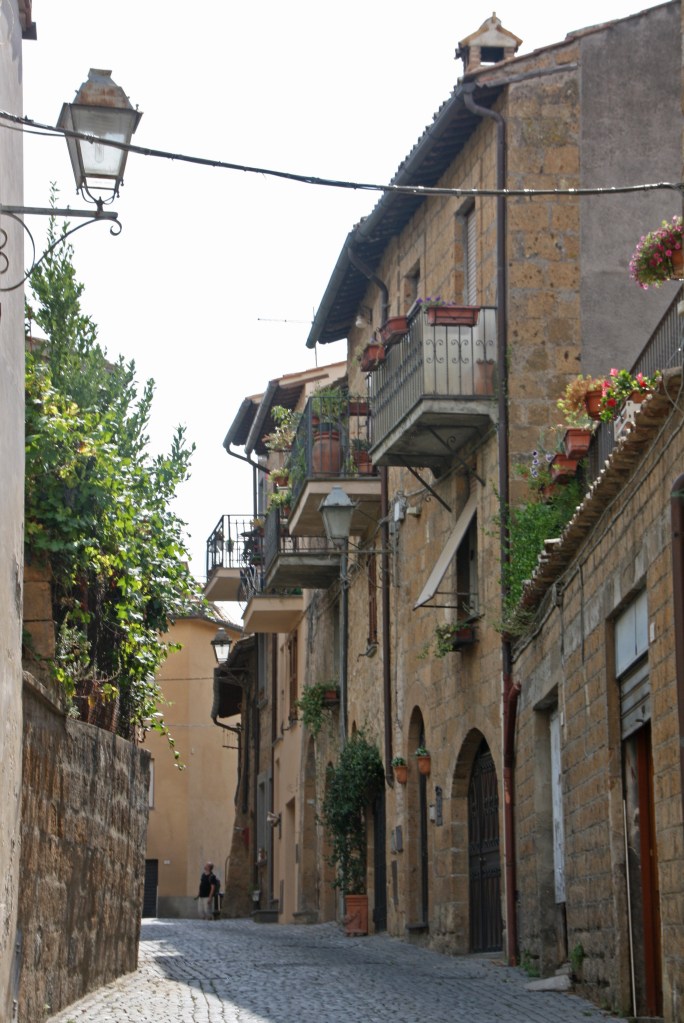
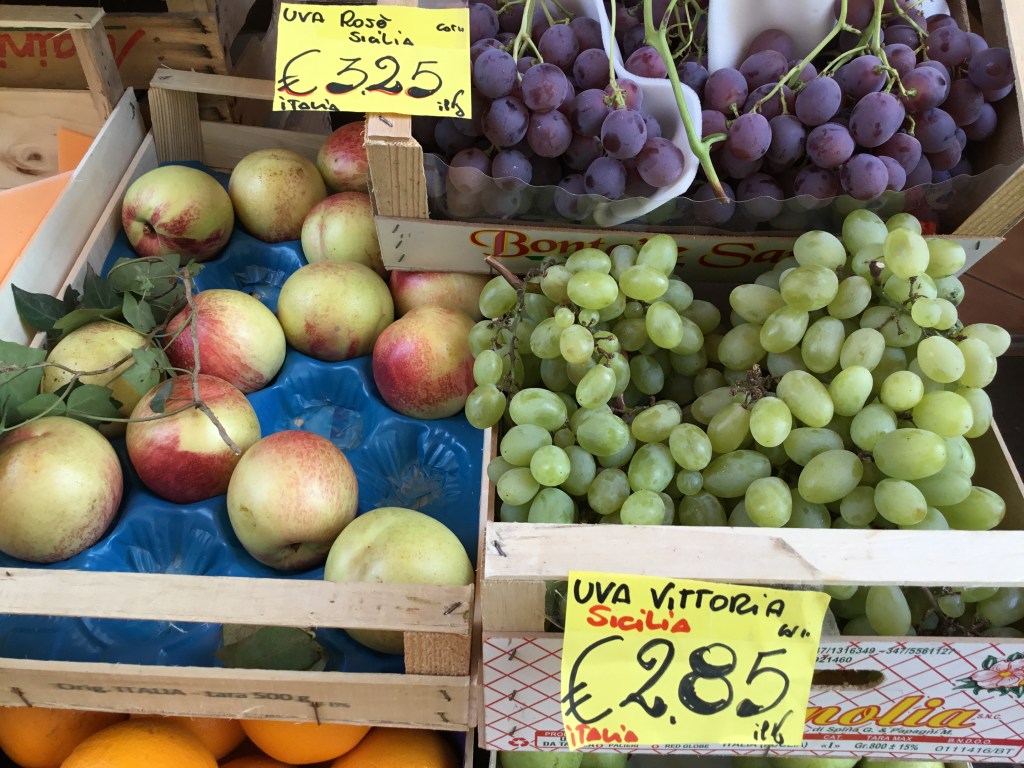
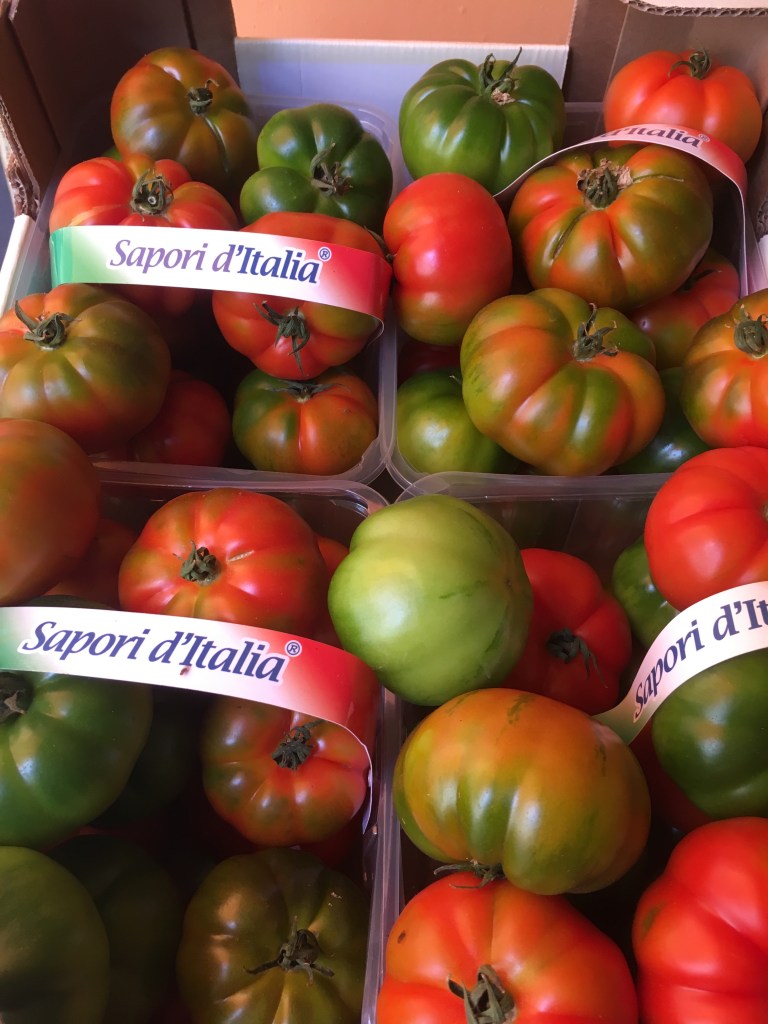
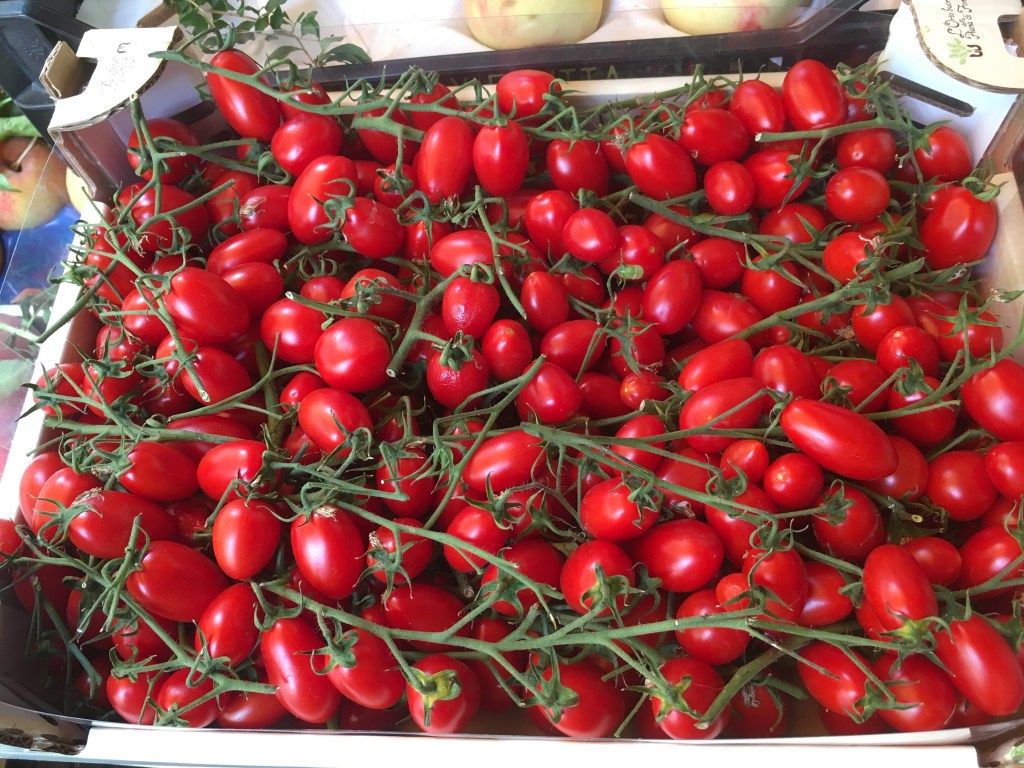
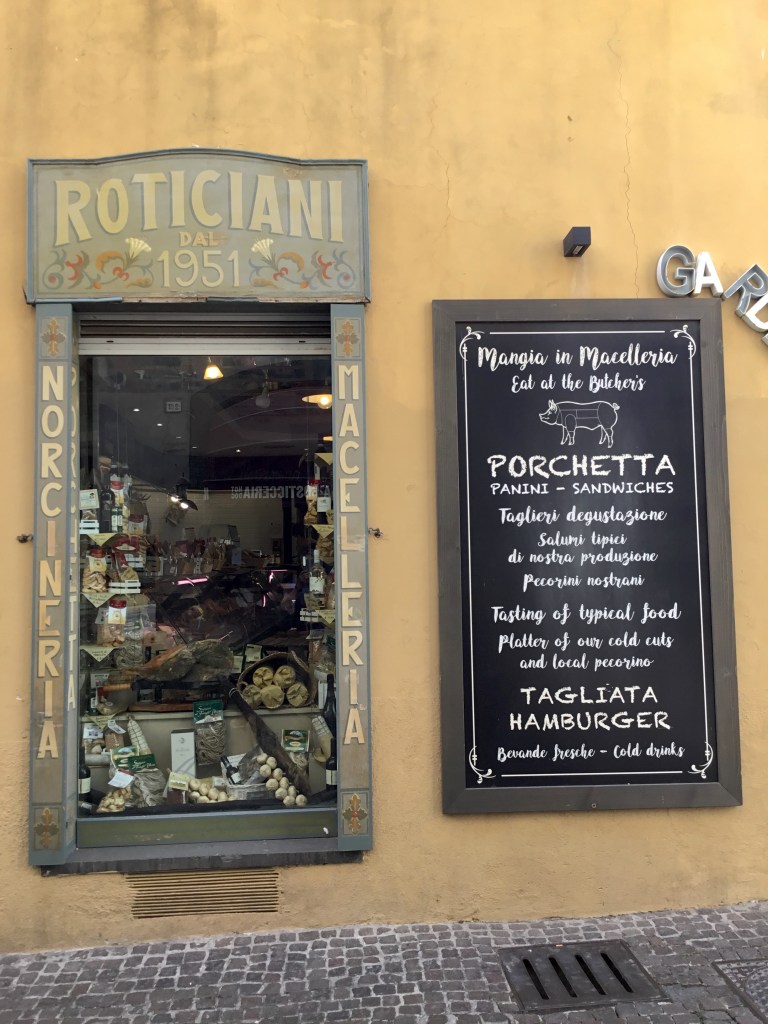
There are laneways and alleys to be explored, fresh fruit and vegetables from the region on display at street-side stalls – the richest coloured tomatoes, luscious-looking grapes, deep-purple coloured eggplants.
The grapes are perfect to eat from the bag while walking and talking, trying to take everything in.
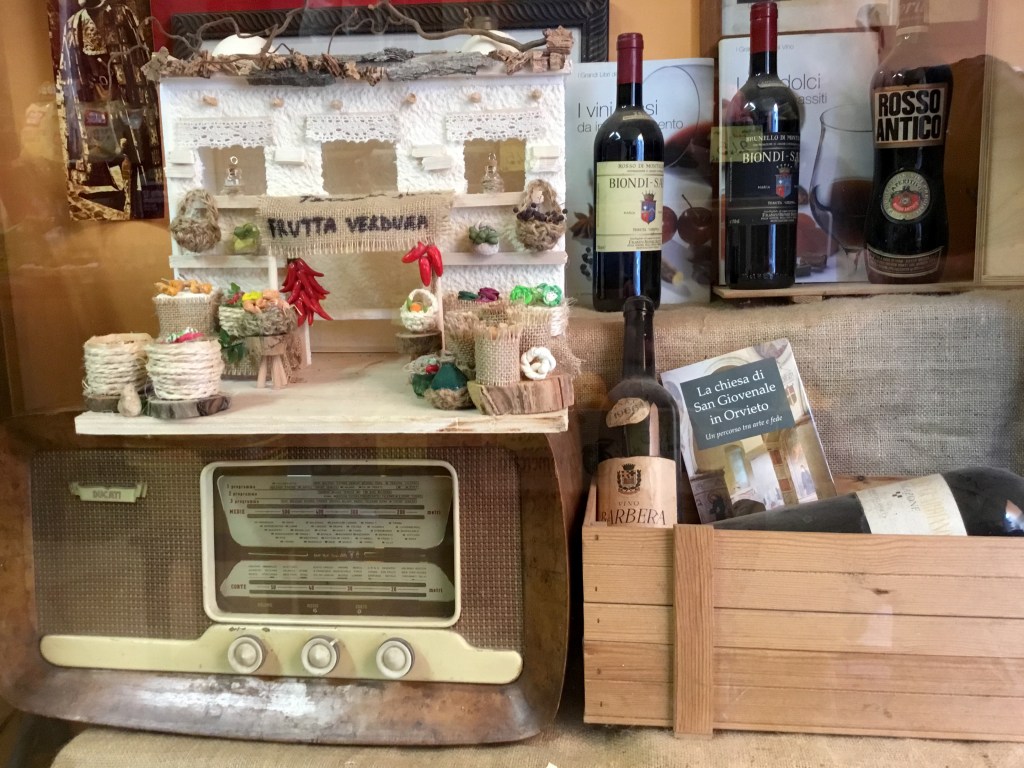
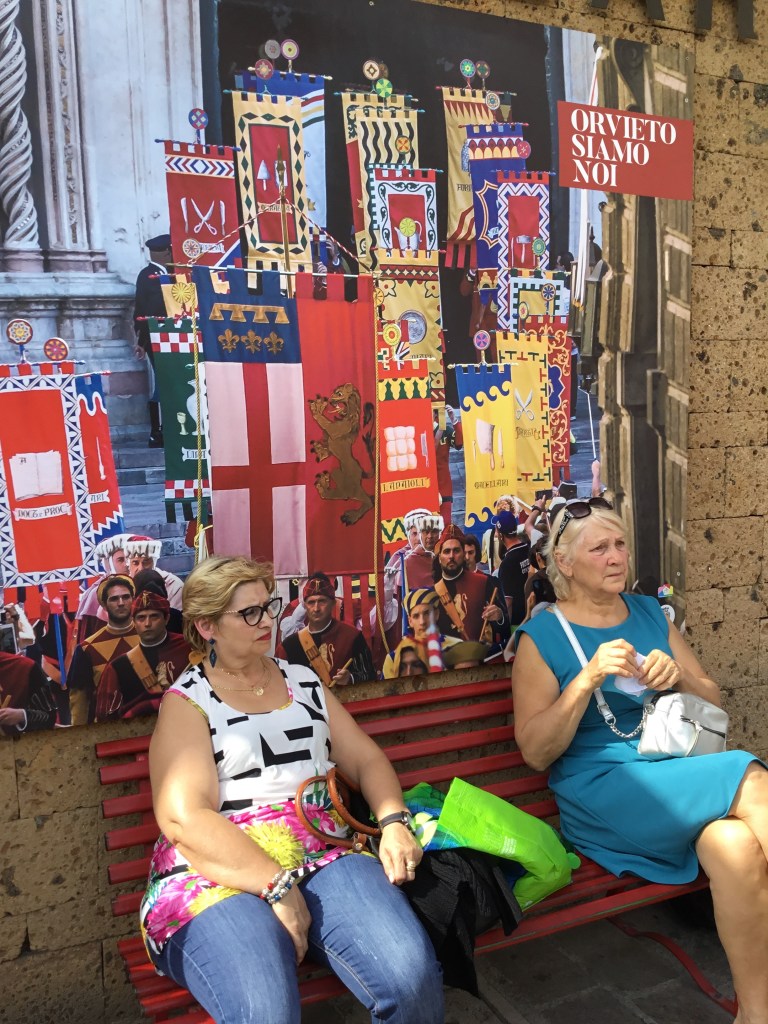
You get an idea of the town’s character from the poster at the furnicular station – Orvieto’s art and cultural heritage is one of the richest in Italy. There are festivals of music, food, drama and film.
Yet above everything is the Duomo di Orvieto, dating from 1290, with a facade of marble that stands as a masterpiece of Italy’s Gothic art.
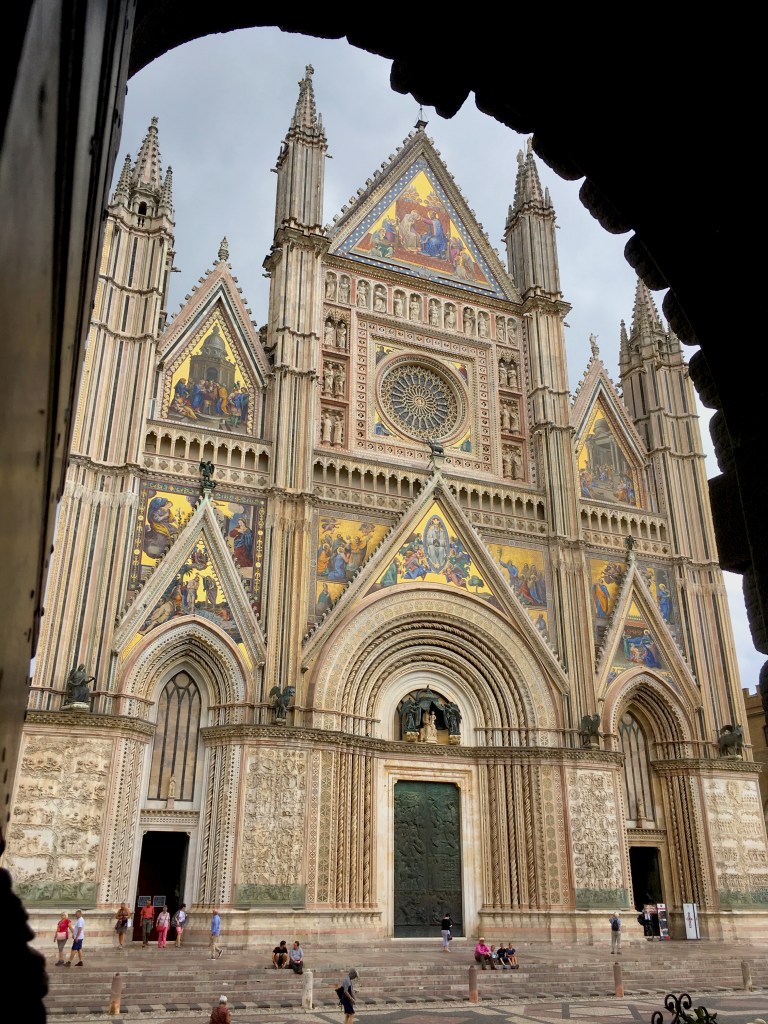
In the upper section, above the central portal, is an elegant rose window created in the mid-14th century and featuring the head of Christ at its centre. Marble carvings depict biblical stories, including statues of the 12 apostles above the rose window.
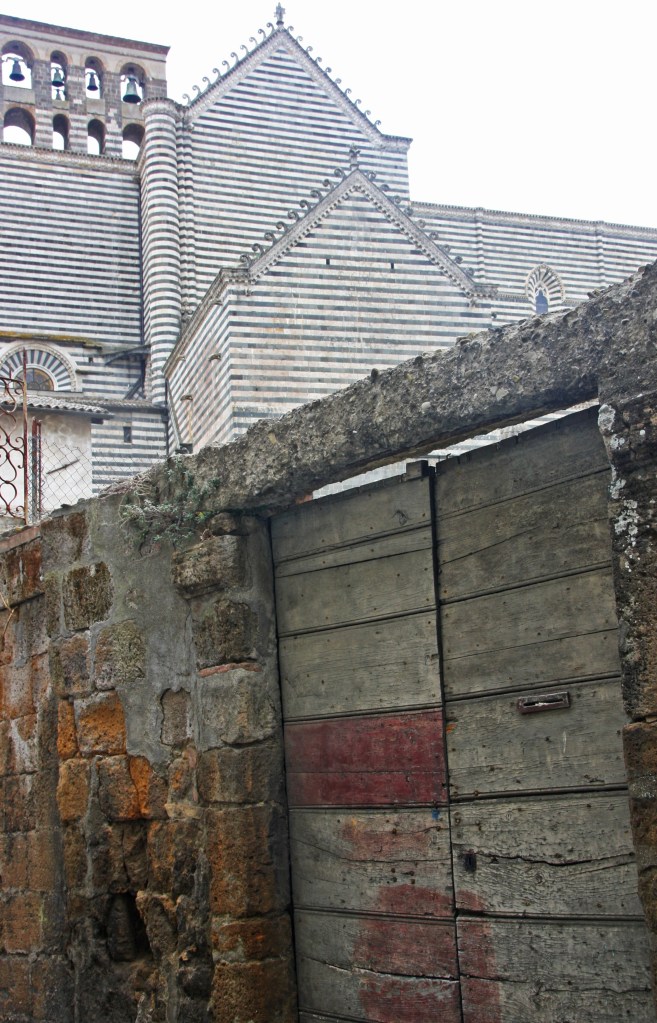
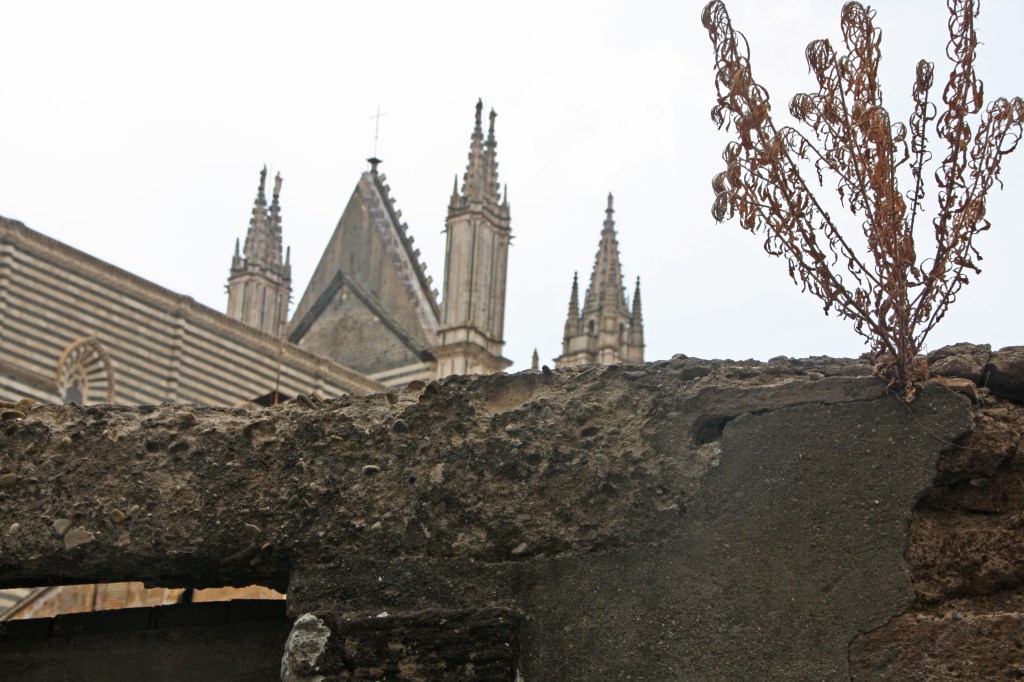
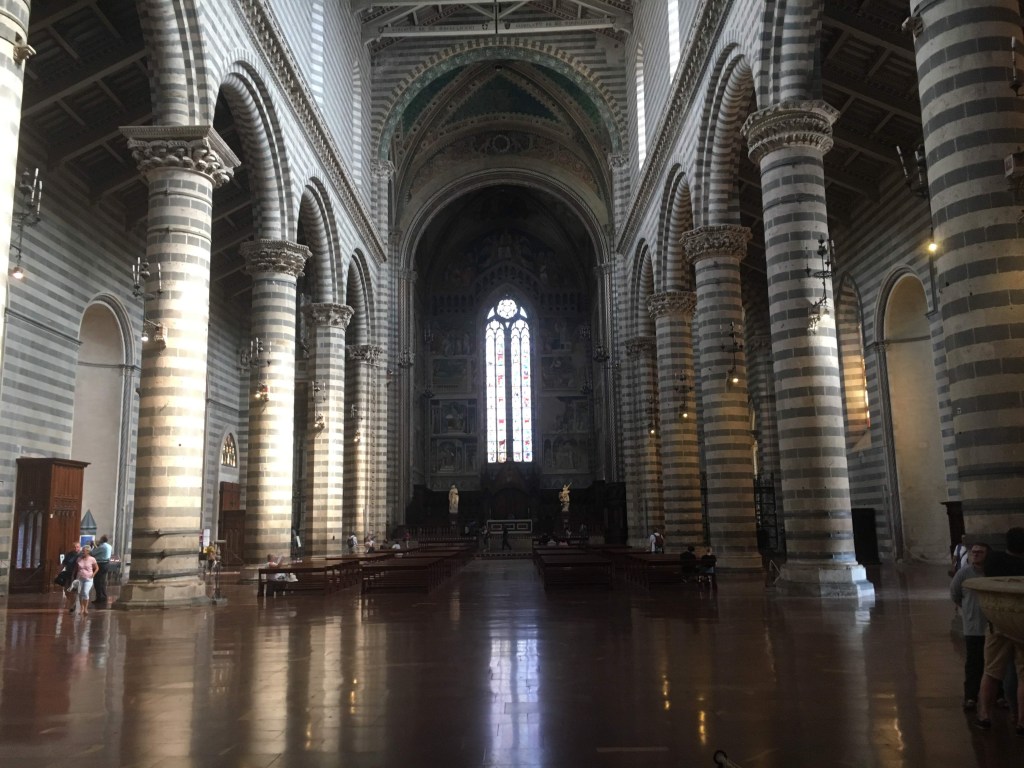
The sides and rear of the cathedral are constructed of distinctive black and white layers of basalt and travertine marble. This duotone effect continues inside with striking columns lining the main body of the church.
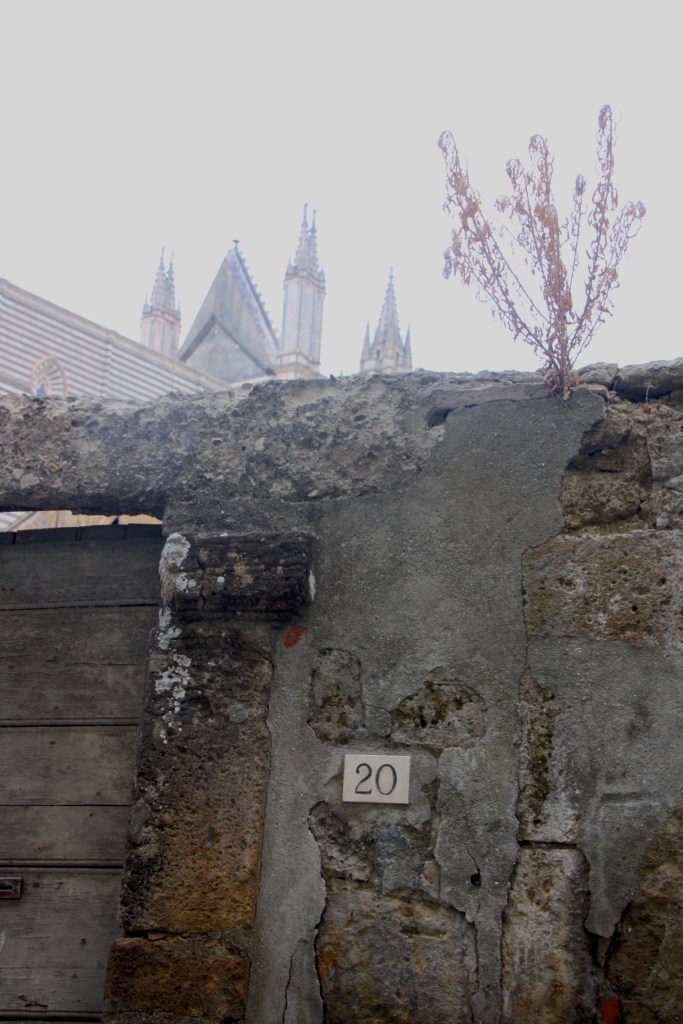
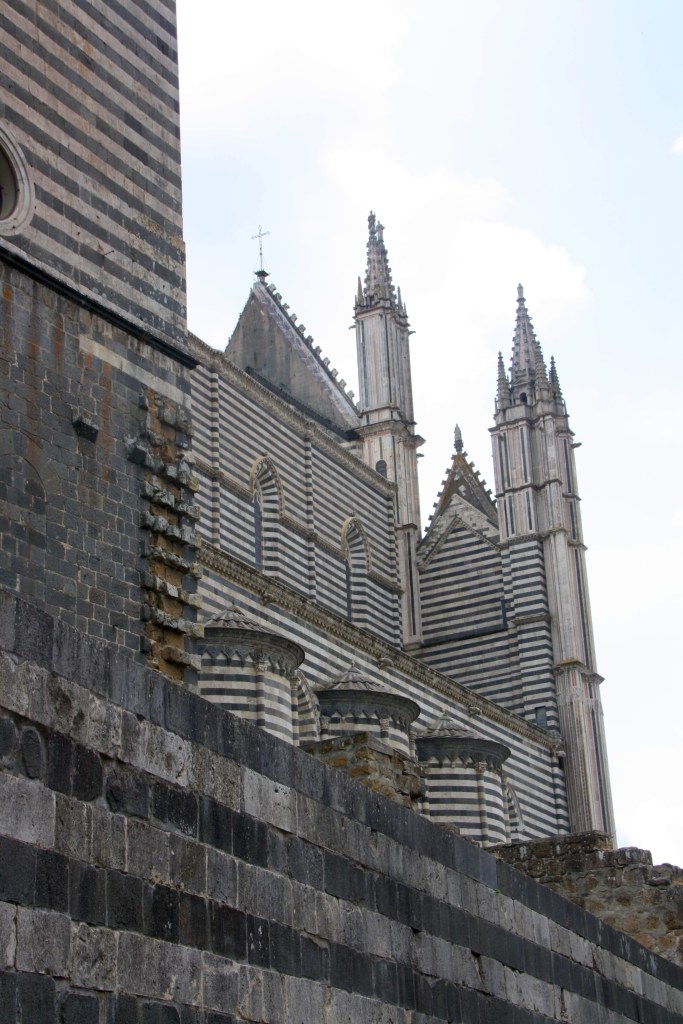
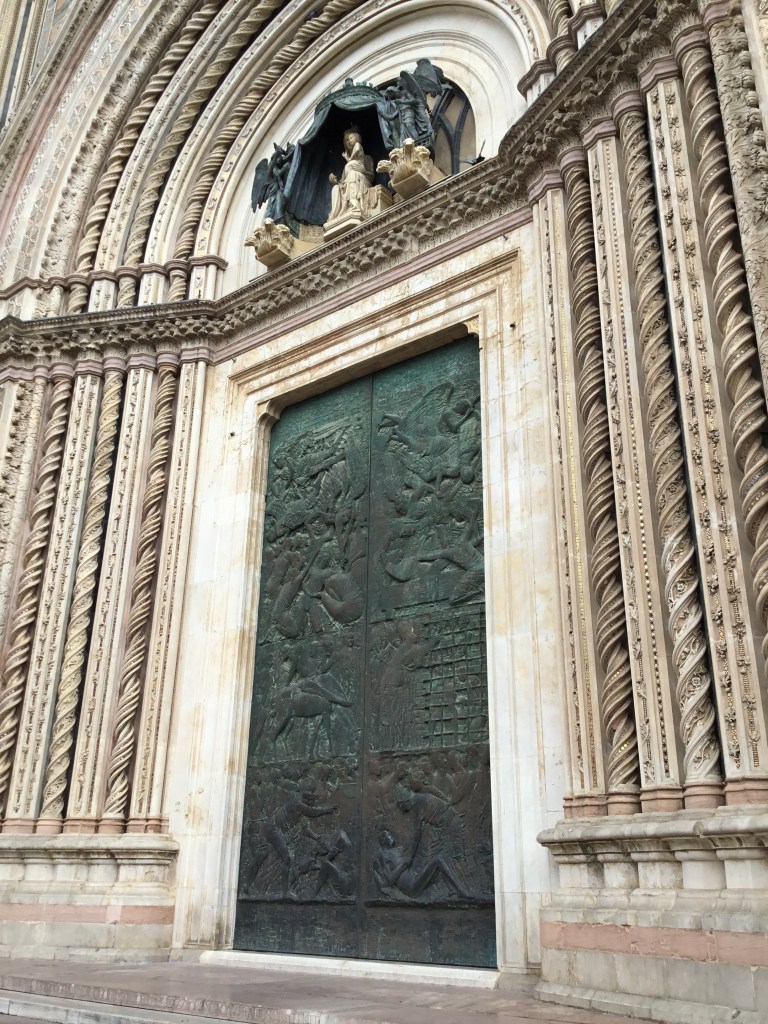
The three bronze doors for the façade were installed in 1970. Only the central door is sculpted. It depicts the Works of Mercy: feeding the hungry, giving drink to the thirsty, clothing the naked, sheltering pilgrims, visiting the imprisoned and the sick, and burying the dead.
The Pietà in the cathedral is a Renaissance masterpiece carved entirely from a single block of marble and featuring four distinct figures: Christ, the Virgin Mary, Nicodemus, and Mary Magdalene.
It captures the agony in the face of Christ and the devotion in the face of a kneeling Mary.
Being early afternoon, and having become detached from those I had been exploring Orvieto with, the best plan was to head back to the “funiculari” and wait for them.
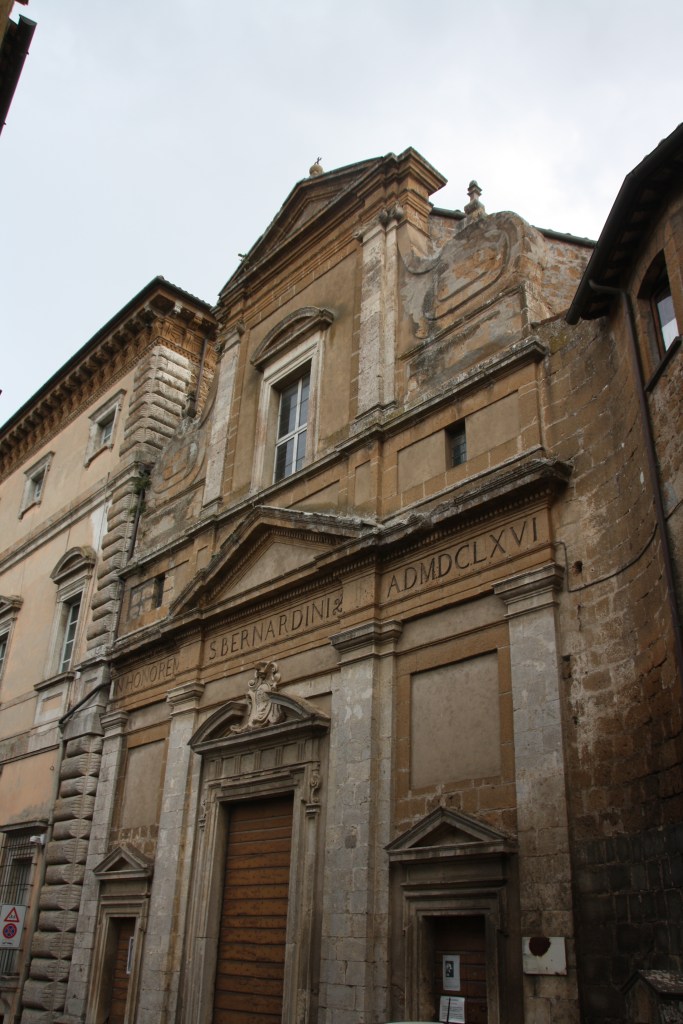
Down streets and more laneways – schools, museums and the Monastero di San Bernardino, founded in the 1400s and has welcomed generations of nuns into this small, unexpected oasis of peace.
It’s this sense of walking, touching and understanding those who have created such places that helps shape the sense of self.
Yet the heat of the day had built up to a thunderstorm and suddenly there was this downpour – drenching rain.
Some people relied on umbrellas. Instead, a doorway seemed to be a good place to shelter in but the cars coming past to collect the school children splashed the water up from the run-off.
That resulted in wet trousers, socks and walking shoes. Uncomfortable.
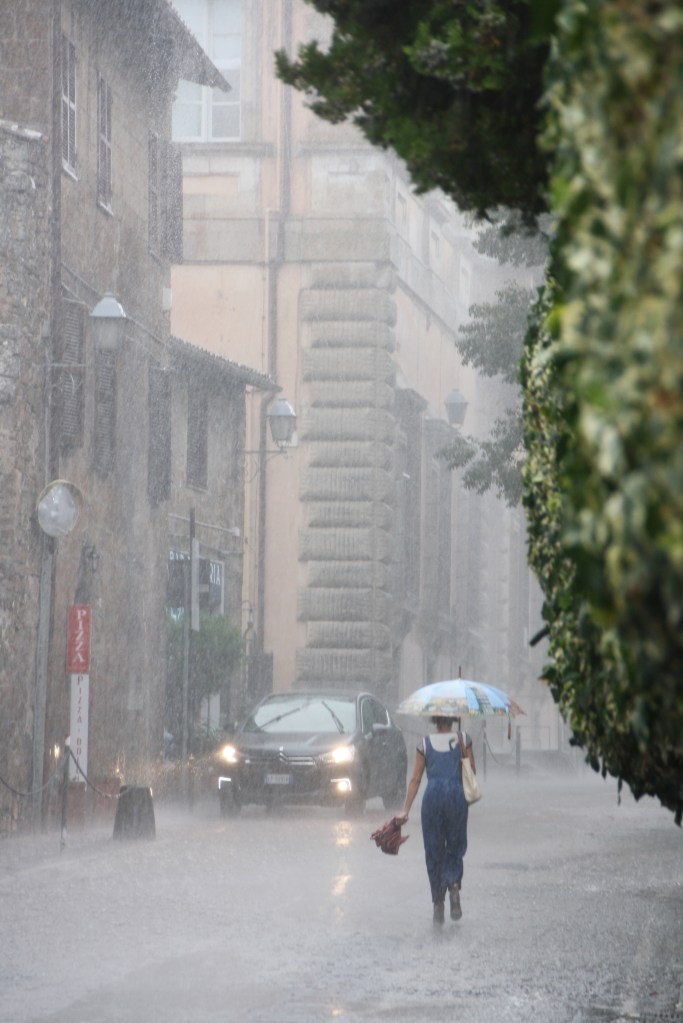
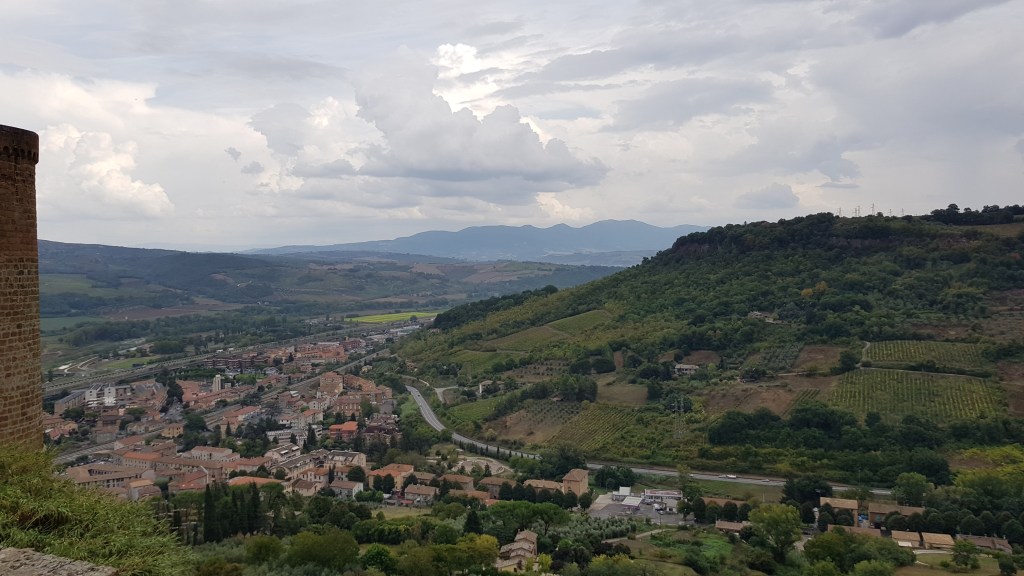
The storm, though quite torrential, was short and with the humidity gone it gave time to appreciate the parks, the gardens and the view from the walls of the city.
The Pozzo di San Patrizio is a 16th-century well shaft with a double spiral staircase, while an underground cave network attests to the city’s Etruscan roots.
The ancient town had been fortified with defensive walls and the well was built between 1527 and 1537.
The city proved to be an excellent refuge for Pope Clement VII to escape the mutinous troops in the sacking of Rome.
Clement feared that the natural water supply for Orvieto would be insufficient in the event of a protracted siege, so the well was completed in 1537 during the papacy of Pope Paul III.
Two double helix ramps allowed teams of donkeys to carry empty water vessels downward and full water vessels upward without having to cross paths by using the same staircase. The well is 53.15 metres deep, with 248 steps and 70 windows to provide illumination.
Eventually I made my way back to the funiculari to reconnect with the tour group and the replacement bus.
A 1e 20 ticket to get back down to the bottom and to where we had disembarked from the bus near the railway station was.
There was no-one else there. No bus. No tour group members. Had I been left behind?
In a moment of considering what to do, I wondered whether we were supposed to meet in the park at the top of the funiculari.
So I bought another ticket but then realised the first ticket given out by the tour guide was valid for a return trip.
Finally, there I was standing in the park at the top of the funiculari. Thankfully, other fellow travellers had started to gather.
That’s when we heard the eeeh-aaah, eeeh-aaah sound of an ambulance, and realised it was one of the choir members.
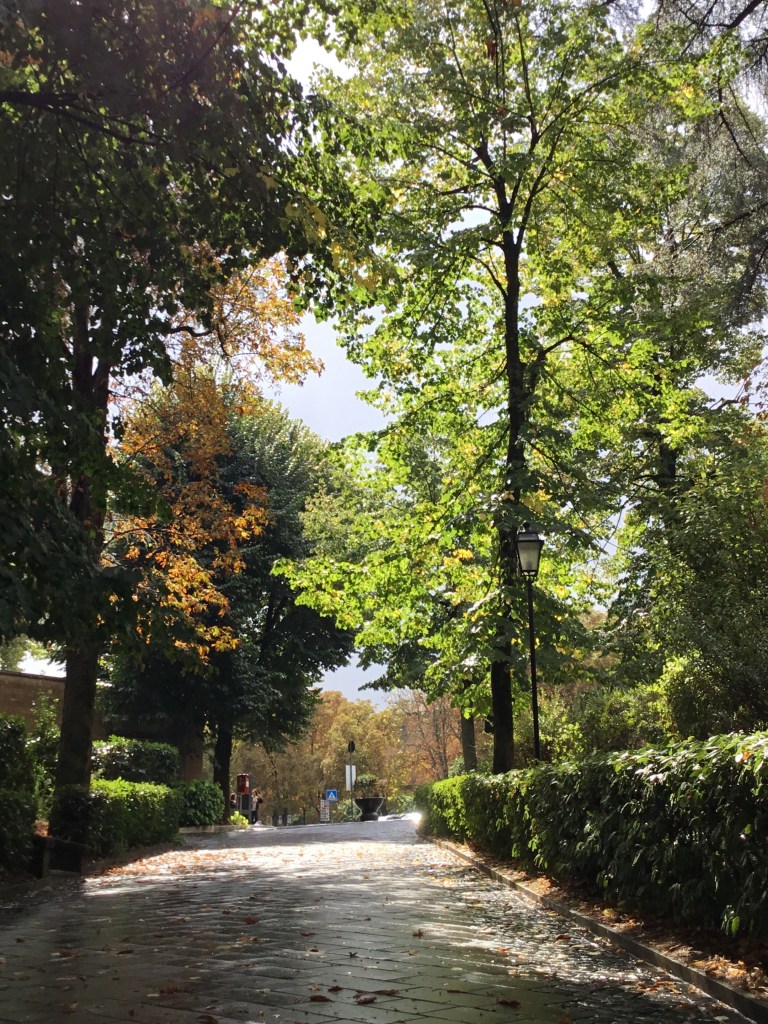
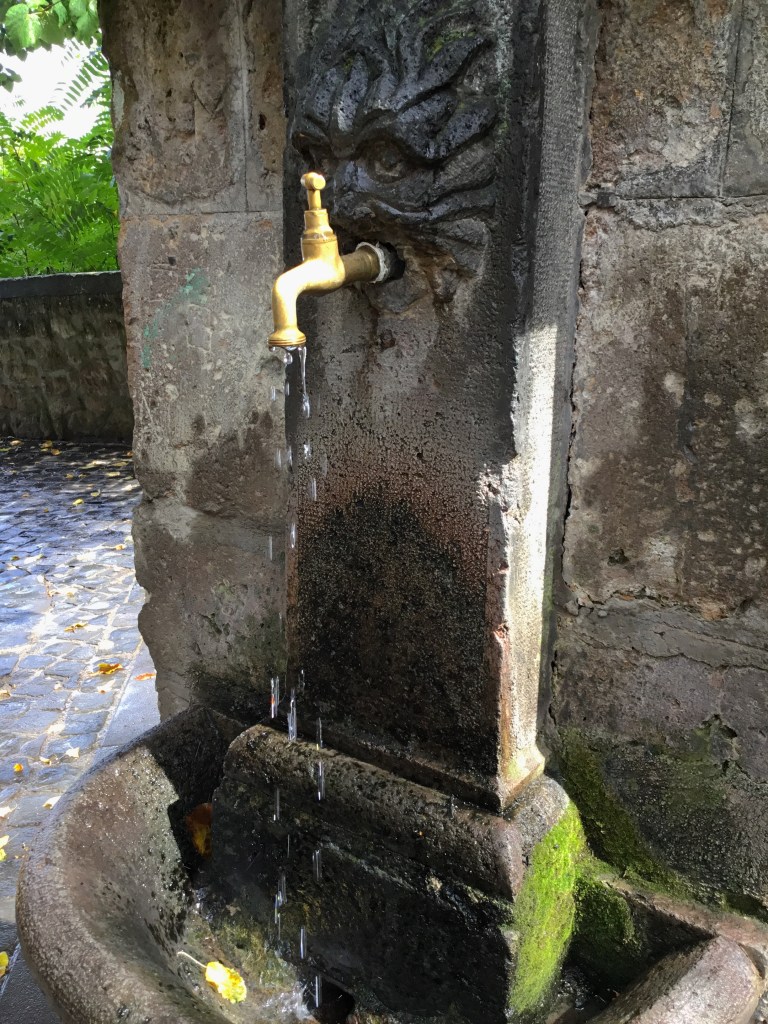
One of the supporters had fallen over on the cobblestones after the rain.
That set off urgent discussions and decisions with the paramedics about what action was to be taken to ascertain if and what injuries had been sustained.
The choir group was booked into a hotel at Montecatini Terma that night, with a performance scheduled for the following evening.
He was not allowed to travel with the group, instead was to be taken to hospital for assessment of any injuries, especially if it involved any trauma to the head.
You can imagine the excited translating of Italian to English going on. Yet the tour guide Jessica and choir executive did an amazing job of not only helping facilitate the hospital visit but what was to be done afterwards so the traveller could rejoin the group.
Eventually the group was back on the bus and the patient would be brought on by car to Montecatini Terme after the treatment and observation.
As the rolling fields slipped past we wondered what an eventful introduction it was to Tuscany.
On the bus ride I got a text message from my daughter back in Australia.
“Are you still in Orvieto????
“There is a magical store run by a magical man that is worth visiting if you can.
“He makes masks for celebrities when they attend the Venice festival.”
And all along the way I had the tune of the folk song going around in my mind:
“Funiculì, funiculà, funiculì, funiculà.”
Funicular up, funicular down, funicular up, funicular down … it certainly was that kind of day and prepared us for the adventures that certainly we would experience in this country where everything seems to be in panic yet there is a wonderful calming order to the perceived chaos.
Oh ha, ha hhha ha … funiculì, funiculà.
 leavearly