The first time you see it, you will always remember the impact it makes.
The dome on top of cathedral in Florence makes you catch your breath.
Brunellschi’s Dome on the Basilica of Santa Maria del Fiore is the largest of its kind in the world.
Built between 1420 and 1436 by Fillipo Brunelleschi, it features a double-shell design and herringbone brickwork to give it the strength to be self-supporting of such massive weight without the need for traditional scaffolding during construction.
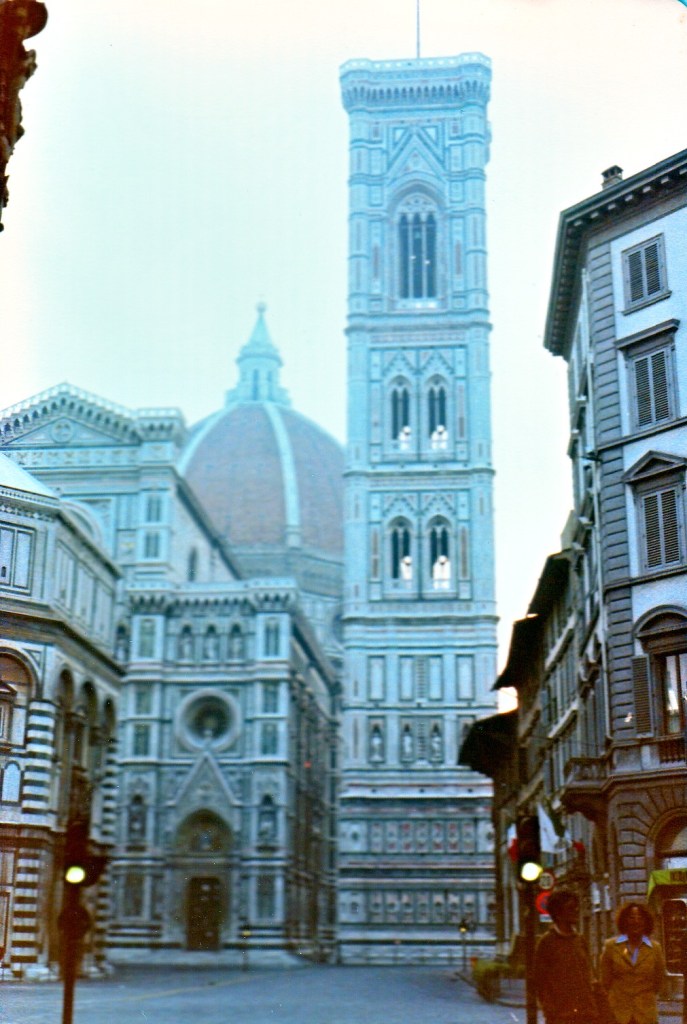
A masterpiece of the Renaissance, it dominates the city skyline, together with the Baptistery of St John and Giotto’s Campanile. Together they are part of the UNESCO World Heritage Site covering the historic centre of Florence.
Giotto’s belltower stands adjacent to Santa Maria del Fiore – Saint Mary of the Flower.
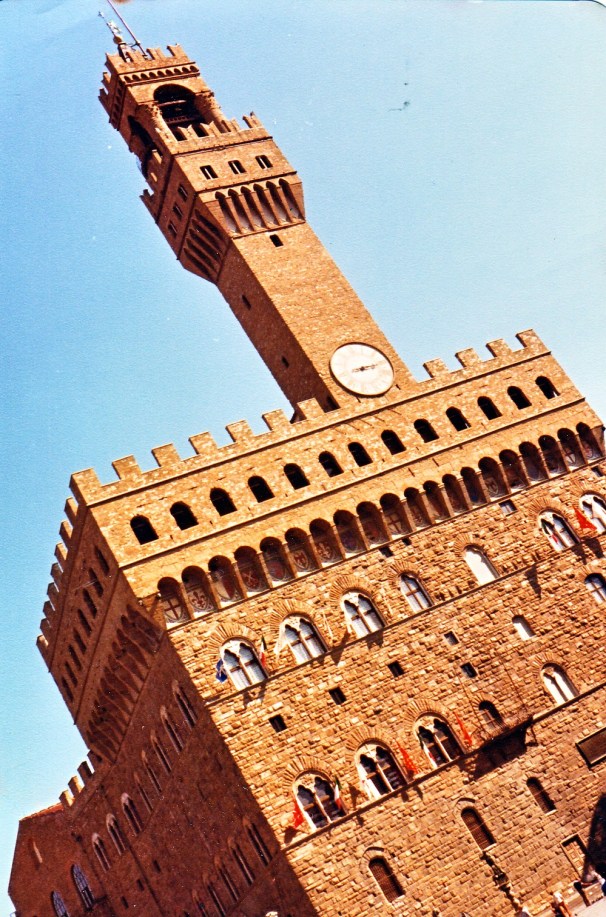
It was into this world that we found ourselves early one morning in the 1970s, after an overnight train trip from Venice.
The train pulled in to the station at 4.20am. That meant sitting on the concrete floor of the waiting room with sore eyes and watching the world pass by until the city came to life.
We would need to find a place to stay … somewhere close to the station and the city centre.
Walking in the early morning light, admiring the impressive buildings … the hand of Da Vinci and Michelangelo seem to be everywhere.
The Duomo instantly attracts your attention. It is portrayed in every postcard, book and painting that depicts Florence.
It is about eight minutes walk from the station.
We step inside and are taken by the size of the basilica and the sense of peace, of calm … a refuge from the world.
Sitting there, a sister of religion compassionately asks if we are alright. Tired travellers taking a moment to rest and reflect on life’s journey.
This simple gesture speaks volumes about the ever-present need to be caring and kind to others.
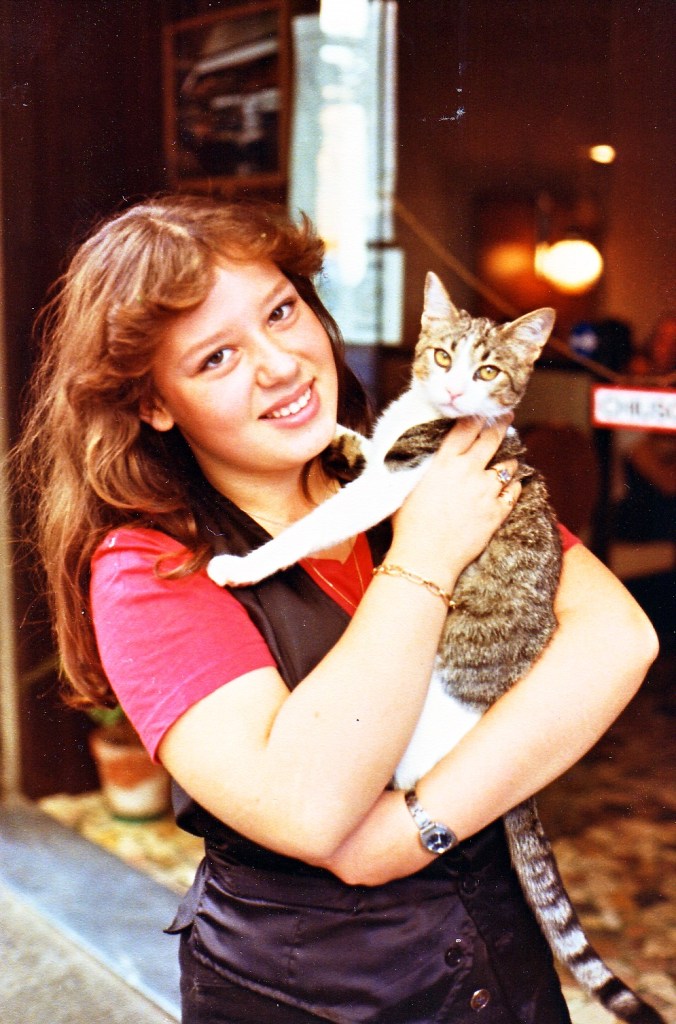
We are lucky to be travelling with Paolo, Angela and Valerie – three young Italians we met on the train from Trieste to Venice. Simply saying “bon giorno” in the carriage opened up a wonderful friendship.
As the vineyards flashed by, I told Paolo about life in country Australia and the few words of Italian we learned from neighbours and school mates.
He openly admitted to being the most talented cancer specialist in Italy … at the age of 28. Angela and Valerie were medical students from university.
It was their help that saw us navigate Venice. Now they have found a hotel to suit a traveller’s budget while being in a central location.
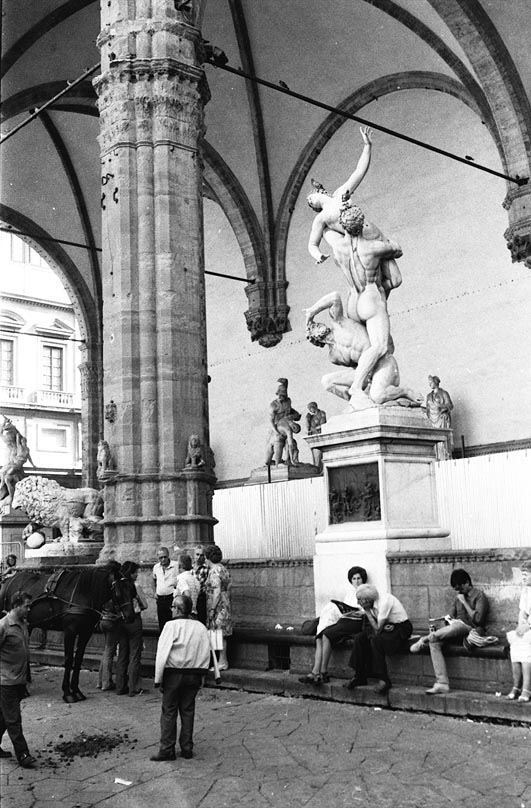
Find a room and grab some sleep. We are right in the city square and it is still so affordable.
Walking through the town in the afternoon, across the distinctive arched bridge the Ponte Vecchio that spans the Arno River.
The bridge has shops built along it. Above is a corridor built by architect Giorgio Vasari in 1565 to allow the powerful Medici family to reach Palazzo Vecchio undisturbed.
In this heady mix of history and everyday life, we philosophise about so many things – and he maintains I have a healthy fire of the soul.
I particularly look back at those early morning walks, just on sunrise, through the city streets and across the river. There was hardly anyone around at that time of day.
Not like today, with the number of visitors that queue to see the inside of the basilica, queue to get the best focaccia in Florence, to jostle with others at the shops on the Ponte Vecchio.
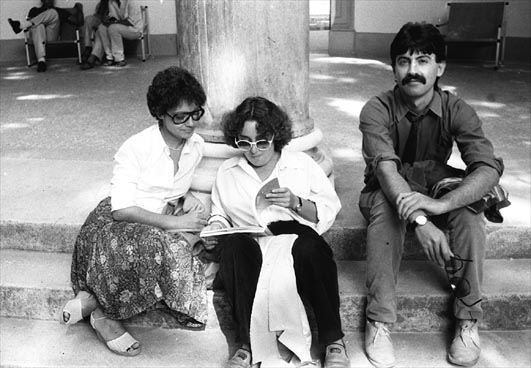
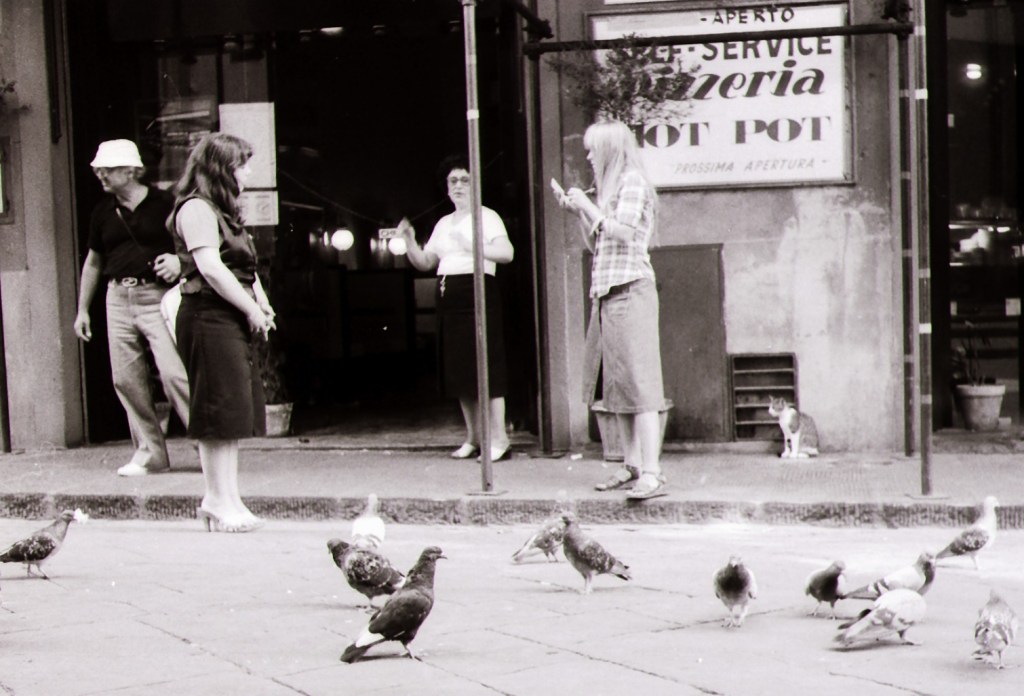
That evening we enjoy a huge meal of pizza, pasta, beans, salad and wine at a self-serve bistro.
Afterwards we just had to have one of their tall but expensive glasses of fruit punch at a street-side cafe.
Then it’s a matter of saying farewell to Paolo and the girls as they head for Roma.
It’s September but you marvel at how hot and crowded the station can be on a Sunday evening.
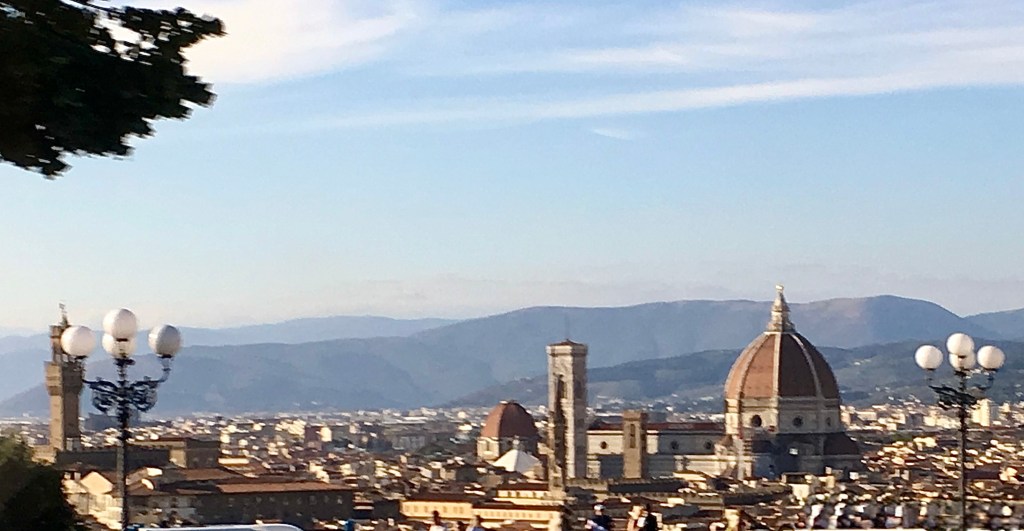
The next day we catch a suburban bus up the hills to the village of Fiesole, and Firenza is lost in the distance. It’s the dome that stands out.
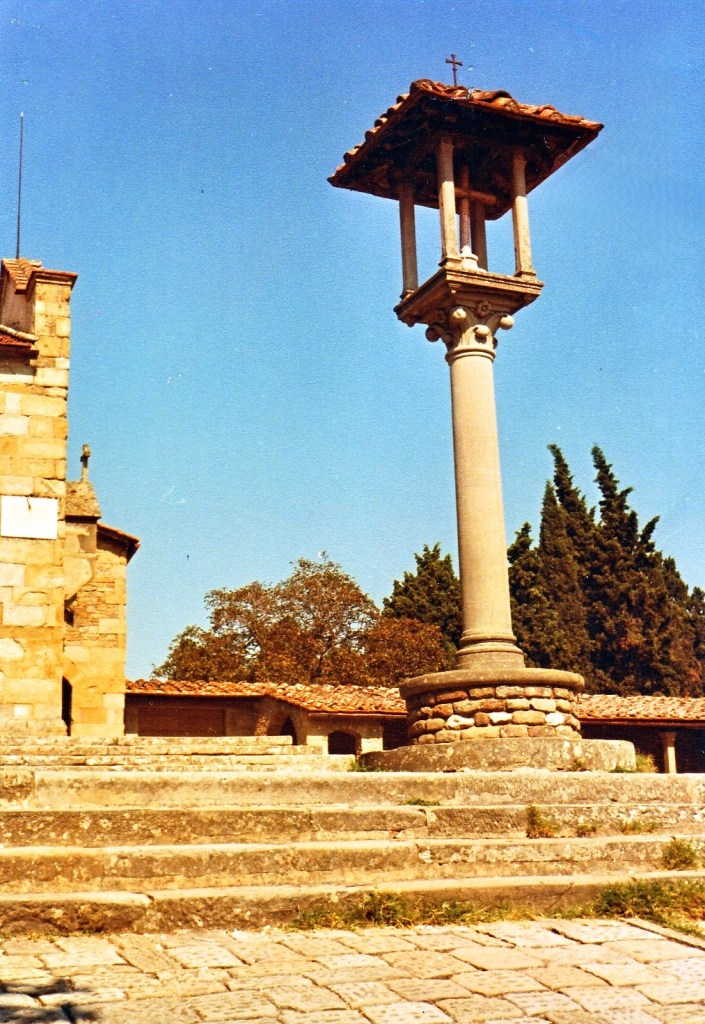
Walking up the cypress-lined pathways to the monastery, you think about how Firenza is full of surprises.
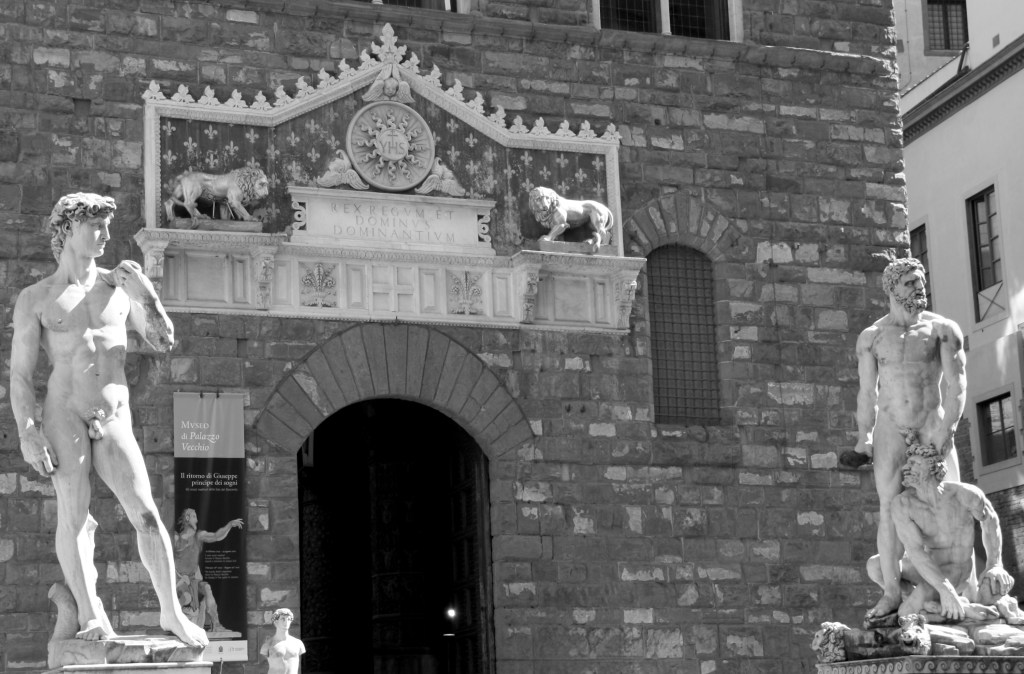
One moment you are taking in the power of Michelangelo’s statue of David. What started as a block of marble was transformed to reveal arguably the ideal form.
Completed in 1504, it symbolised the defence of civil liberties embodied in the 1494 constitution of the independent city-state, the Republic of Florence.
While you cannot help but be impressed by this colossal 5.17 metre-high statue, metre, there are so many other works of art in Florence.
A seemingly unfinished sculpture in a side gallery had the most impact … so personal and so hauntingly good.
The Pieta Bandini is housed in the Museo dell’Opera del Duomo, and created by Michelangelo in the mid 1500s.
Supposedly it is a self-portrait of the artist holding the dead Christ while flanked by Mary and Mary Magdalene.
Known as the Florentine Pieta or Deposition, it depicts the immense pain and burden of death, and stands in stark contrast to the earlier, more serene Pietà in St Peter’s Basilica in the Vatican City. In this the Virgin Mary is depicted cradling the body of Jesus after he has been taken down from the cross, and shows the sorrow and agony of his loss but also the enduring love.
Apart from the brand shops, the bakeries with their pastries and the restaurants, Florence is known for high-quality leather, a tradition that goes back to Renaissance craftsmanship.
While there are stalls in the San Lorenzo market, high-end shops are often found in the city centre.
The Santa Croce area is historically significant for leather artisans.
The Arno River provided the water necessary for tanning, and during the Renaissance the patronage of the Medici family turned craftsmen into artists, creating luxury goods rather than just practical items.
The markets provided good products at reasonable prices – and I still have the wool-lined suede jacket that probably cost about $60 at the time.
It has served me well, whether in the frosts and snow of winter, to use as a blanket or as a pillow on train journeys or airplane flights.
That night we catch the train from Firenze Santa Maria Novella – a tribute to the nearby church of Santa Maria Novella – to Innsbruck in Austria.
It follows the valleys of the South Tyrol the traverses the Alps by means of the historic Brenner Pass which opened in 1867 with no major tunnels.
Being a night train we miss the spectacular views but arrive early at Innsbruck. A beautiful morning but just enough money for eggs on toast and a coffee for breakfast – that is until the banks open and we can change travellers cheques and look for somewhere to stay.
That night we catch the midnight train to Firenze … with dreams of San Marco, the Rialto, Lido, gondolas bobbing at rest in the first light of day.
The fashionable shops with windows and doors so clean you walk straight into them … and end up with a bruise on the forehead.
Expensive icecreams and tea, Strauss waltzes and street magicians, tourists and honeymooners. It was better than my expectations. But as Paolo said: We were lucky with the weather. In summer it stinks.