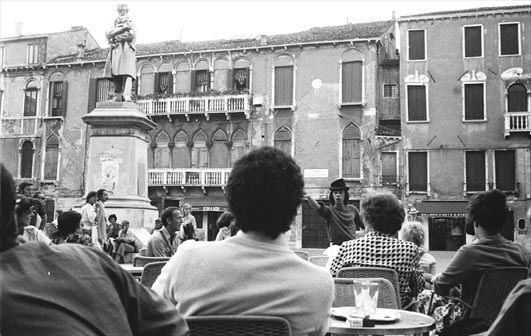
A 1970s visit to one of the world’s great destinations
Travellers do not go to Venice … they arrive.
It can be by plane, by bus, by car or by train.
Venice is a place of 126 islands and 472 bridges.
It was by train that we arrived in the mid 1970s.
The slow clickety-clack of the carriages as it crossed the bridge from the mainland to the islands.
It’s a timeless crossing – one you will always remember.
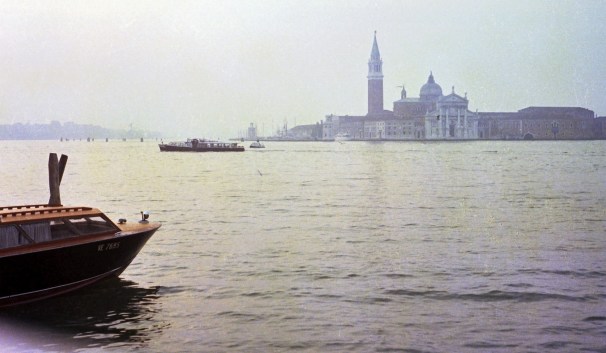
Founded in the fifth century by mainlanders fleeing invaders from the north, they created a settlement built on wooden piles on a marshy lagoon.
Venice went on to become a leading trading hub between Europe and the East, and joined Italy in 1866 as part of the unification process.
There are a variety of water craft that can ferry you from the airport to the island – water boat or water taxi that can be either private or shared.
Venice is connected to the mainland (Venice Mestre) by the Ponte della Libertà, the 4 km long bridge used by trains and cars to reach the lagoon with its railway station and vehicle parking. At the time it was the longest railway bridge in the world.
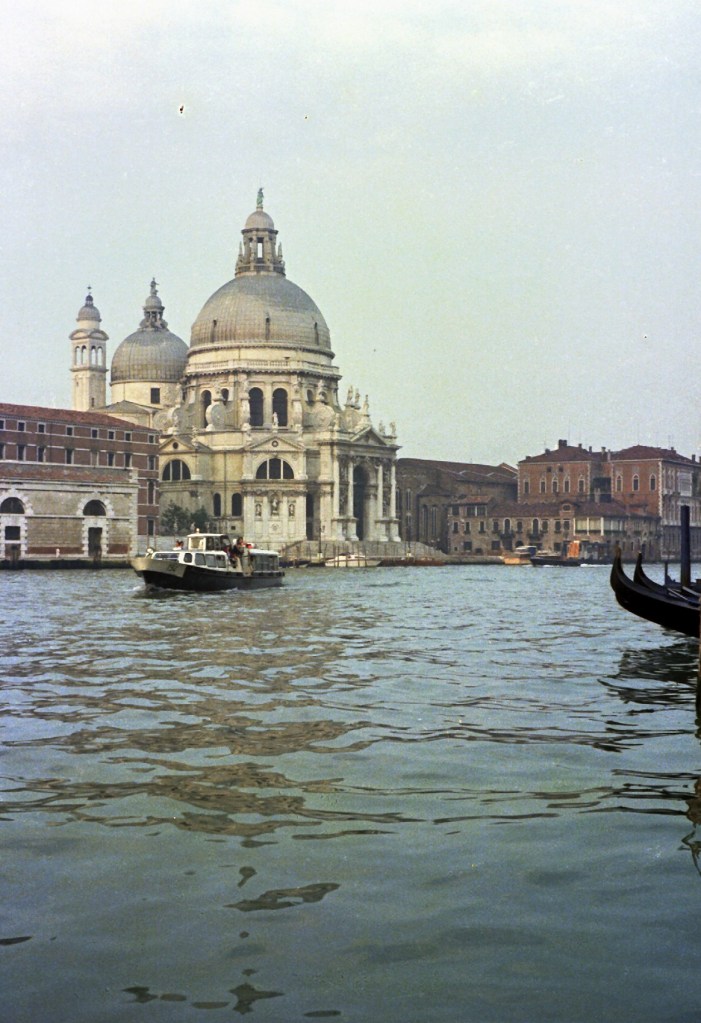
The city is home to many architectural masterpieces. Yet the sinking foundations and the rising sea levels expose it to the elements.
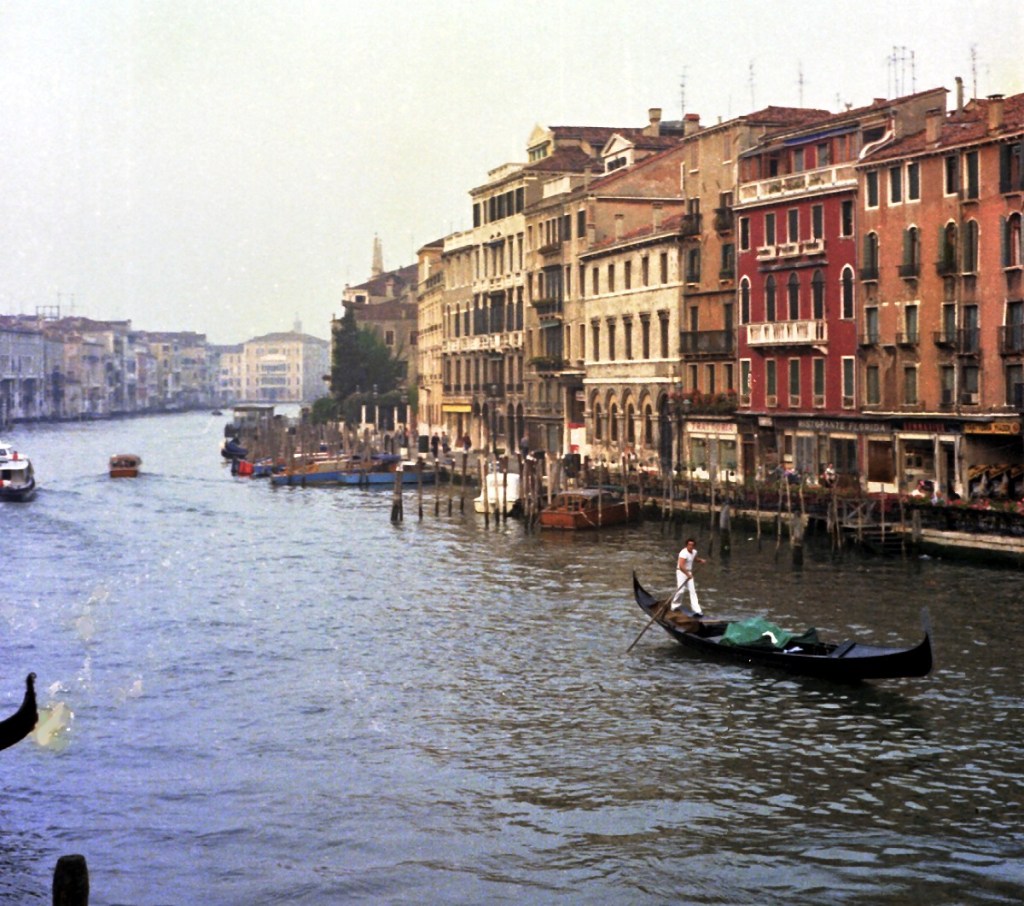
It is the islands and bridges, the canals and the sea that give Venice an amazing sense of romance.
There are no cars. You walk everywhere or rely on the waterways.
There are gondolas, but most use the water taxis – or vaporettas. Food and services are supplied by boats and by barge.
It was a relaxed way of life in the 1970s with less than two million overnight visitors each year compared to more than 10 million in the 2020s.
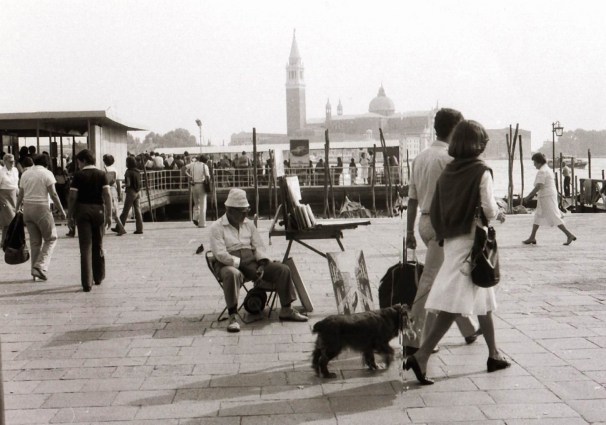
It was less overwhelmed back then – a “living” city with shops being mostly locally-owned and you would find children playing in the streets.
You could find them – kicking a football in a neighbourhood garden or throwing a ball against a wall in one of the many laneways and alleys.
These spaces provided a wonderful place to sit and reflect on the way of life here – busy but not hurried, relaxed but with generations providing hospitality and service.
So much of life bundled up in these series of islands.
Our journey had started very early on a Friday in September. It was a matter of catching the 6.20am bus from Ljubiljana in Slovenia – then part of Yugoslavia and under the control of the Soviet Union.
We were still behind the Iron Curtain yet Yugoslavia was gaining momentum in its bid to break away from the rule of Josip Tito and the Soviet regime.
Tito had created a communist federation with six republics – Serbia, Croatia, Slovenia, Bosnia and Herzegovina, Montenegro, Macedonia – and two autonomous provinces – Vojvodina, Kosovo.
He had stepped away from the Soviet Bloc to create a socialist federation that philosophically sat between the US and the USSR.
This balancing act between capitalism and communism led to some interesting encounters – especially in Serbia and Croatia.
While the bus journey to Trieste in Italy was only 100km, there was a convergence of time zones and a long wait at the border crossing as passports were checked.
The autumn weather is pleasant. A sunny day rising out of the morning mist.
Finally we drop down into the old port city. We are in Italy.
A big, busy, old city with graffitti, university, big hospital.
Across the road from the bus depot is a bar-cafe. We grab a table and order spaghetti … for breakfast. Washed down with a reasonable chianti and some dry bread.
If I die today I will die happy. I have had spaghetti in Italy. There is not much more to life in my expectations.
When you sit in the classroom of a high school in a country town in Australia and find yourself looking out the window … you never think you will actually be here. But you are.
Enjoying the bowl of spaghetti in that street-corner cafe in Trieste, you think back to those days and nights at home on the family farm.
Mum would make tinned spaghetti on toast of a Saturday night. In the ’50s spaghetti and chow mein was something of a change from the meat and vegetables from the paddocks.
An Italian family had bought the farm across the road and we would ride to school with them. Old Sam had fought on the Allies side in World War I.
His wife Rosa made beautiful spaghetti. They had two boys that we would play football with, learn to drive, discover the mysteries of Old Sam’s vino cupboard.
The family would get fresh milk from us and we would get asparagus from them.
Mum would teach the family English and they would open up a new world for us kids. New tastes, new levels of understanding.
After football of a Saturday the boys would come to our place for something to eat before going out for the night – the drive-in, maybe the pub or the movies. Mum would make us spaghetti. By this time it was the real thing … not tinned.
If we went to their farm we would have veal or small pieces of steak, salad, pasta duro and a bottle of beer.
It took years before we found out they didn’t like spaghetti and would rather Mum’s traditional Australian meals of steak, lambs fry, lamb roast or chicken. At the same time I was always wondering why I couldn’t get a meal of spaghetti from an Italian family. We had both been caught by the good manners of our families.
It was a great moment when the realisation hit us.
And that’s why this September moment was so special. The glass of wine was for the friendship and love the family gave us.
The vineyards of the Italian countryside slip past as I gaze out of the train window. Try my Italian learned from those early days in a farming community … one of the largest Italian communities in Australia.
Fellow travellers included Paolo, Angela and Valerie. He openly admits to being the most talented cancer specialist in Italy … at the age of 28. He’s been to the US. The girls are medical students from university.
Finally the train crosses the causeway into Venice. Venizia. This crowded, fairytale city. The weather is beautiful. We are lucky. It’s busy but Paolo finds rooms at a clean hotel. It is expensive compared to where we have been but we are lucky to get something when the weather is so good.
Paolo says it’s better than summer as the place can become quite dirty and smelly.
Then we notice everything in the hotel room is on a lean … and there is not a straight line or wall. Such is the sinking feeling of this city built on water. Then there is a view … of the canal. You have to pinch yourself.
It’s as if you are part of the Thomas Mann novella Death In Paris, and the 1971 Luchino Visconto film adaptation starring Donald Sutherland.
There’s a serenity about the view yet also the feeling that history is gliding past in the shape of a gondola.
You get lost trying to navigate the streets of Venice but at the same time discover exquisite spaces and places. Along the way you find out more about yourself. What you have learned in life so far.
We enjoy a good evening meal of spaghetti volognol (clams), fish, salad, wine, cheese and coffee.
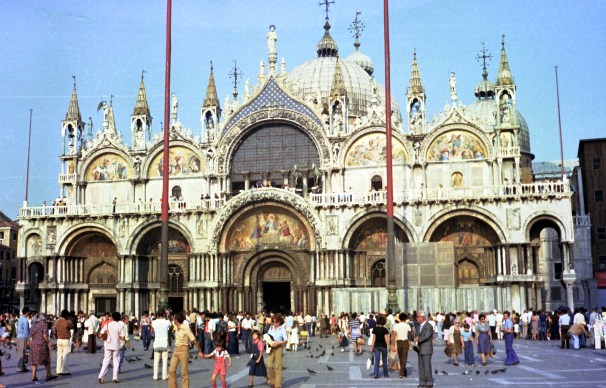
The traveller quickly finds that ice-creams in the main square, listening to classical musicians can cost a lot. It’s much easier to buy one from around the corner and walk through the plaza of San Marco. It’s the same with any food. Much like the Avenue des Champs-Élysées in Paris.
On a beautiful autumn morning it is so nice to walk through the streets and alleys, across the squares and along the canals. An unbelievable place. It’s a great time of the day.
The place is just coming to life. Clean and washed down ready for another day. The fog slowly lifts.
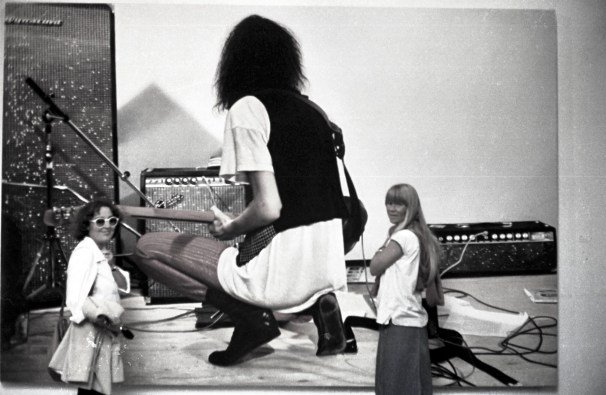
We catch a vaporetta to the Venice Biennale on Paolo’s recommendation – a cultural exhibition founded in 1895 and which alternates each year between art and architecture.
What a different way of looking at things. A whole island devoted to art … modern art … living art.
There is a building devoted to major countries while places such as Australia share spaces. In some cases whole rooms are given over to one work.
Loved the photographic record of one person’s journey from the train station to the room it is hanging in. The body language painted on to photographs. The nuclear morning that served as a warning.
Some pieces are simply erected in the open. People sit on park benches and get involved.
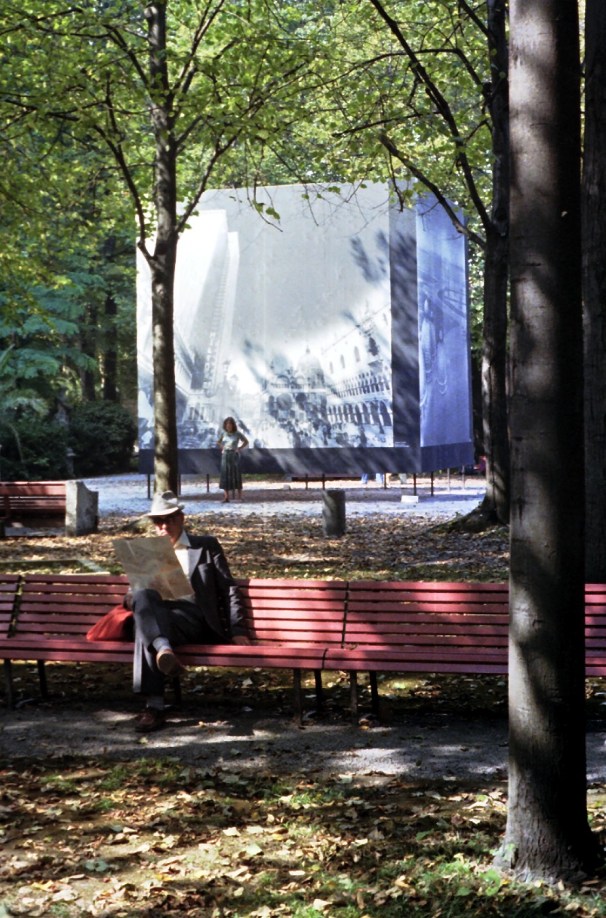
Years later, Noosa Regional Gallery director Merton Chambers was to explain it to me: The reason modern art takes on such a fresh look is that it is being done by living artists, not dead ones.
That night we catch the midnight train to Firenze … with dreams of San Marco, the Rialto, Lido, gondolas bobbing at rest in the first light of day.
The fashionable shops with windows and doors so clean you walk straight into them … and end up with a bruise on the forehead.
Expensive ice-creams and cups of tea, Strauss waltzes and street magicians, tourists and honeymooners.
It was better than my expectations. But as Paolo said: We were lucky with the weather. In summer it stinks.