Changing faces, changing places with a train journey from Perpignan to Paris
We re-enter the remote world of winter. Bare vineyards, the smoke from evening fires rises from the farmhouses and mixes with the descending fog.
It is the south of France in the early 1970s. Trevor and I have decided to take the night train to Paris from Perpignan.
We figured we had just enough money to make it back to London.
He had sold blood in Malaga so still had a five pound travellers cheque. I had a $US10 travellers cheque. That would get us on the train and ferry.
Even enough for lunch in Paris and something to eat on the ferry. We could try and hitch from Perpignan but one day without a lift, like when we landed in France, and we would be unable to afford the train.
There was a postal strike in Great Britain so we could not arrange money transfers.
Everyone had been expecting to get money sent on from London but the strike had stopped that. Others were getting around it by getting it sent direct from friends and relatives back home in Australia.
It was a time long before credit cards and mobile phones.
You changed currency at the borders of the different European countries as well as having passports stamped.
We had spent a month in a villa overlooking the Mediterranean Sea just to the east of Malaga in the south of Spain. Eight Australians who had been working in London and had headed to Spain – some in a Bedford van fitted out for camping, others hitch-hiking as well as relying on ferries, buses and trains.
There was a few days in Morocco … and a lot of walking.
Somehow we had all fitted into the van to follow the coast up to Barcelona.
The original six in the van were going to drive on to Italy, Yugoslavia and Greece.
The van trip from Malaga to Barcelona involved endless games of 500 and gin rummy, living in and out of each other’s pockets, reading each other’s letters from home.
Now it was time to say goodbye for now. Trev and I were to catch the 19.07 to Paris.
The bare branches of the trees and the grape vines gave the landscape a sense of mystery. A change in direction. A sense of wondering what was ahead.
Yet the carriage was warm – one of those with compartments off a passageway.
We talk with the four men in the carriage. Farmers heading to the city.
I tell them I’m from a farm. One shakes my hand and says they are not the hands of a farmer.
He was right. When younger we would work on the farm at weekends – carting hay, picking potatoes, carrots, cucumbers, tomatoes.
It was also a way of earning extra money to pay for the boat ticket to London a year ago.
Both of us had been working in a bank. Softer hands. No callouses.
Yet the men are welcoming – jubilant. They know each other well and are happy to share the cabin with a couple of young Australians.
We share sardines, rolls and wine – no better way to make friends.
We are different to the two travellers who stepped ashore in France about eight weeks ago.
Dan Fudge, our Canadian travelling companion through northern Spain and Portugal, would have been proud of us.
Then a moment never to forget. The men decide the sleeping arrangements for our night journey to Paris.
Some sleep on the floor, the others in the luggage racks, leaving Trevor and I to sleep on the seats.
It was such a good feeling. Different from the way most travelers claim their corner of the carriage.
Instead, everyone works in together and make the most of the journey. A lesson for life itself.
We arrive in Paris at 6.30am. The magnificent old station is on the left bank of the Seine River.
At this time of day and after such a journey a cafe au lait and croissant never tasted so good. Reminded me of all those cups of tea or coffee I’d had at railway stations in Australia. Distinctive colour, distinctive taste.
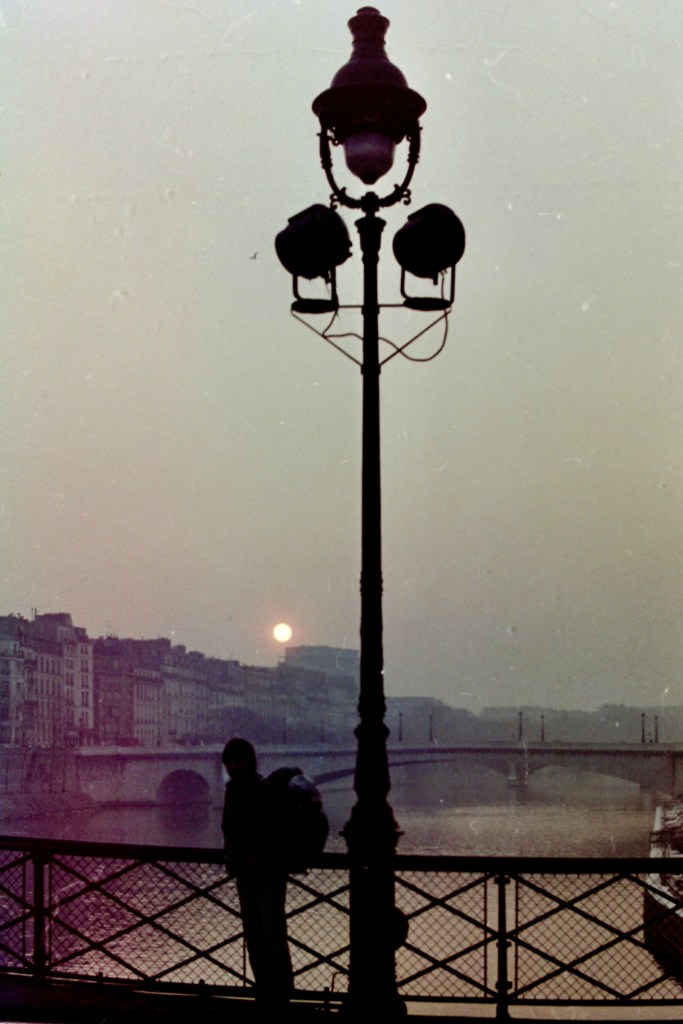
After cleaning up in the public toilets, it’s time to make our way into the new day. Patches of snow are on the ground in sheltered areas, such as the corners of buildings and along the bridge across the river.
But it’s a clear day. Not cold. Early March. Early spring. We walk by the Seine as the thick sun rises.
We pass Notre Dame and into Montmartre just as the meat is taken from the warehouses to the delivery vans. It’s like a movie set.
We check the train timetable at Gare du Nord then find a place to exchange our last travellers cheques. Here we were, two Australians in Paris with just enough money to live out a day that you dream of – exploring Paris.
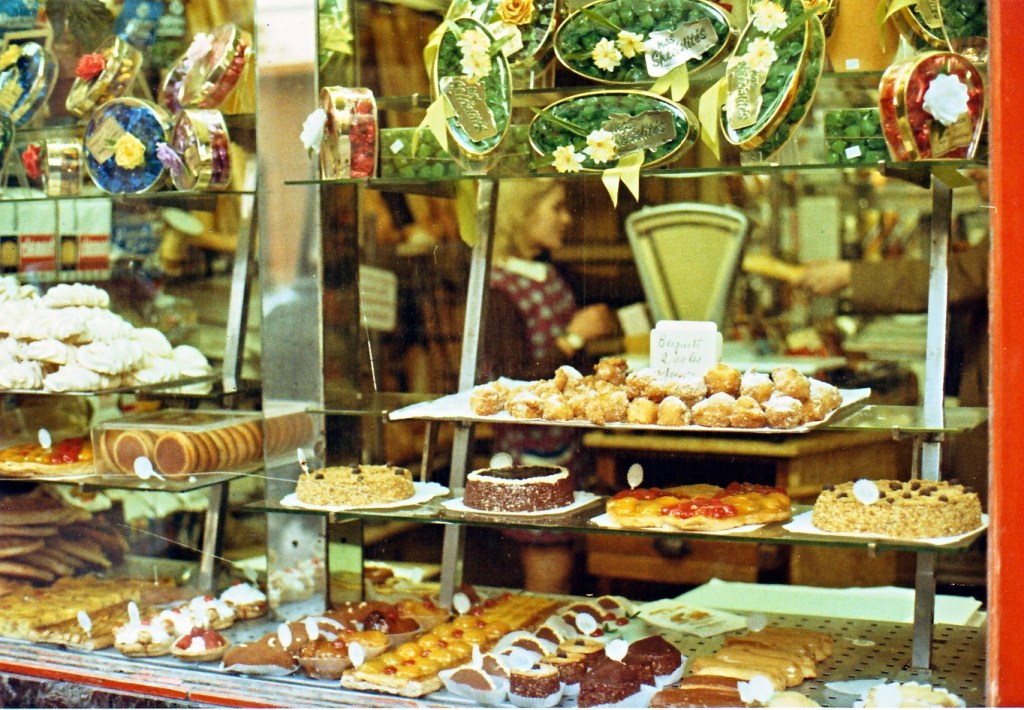
Out into the street and drift past the windows of the boulangeries. All of those cakes and pastries, all of those croissants. We push inside and get a decent breakfast. We have enough money to buy our tickets then have six hours on the town.
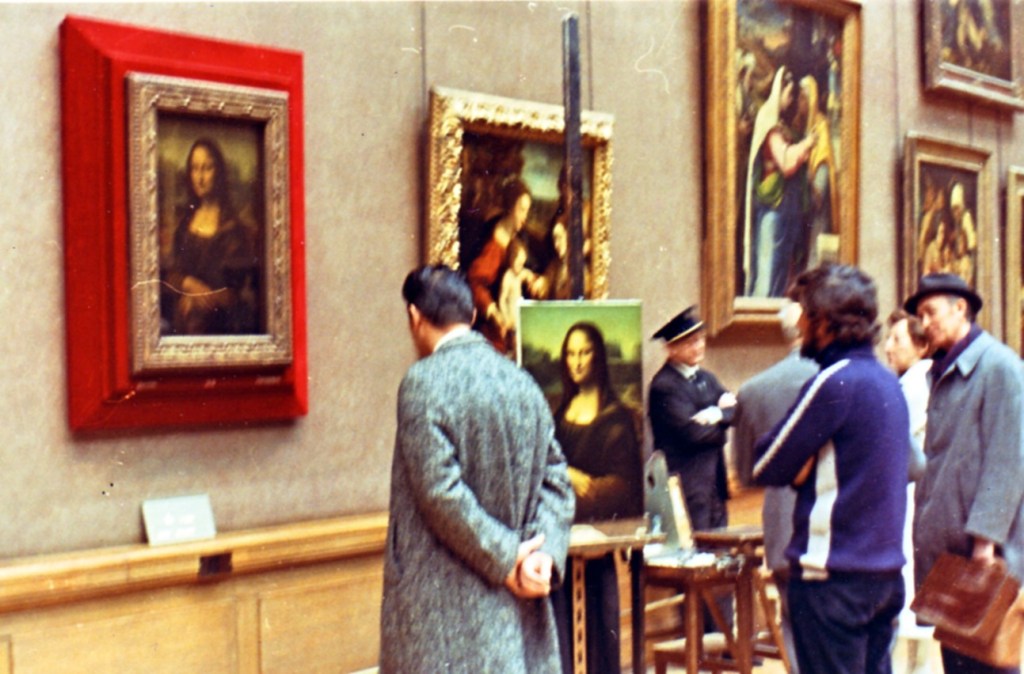
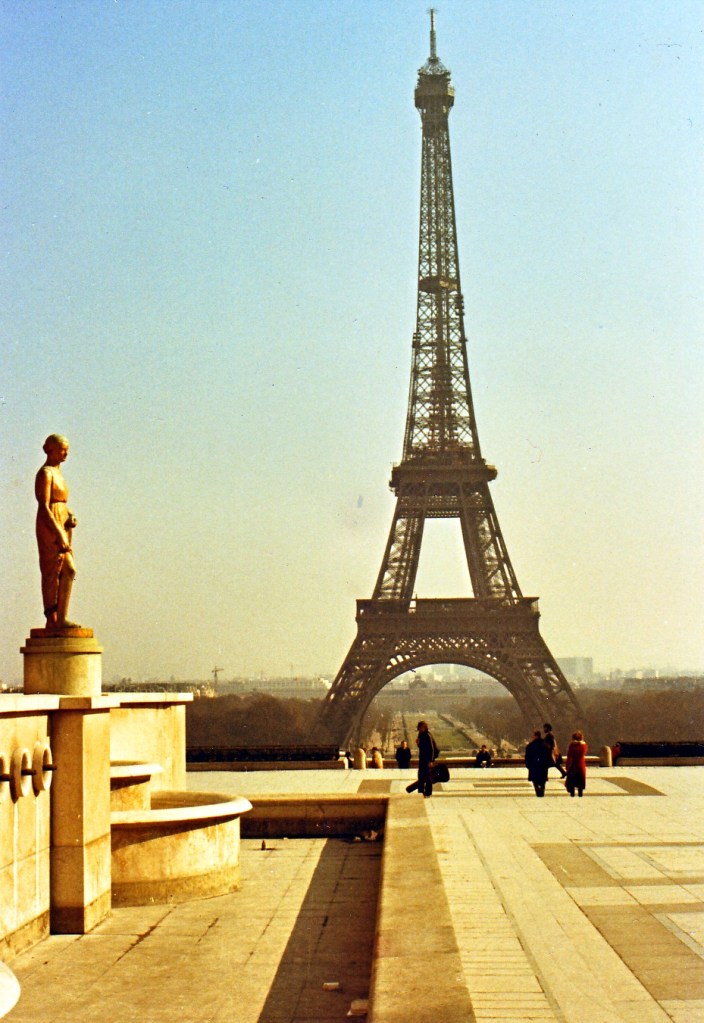
Beers at a brasserie outside the Eiffel Tower, metre-long hot dogs at the Louvre. Walk through the Concorde, along the Champs Elysee to the Arc de Triomphe.
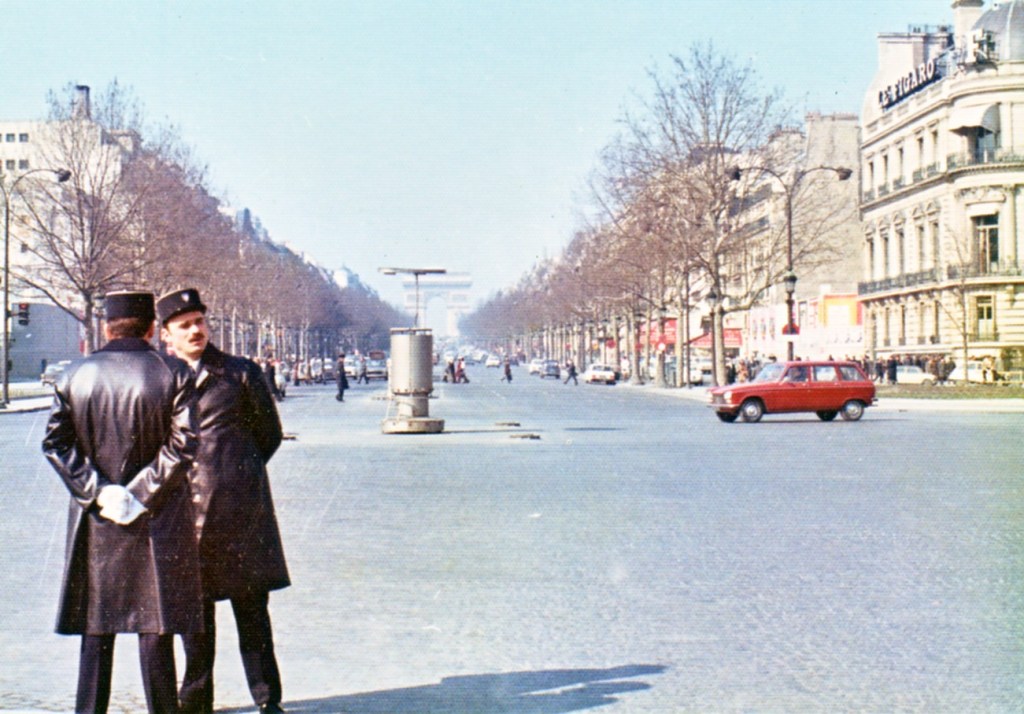
The sun is out in a cloudless blue sky. Crisp air, a beautiful city. Along Pont de Neuf. Short black coffees and dinner on the Left Bank. Intrigued by the girls of Paris in Rue St Denis. An eye-opener for us.
Then it’s time to stock up with ham rolls and wine for the train trip and ferry crossing.
The train leaves at 22.00. There is nothing quite like the feeling of departure. The carriages slide away from the platform. People say goodbye. Others look forward to an adventure together … or on their own.
We are settled into a cabin but sit up for most of the night crossing by ferry. There’s even the chance to have a whisky and ice to celebrate the sunrise.
We slip into London. There’s the relief of walking down The Strand. Seeing the buses. The taxis. The bowler hats of those working in the business, financial and legal sectors.
It was really quite something to hear the accents of the British seamen on the ferry. It’s one thing to get by with the language in France, Spain and Portugal but another thing to have a conversation. Even if it’s who won the football at the weekend.
Trevor catches the train back to Southampton and I head to the post office and the bank.
where Adrienne will be waiting. Caitlin heads for a hostel in the East End. Then it’s off for a few pints of Guinness with Eric at his pub near Oxford Circus.
Eric was in the merchant navy during World War Two and spent eight days in Perth, Western Australia.
He maintains he cannot remember any of them … the hospitality was that good.
In return he was so generous to our group of colonials who had been working just around the corner from the Black Lion and French Horn at Hanover Square. We had been employed by a travel company as computer programmers.
It was the very early days of computers. The hard copy accounts for the company were being transferred to computer records.
The information would be punched in and then we would take the files to the University of London to run the program.
The university computers were like those in the early James Bond movies. Cabinets more than head high with spinning discs – and the room took up the size of a large house.
Today, that information and data fits onto a mobile phone.
Then there’s the surprise of having drinks with parachute enthusiast Steve Marrosszcky.
He was one of six from Newcastle we met on the boat. They were members of the Maitland Skydiving Club and on their way to Bled in Slovenia for the world titles.
Steve was working in the Netherlands and just flew over to London from Amsterdam.
That was a change from his aim of parachuting across the English Channel.
He wanted to be on a plane lifting off in one country and for him to land in another.
He already had two roman candles … his main parachute not opening properly.
One time he his struggling with his emergency chute that had become tangled with the main and he felt this THUMP.
What the heck? It’s the ground.