A journey into Tasmania’s high country
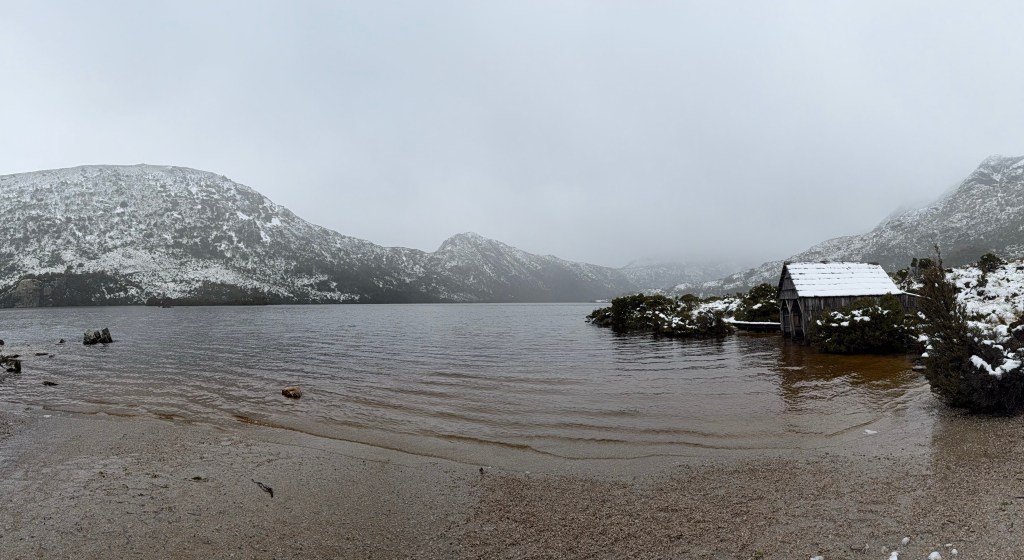
It was like pages out of a storybook.
We landed at Hobart International Airport about 10am and followed the prompts to the hire car.
We would be driving north through Tasmania’s picturesque heartland.
It followed a 4am start to get to the Brisbane Airport domestic terminal in time … no traffic delays on the motorway from the early morning rush of tradies and commuters looking for a 6am start.
We must have had a coffee and maybe a croissant at the airport – or maybe a toasted sandwich, as we didn’t trust the food on the plane.
However, there was a $15 voucher that came with the plane ticket so we used it up on snacks to have in the car. Maybe a juice or hot drink – whatever, it was forgettable.
The way we selected to drive from Hobart was through Richmond – up the Coal Valley to the town of Ross and then cut across to Deloraine.
The Tom Quilty Gold Cup was to be held in Tasmania – the premier endurance horse-riding event each year in Australia.
Riders set out to complete 160km (100 miles) in less than 24 hours.
Each year it is hosted by a different state, on a rotational basis. In 2024 it was South Australia, in 2025 it was Tasmania and in 2026 it will be Queensland’s turn … our home state.
Queensland had a strong contingent setting out for Sassafras, in the north of Tasmania, which was to be the ride base.
Our roles were as a strapper in a team that was assisting a rider at the transition points, while the other was a media delegate.
There was some free time before the ride started, so many interstate competitors took the chance to experience the Island State’s food, wine, scenery and hospitality. Then there was the native wildlife to look out for – kangaroos, koalas, penguins and wombats.
That’s just to name a few of the attractions. After all, it is home to the Tasmanian devils.
Sassafras is a small farming community, just outside of Sheffield, and where the endurance horse ride was to take place.
The official photographer for the Tom Quilty had already been up to the Cradle Mountain National Park, near the ride base.
It was her photos that inspired us to take the opportunity as well.
Two of the veterinarians who would be checking on the health of the horses were amazed that they could experience the world-famous hiking and tourism destination within a two-hour drive of Sassafras.
Some of the competitors who had driven down from Queensland and crossed Bass Strait with their horses on the ferry were keen to see the penguins come ashore at Devonport.
No, they didn’t go to the nearby town of Penguin to see them.
Being an island, Tasmania is naturally different to the mainland. Originally connected to the Australian continent by a land bridge, it was inhabited by an indigenous population at least 35,000 years ago.
The land bridge was broken more than 10,000 years ago.
The first reported sighting of Tasmania by a European was in 1642 by the Dutch explorer Abel Tasman, then in 1772 a French expedition led by Marc-Joseph Marion du Fresne landed on the island and 20 years later Bruny d’Entrecasteaux established the first European settlement.
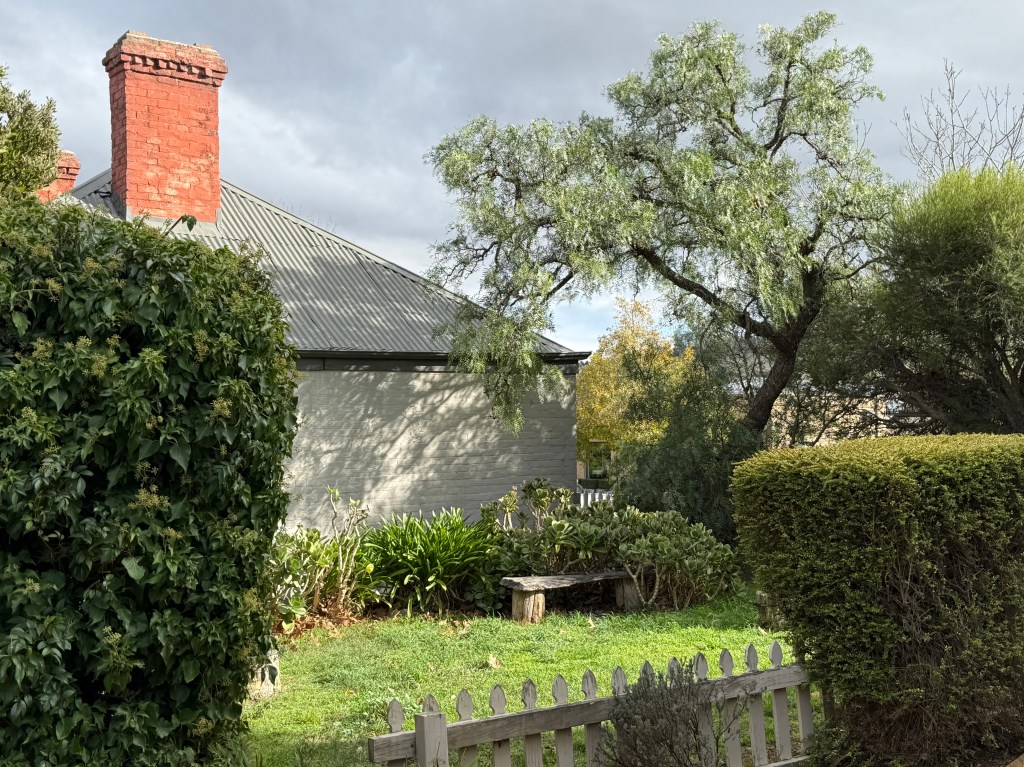
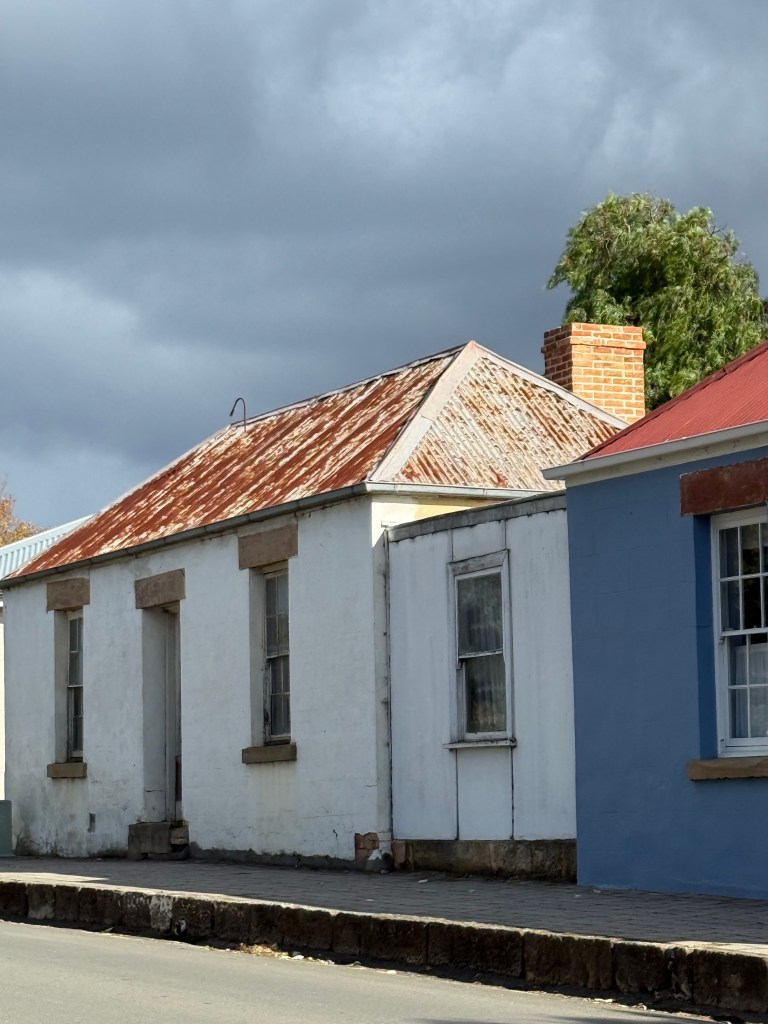
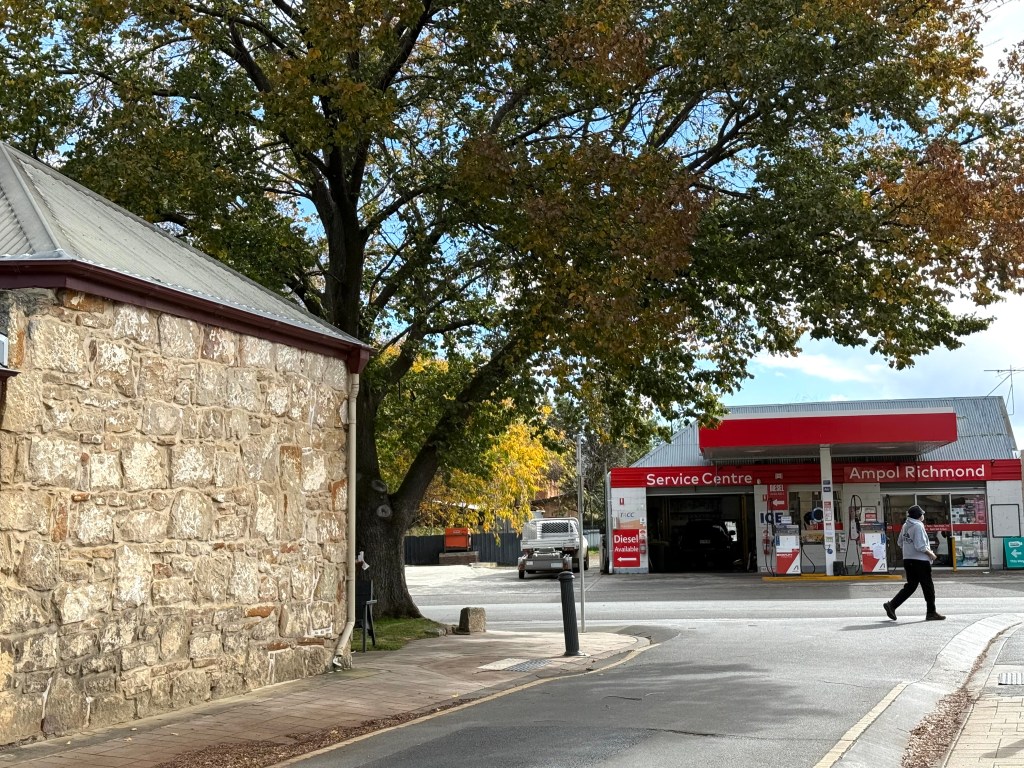
In 1770 British sailor James Cook, a Lieutenant commissioned as captain for the voyage aboard HMS Endeavour, proved Tasmania was an island.
Britain established it as a penal settlement in 1803 and the island became a self-governing colony in 1856 before joining Australia’s Federation in 1901.
The mapping of these previously unknown lands by the early seamen was extraordinary. Their work served other generations of sailors.
In contrast, we had set off with the assistance of GPS and a general knowledge of the geography that had been built up through the years with holidays and work.
We had left ourselves what we thought was a reasonable schedule of being at Sassafras by five o’clock in the late afternoon, to check in and get set up.
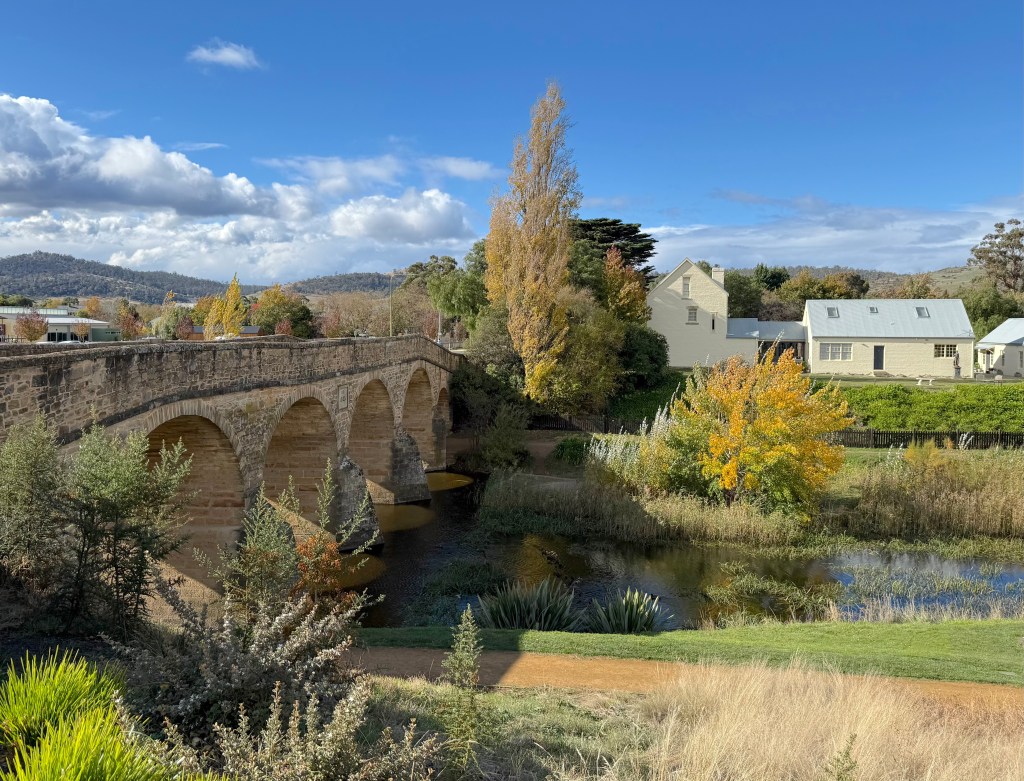
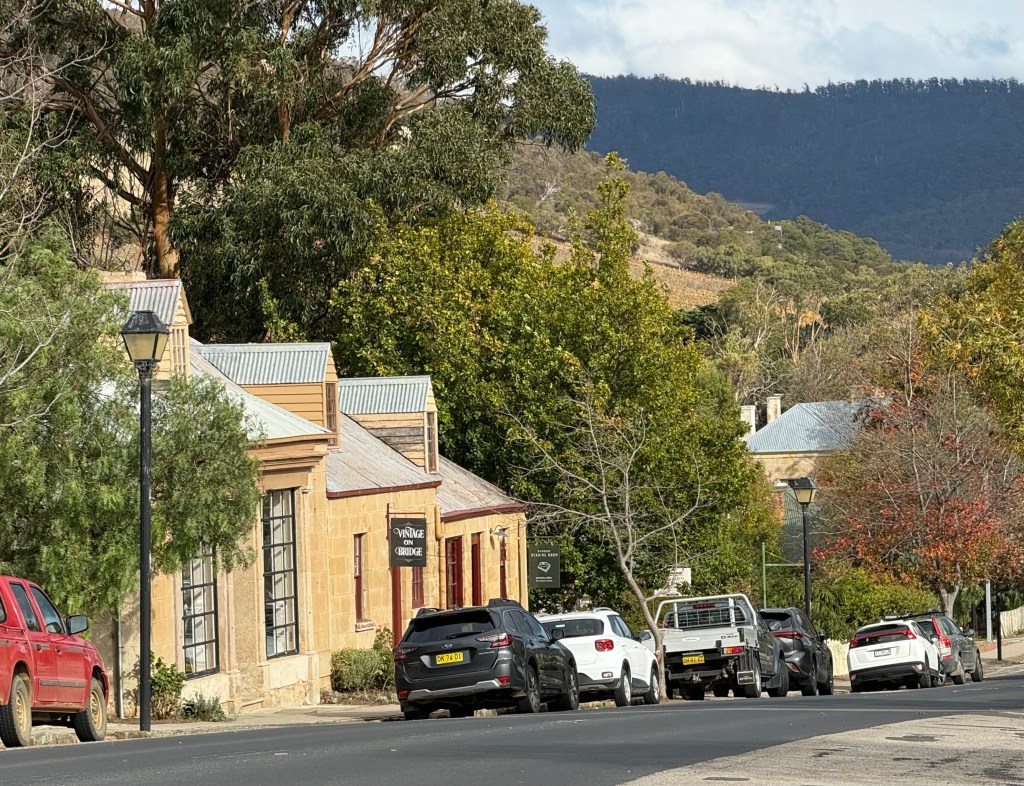
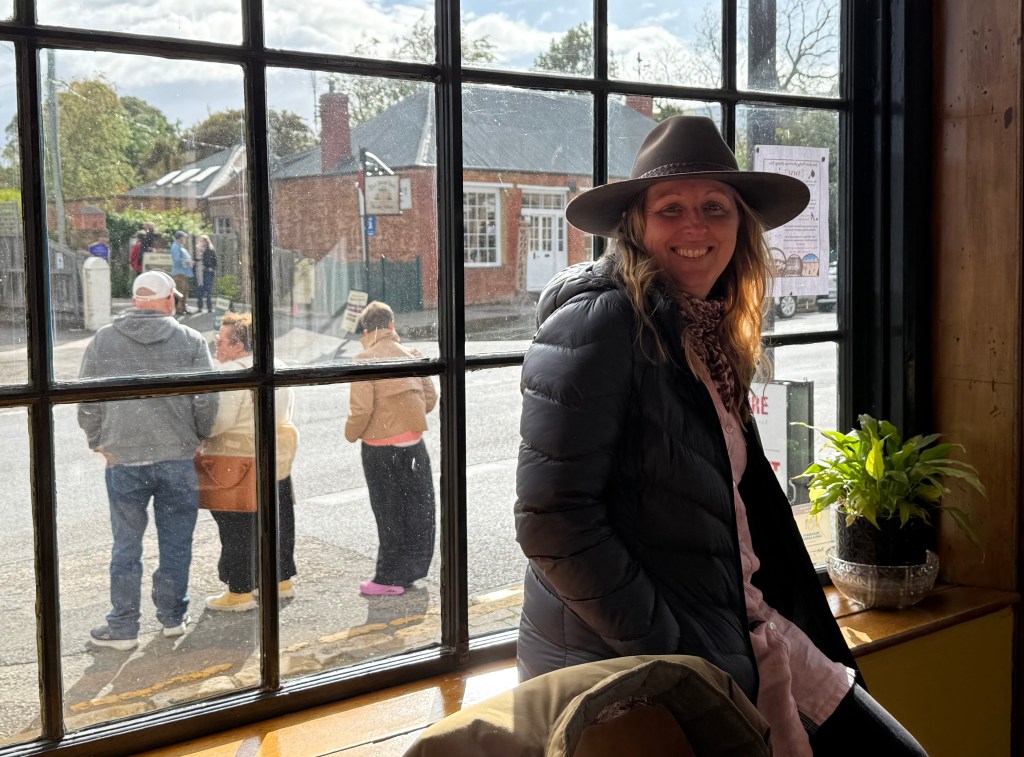
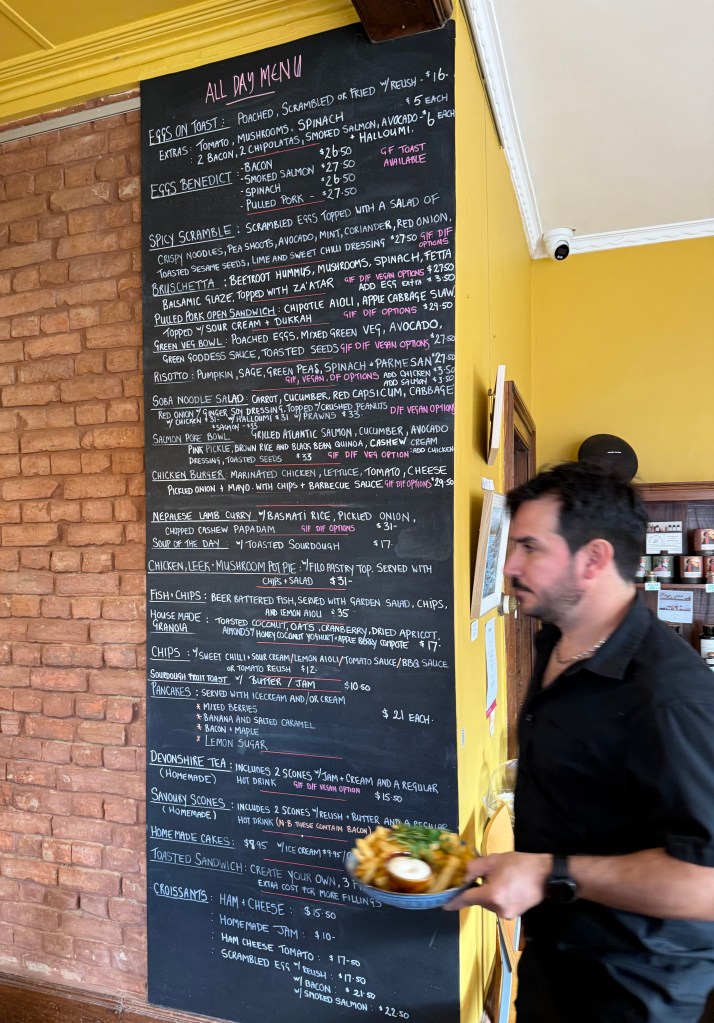
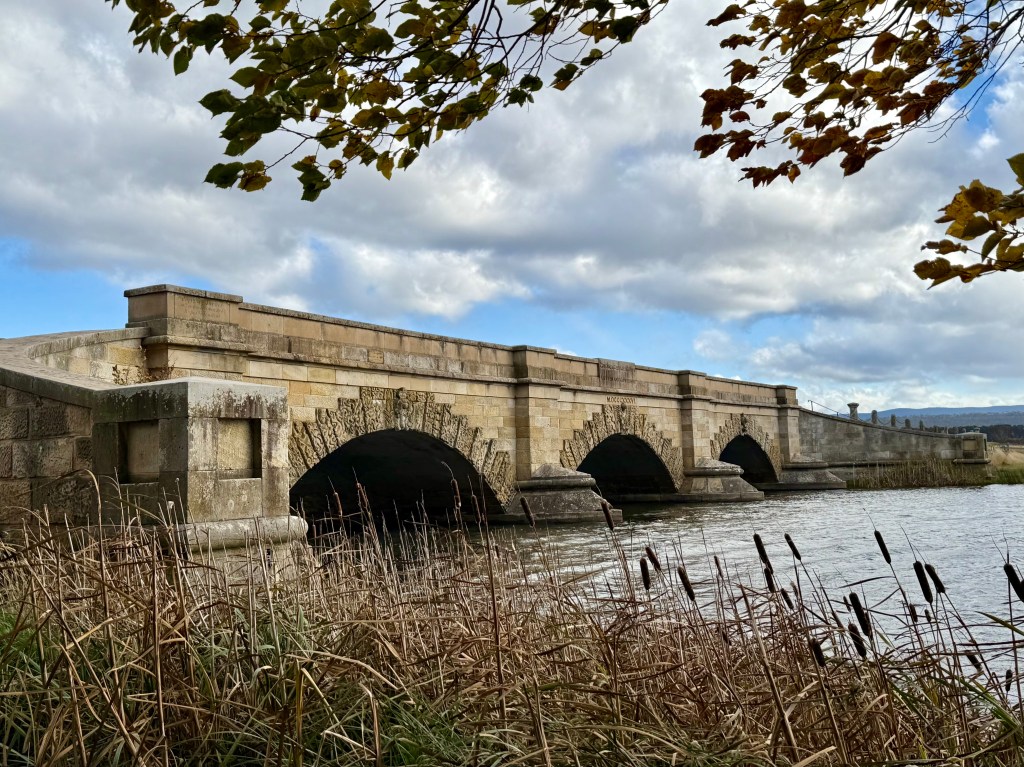
Our first stop was the Ashmore on Bridge Street restaurant/cafe at Richmond, an historic Georgian village famous for its well-preserved colonial architecture, convict history, and Australia’s oldest bridge – second only to Sydney Harbour as the most photographed in Australia.
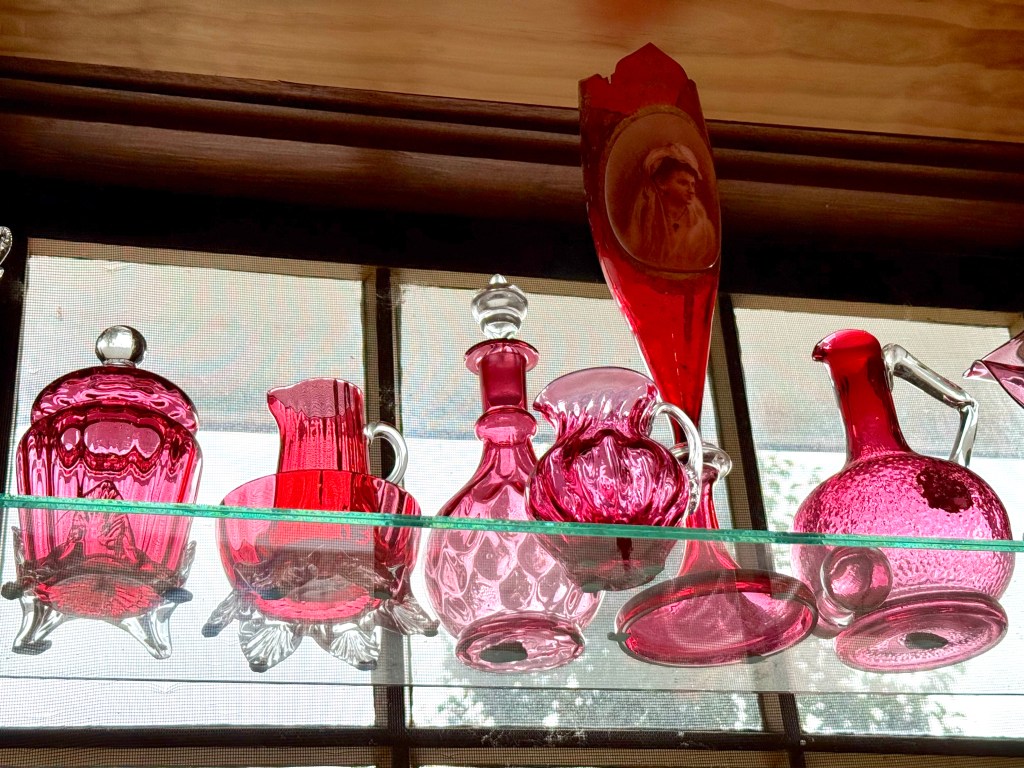
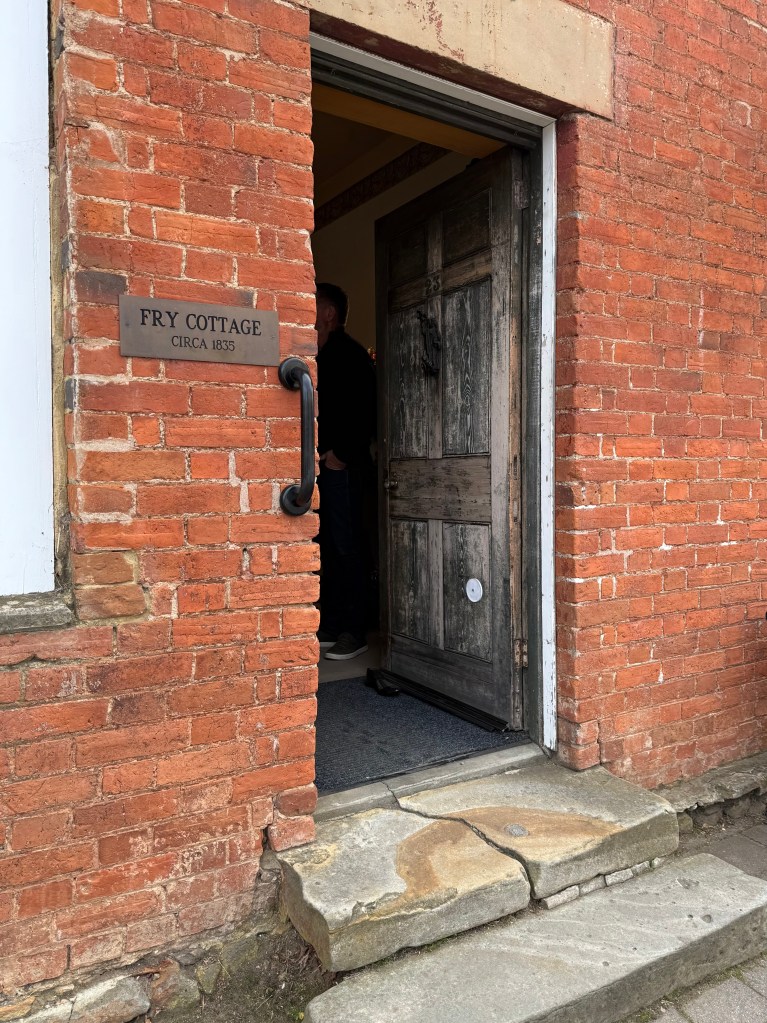
Richmond is also home to the country’s oldest intact jail, and nearby is an original NASA Deep Space Network tracking antenna that was used near Canberra in the lead-up to the first walk on the moon in 1969.
Originally the Orraral Valley Tracking Station that supported the Earth-orbiting satellites, it became the property of University of Tasmania (UTAS) in 1985 and continues tracking commercial/scientific missions.
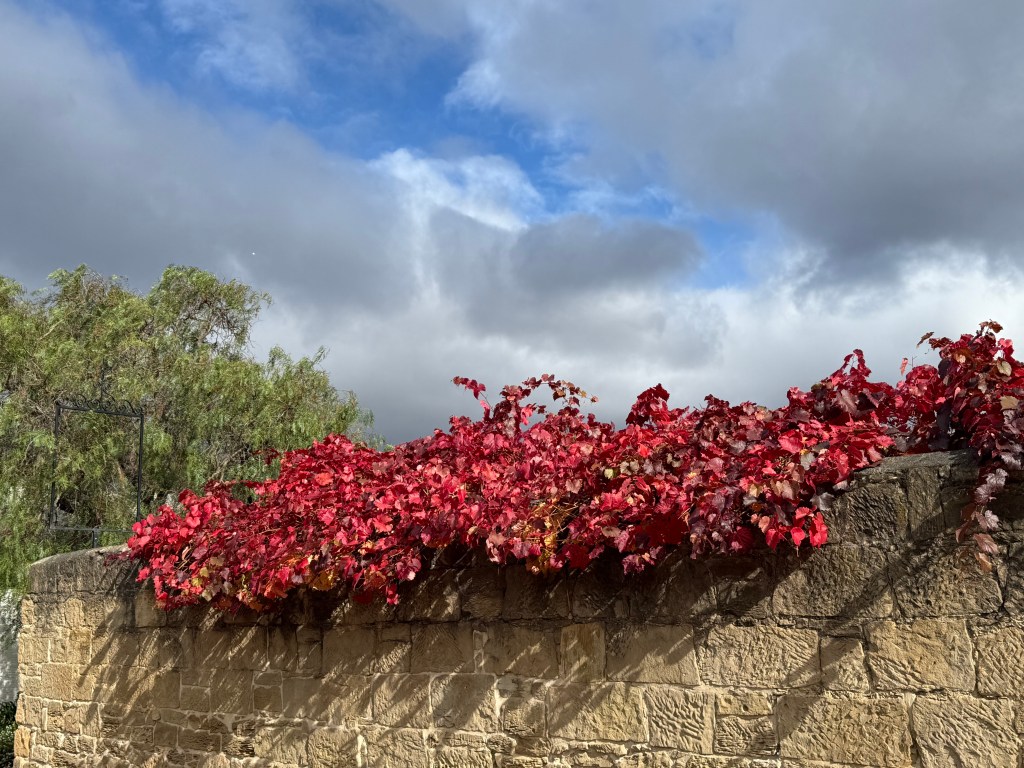
It’s an interesting town to walk around and, being in May, the leaves had started to turn the warm, earthy colours of autumn.
The day was clear but probably no more than seven degrees. Tasmania can be open to some extreme weather and, with the next landfall to the south being Antarctica, you can get these really cold gusts of wind that you feel right down into your lungs.
Yet the hospitality inside the restaurant is warm and the countryside is picture perfect.
We were able to squeeze into the corner, and had a lovely light lunch of curry followed by a chai latte.
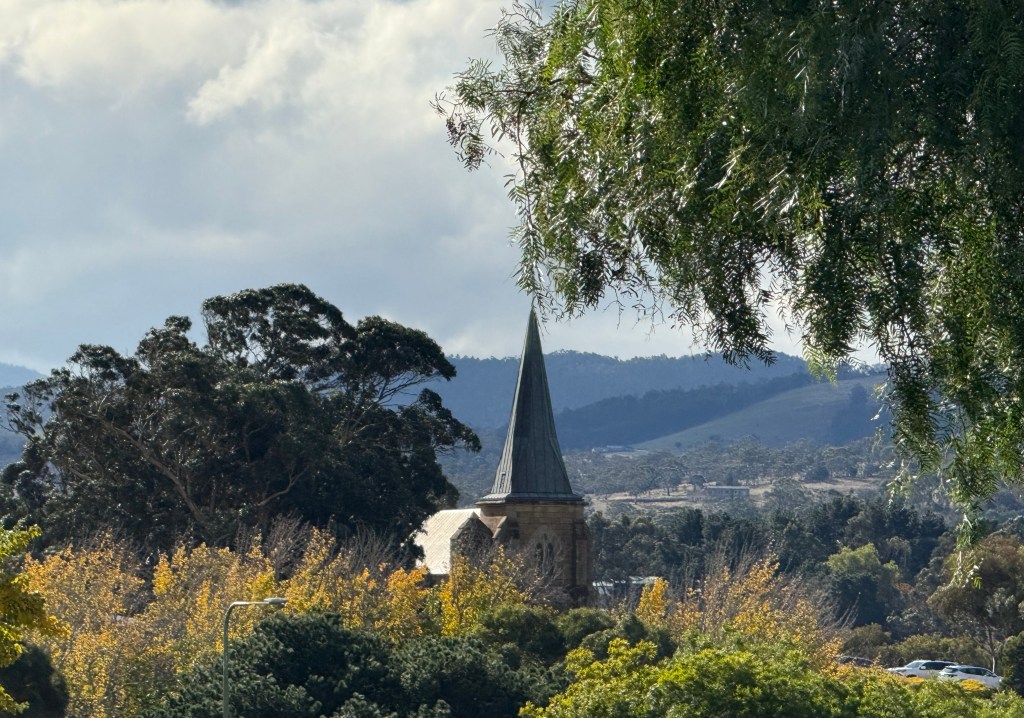
Richmond is such a beautiful little town, complete with the convict bridge and the church on the hill. There’s some really good wineries in that valley – Frogmore Creek, Puddleduck and Pooleys for starters. Then there are the cheeses.
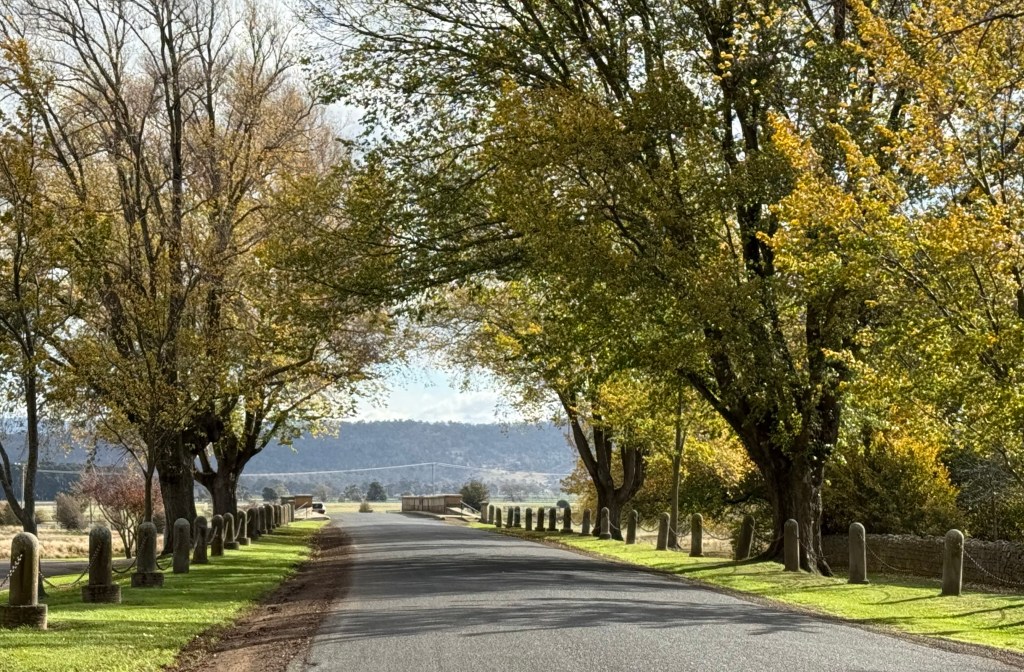
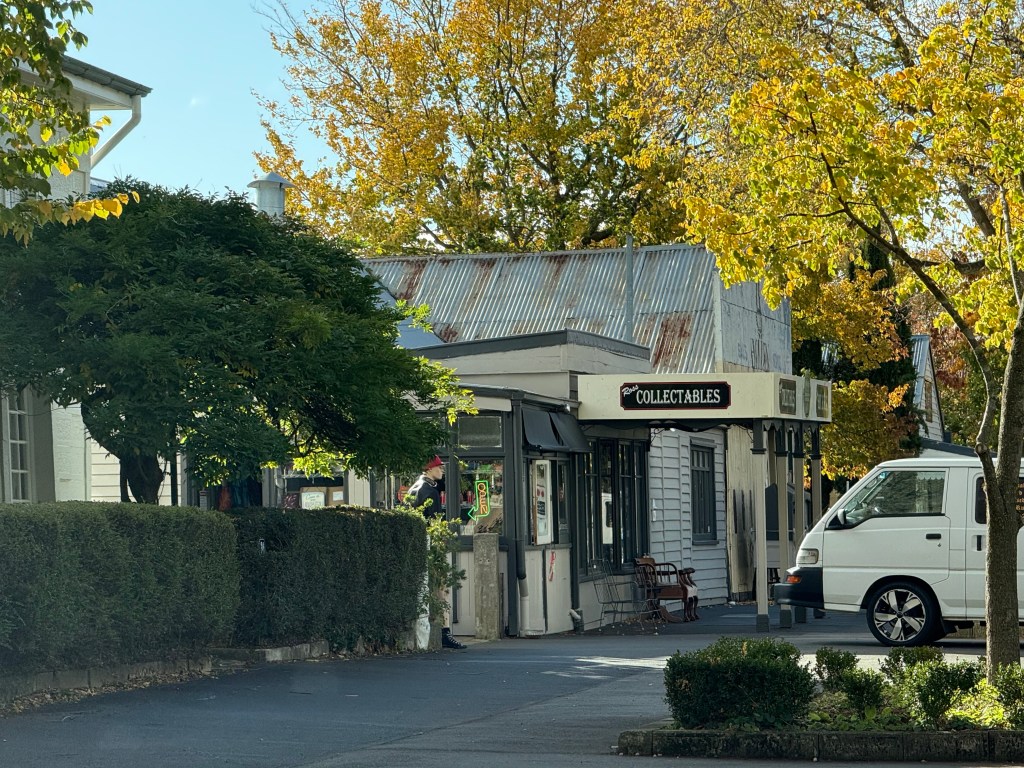
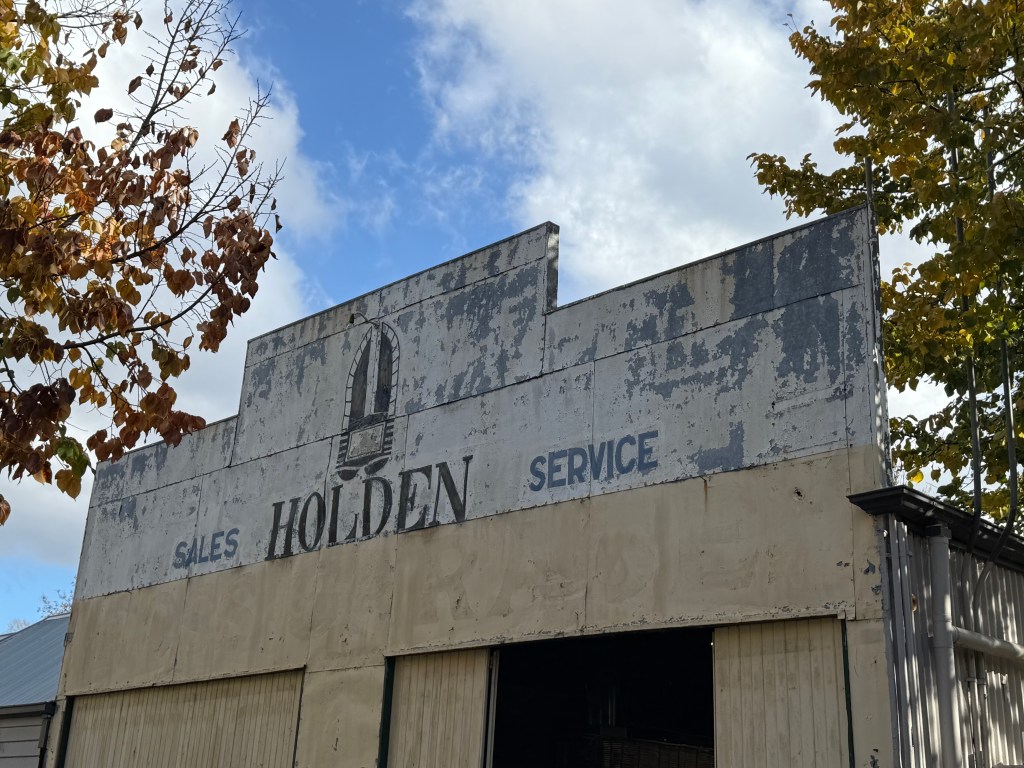
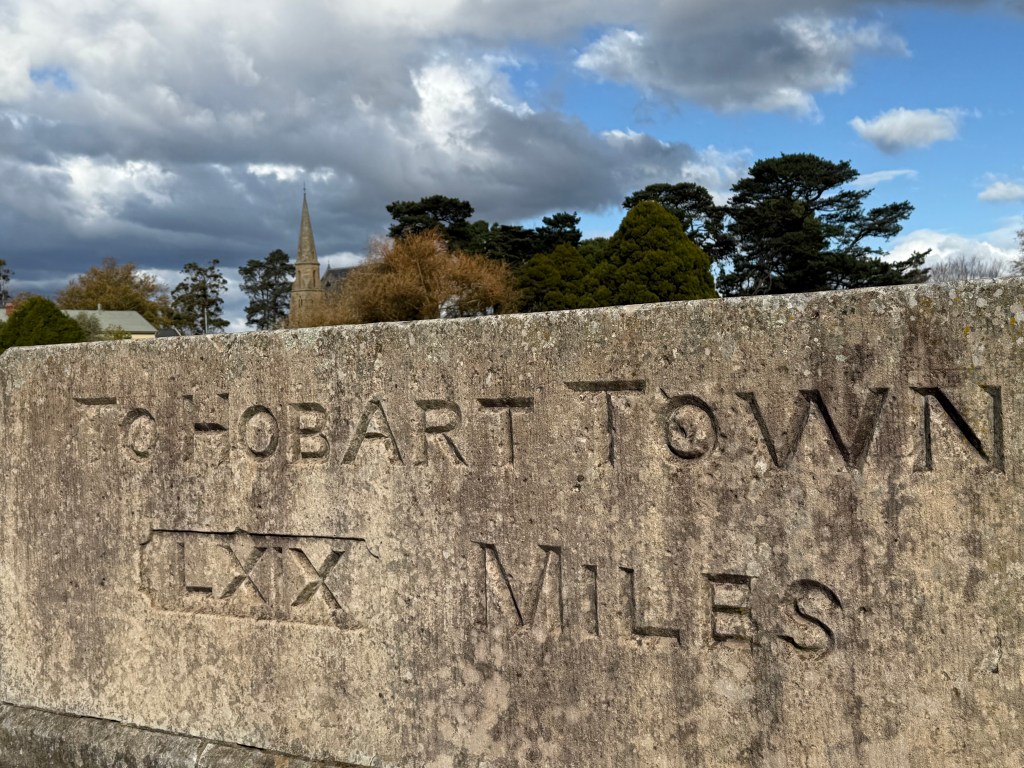
It was good to be back as there is a charm about the island state.
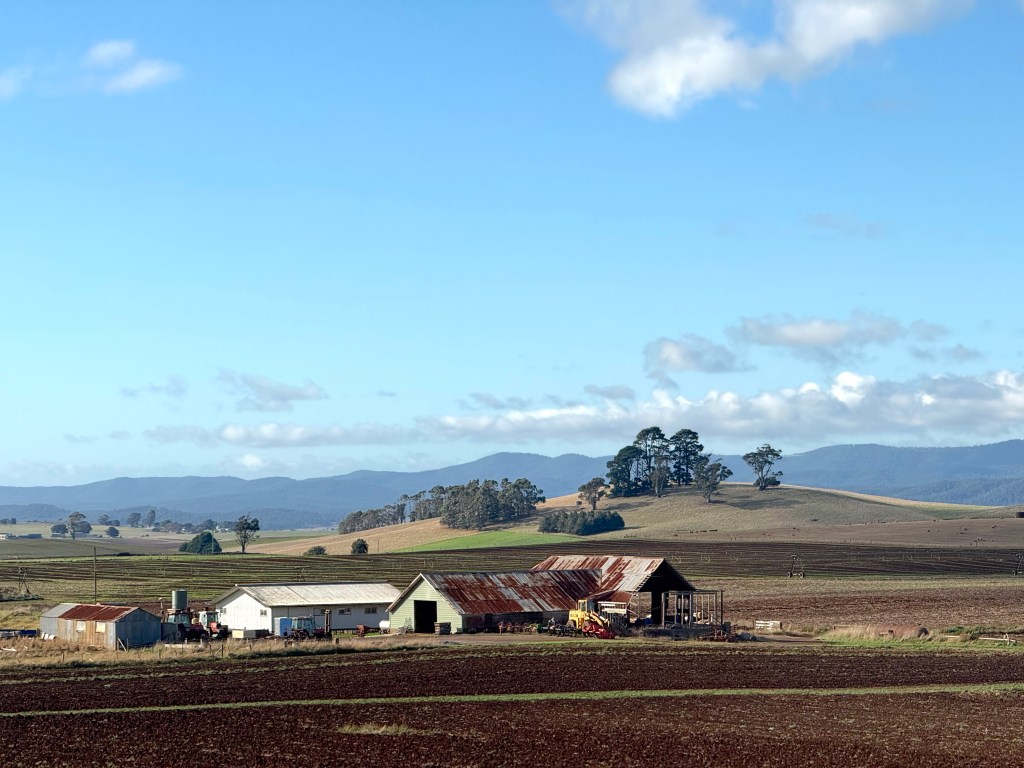
Of course we had to stop and take photos from time to time of farms, townships, shearing sheds, dairies and homesteads.
The intention was to drive a further hour or so and stop at Deloraine to get some food from the supermarket for our time at the endurance ride.
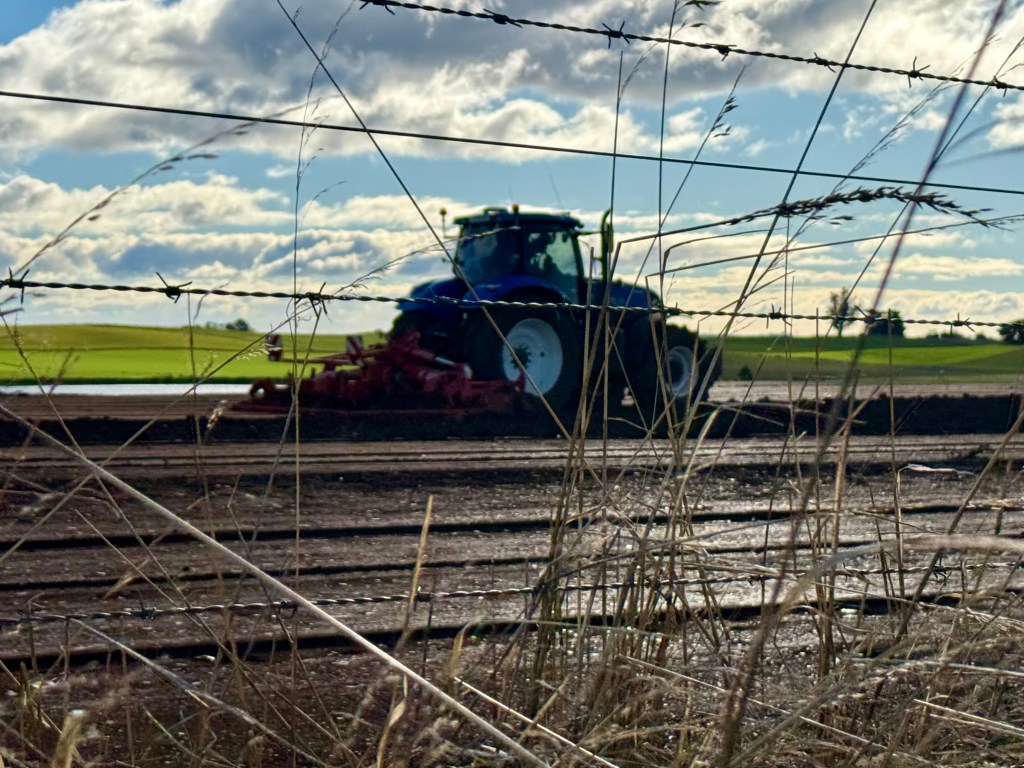
Sassafras was home to a primary school, two churches and Kenny Kennebec – The Big Spud. There was also a tractor on a pole by the roadside – sitting about seven metres up in the air.
With time against us we pressed on through Deloraine until we got to Sheffield … the town of murals. What started out as one painted on a wall in 1986 to brighten the town, has turned into 160 on houses, walls and buildings across town.
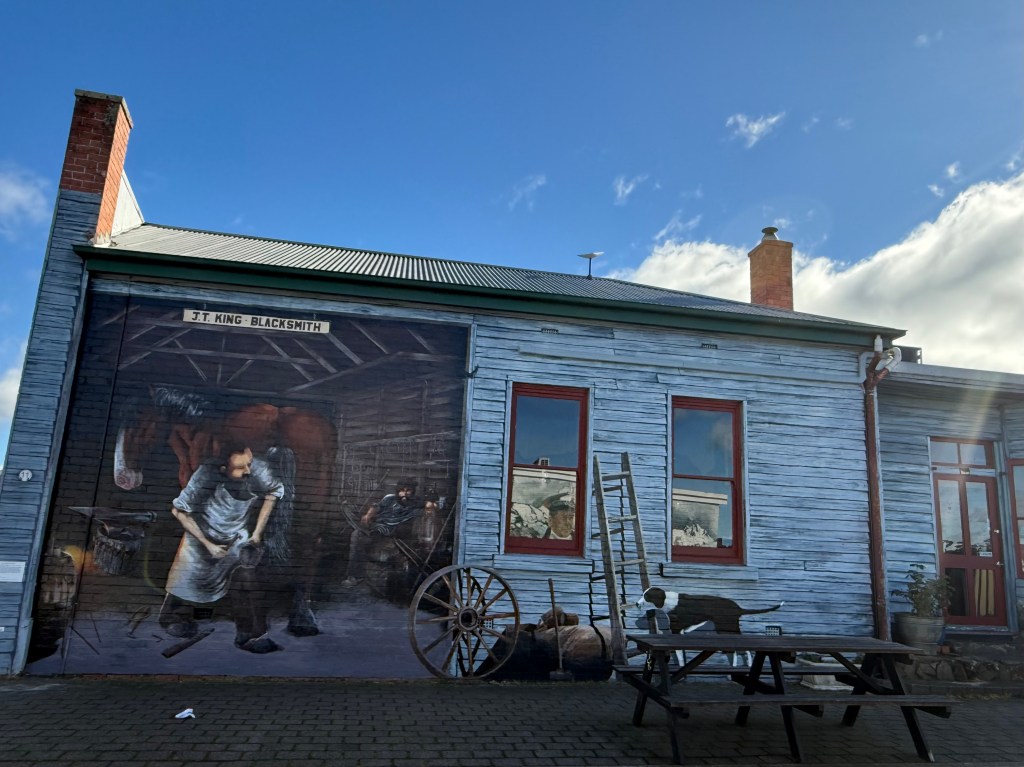
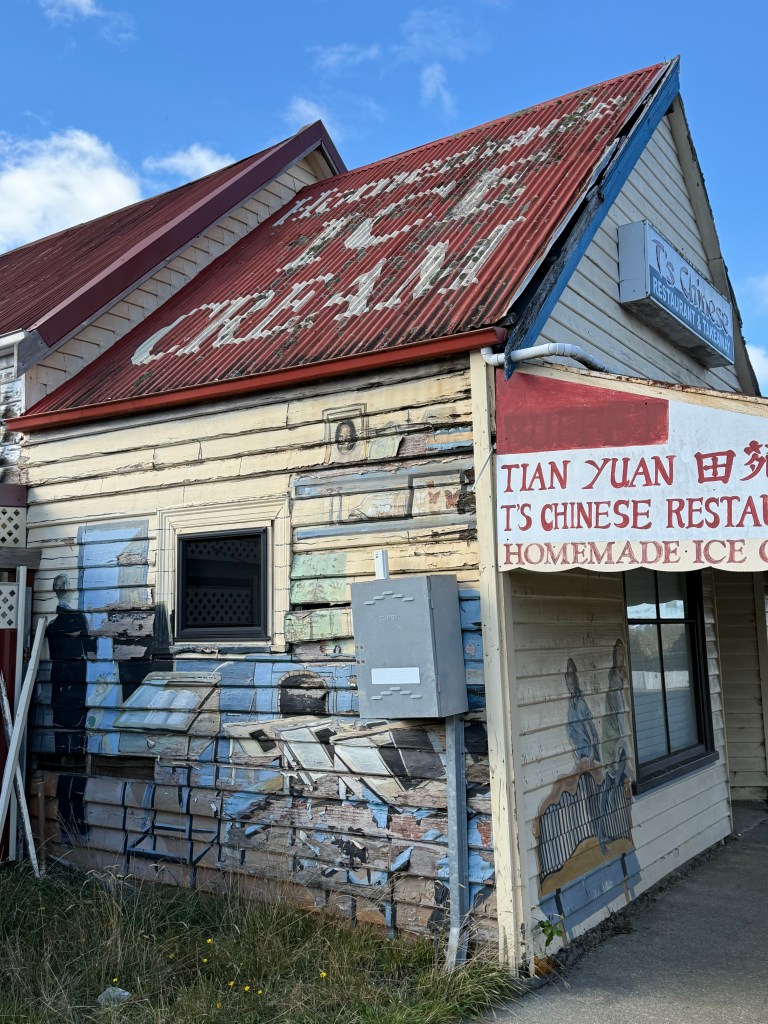
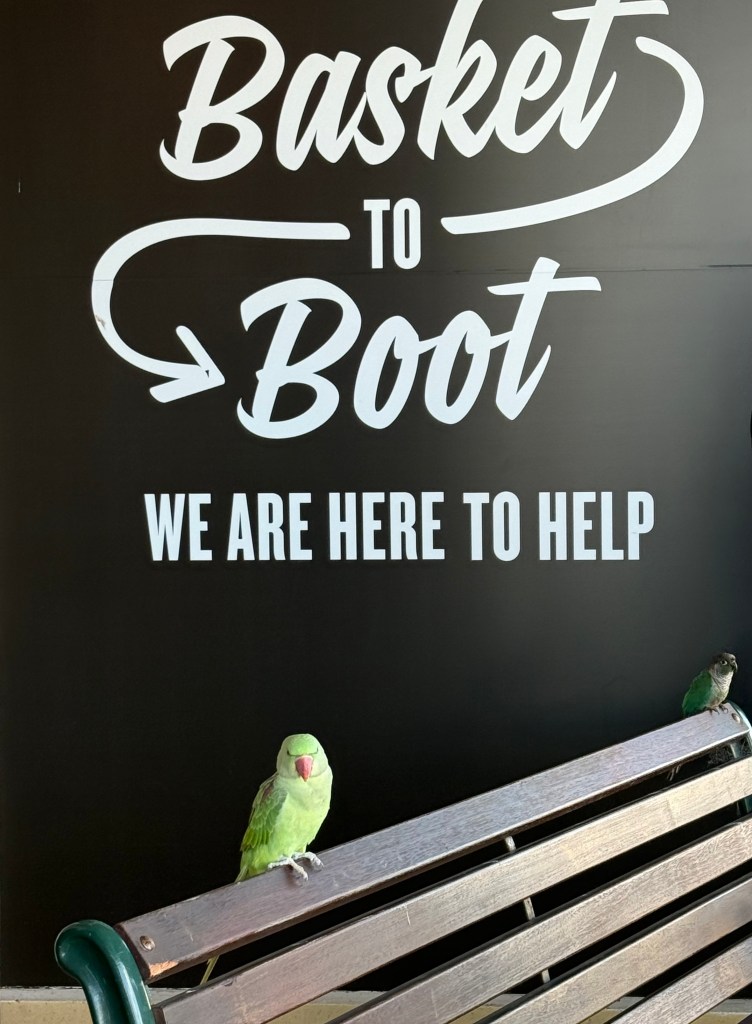
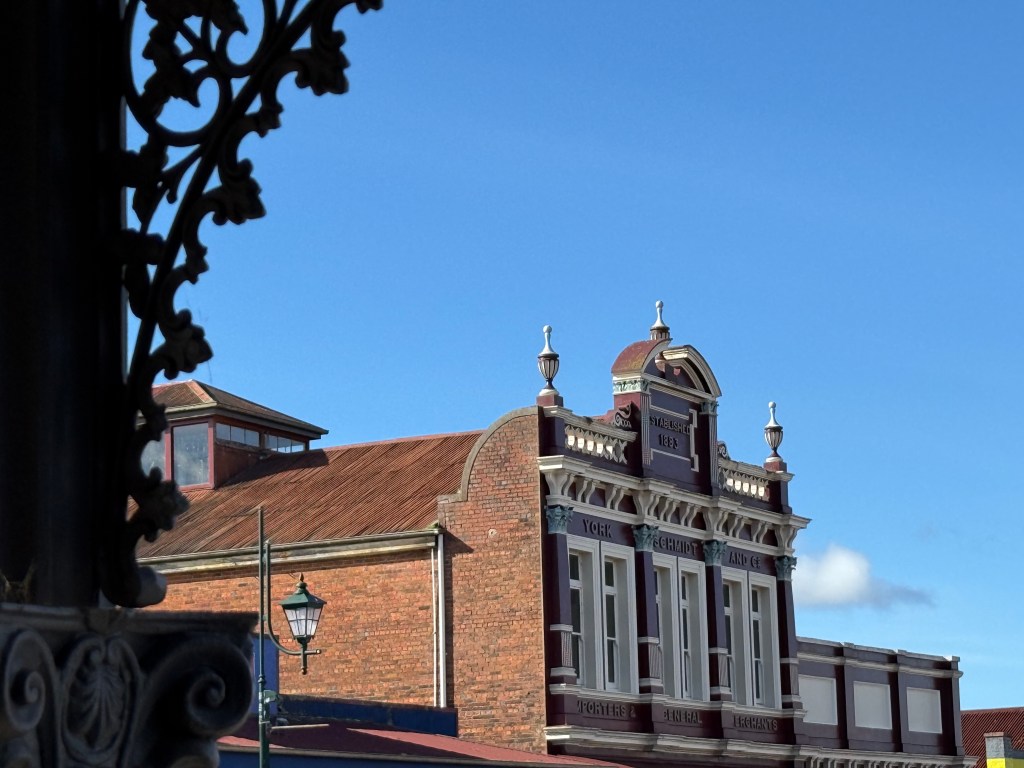
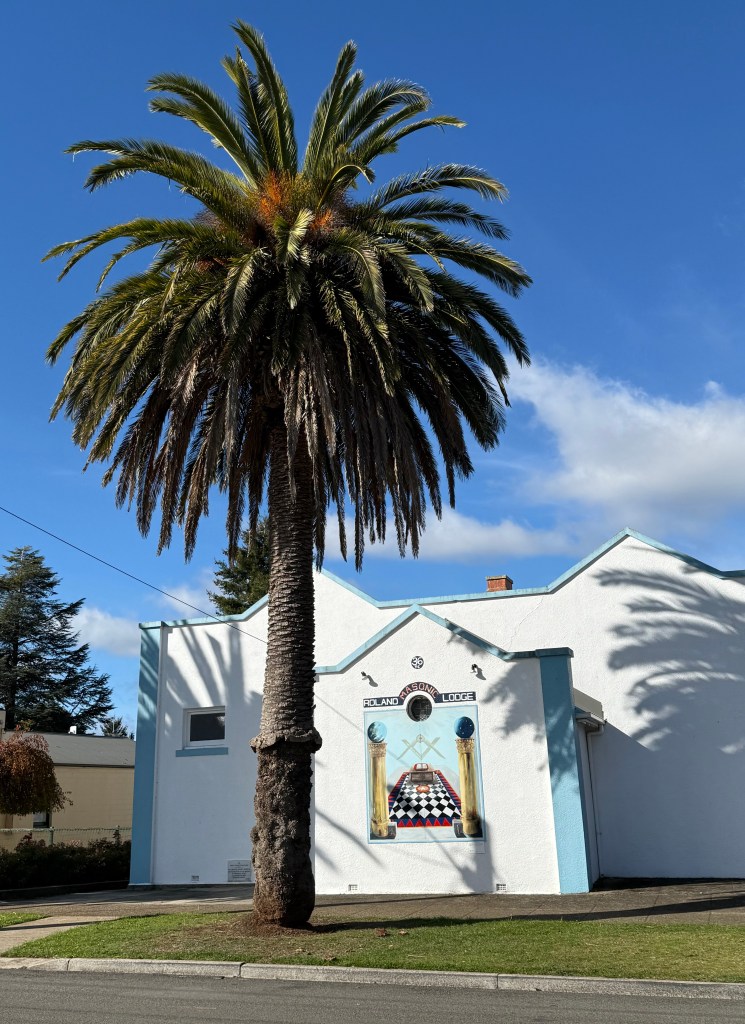
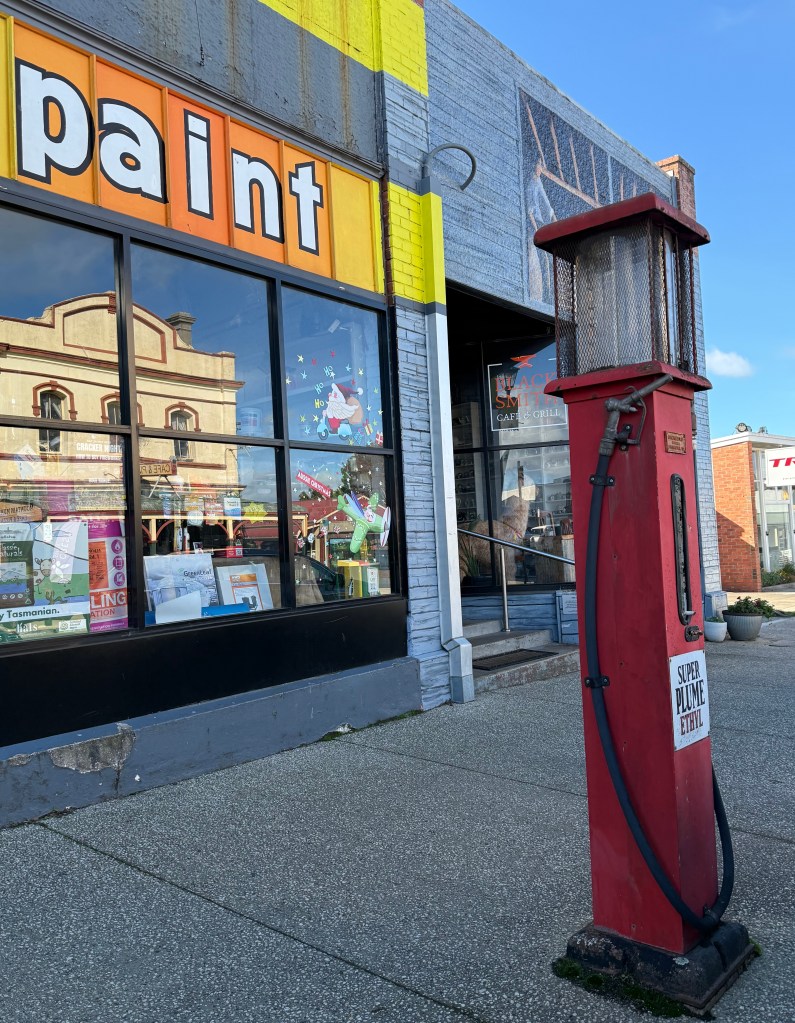
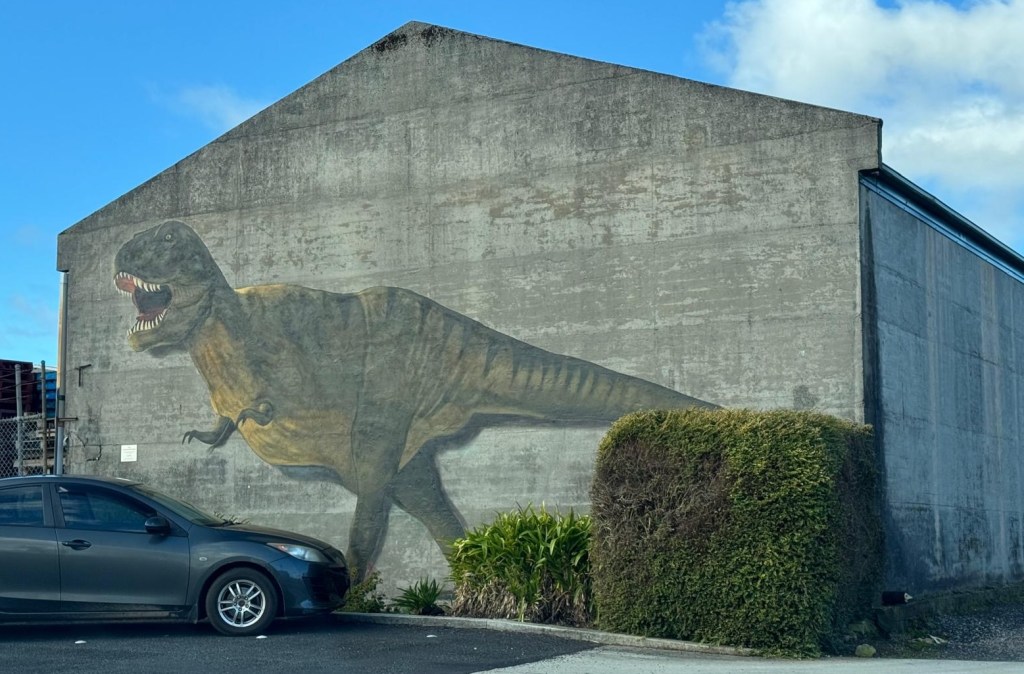
And it has the substantial Mount Roland as a natural backdrop.
From Sheffield it was only 60km to Cradle Mountain, but Google Maps said an hour of travel time.
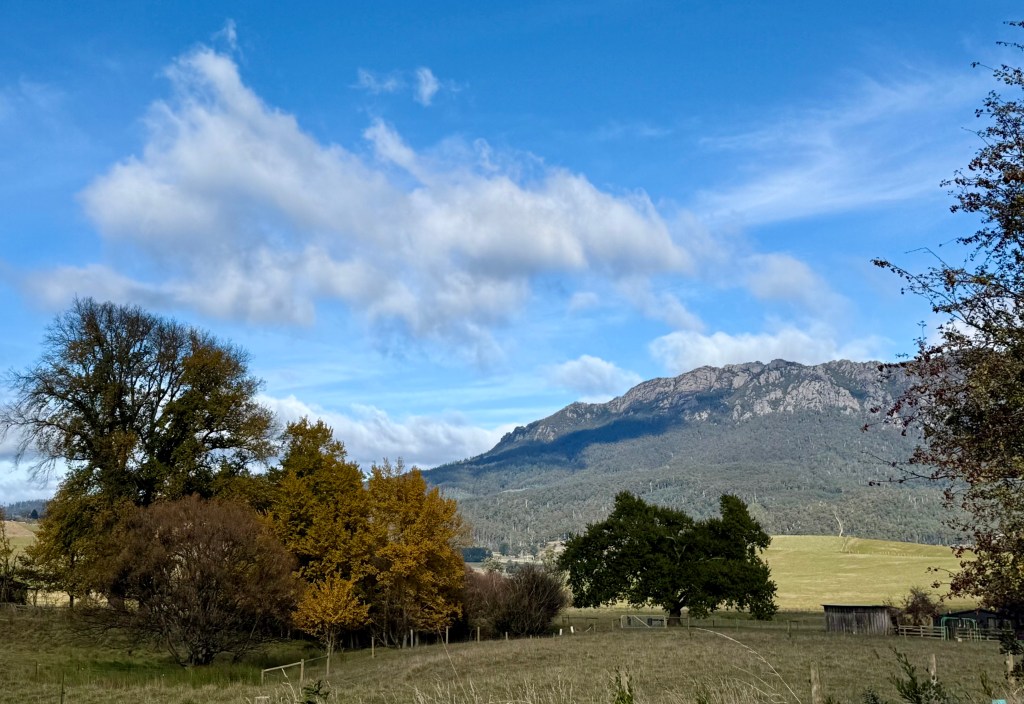
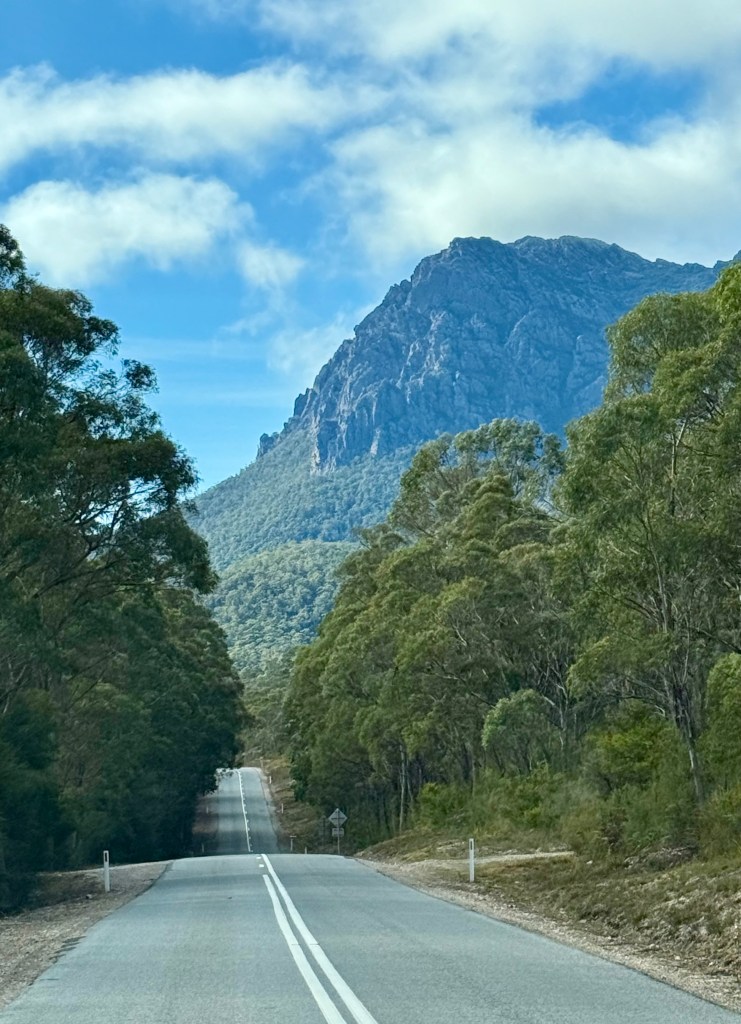
We set out early next morning, through rolling sheep and cattle country. The mountains just seemed to spring out of the landscape.
Whether they are faults in the Earth’s crust or volcanic upheavals, these mountain ranges are just there – right in front of you.
There was cloud at the back of them and we drove through a rainbow.
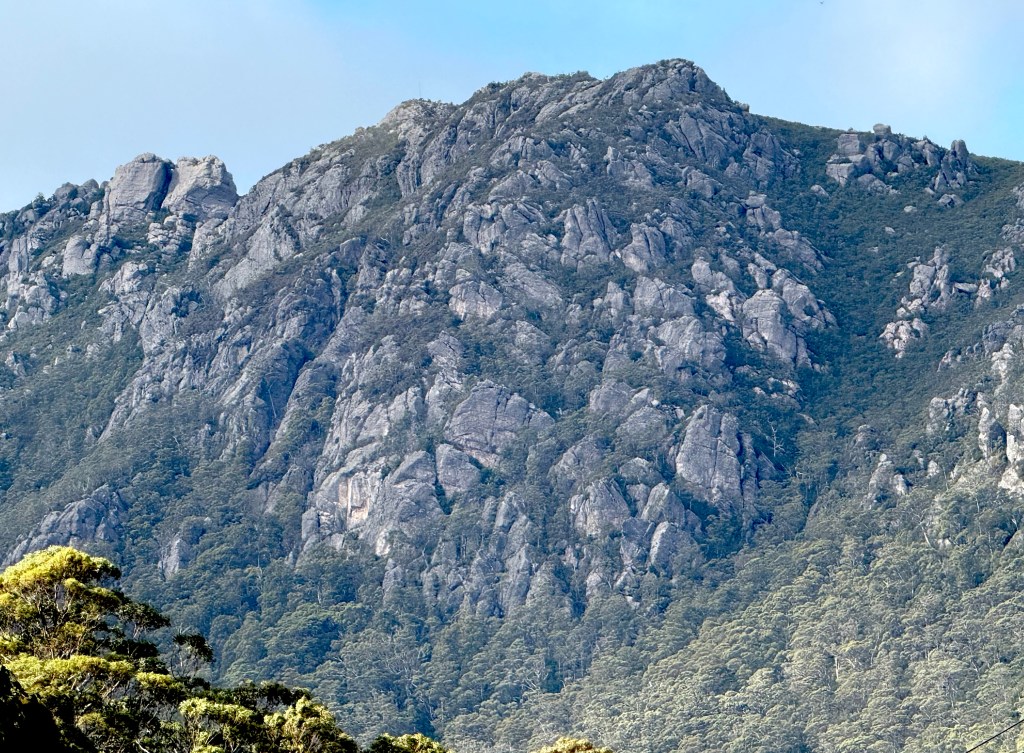
The weather report had been for showers for three or four days, but for particularly heavy showers on the night that we would be there.
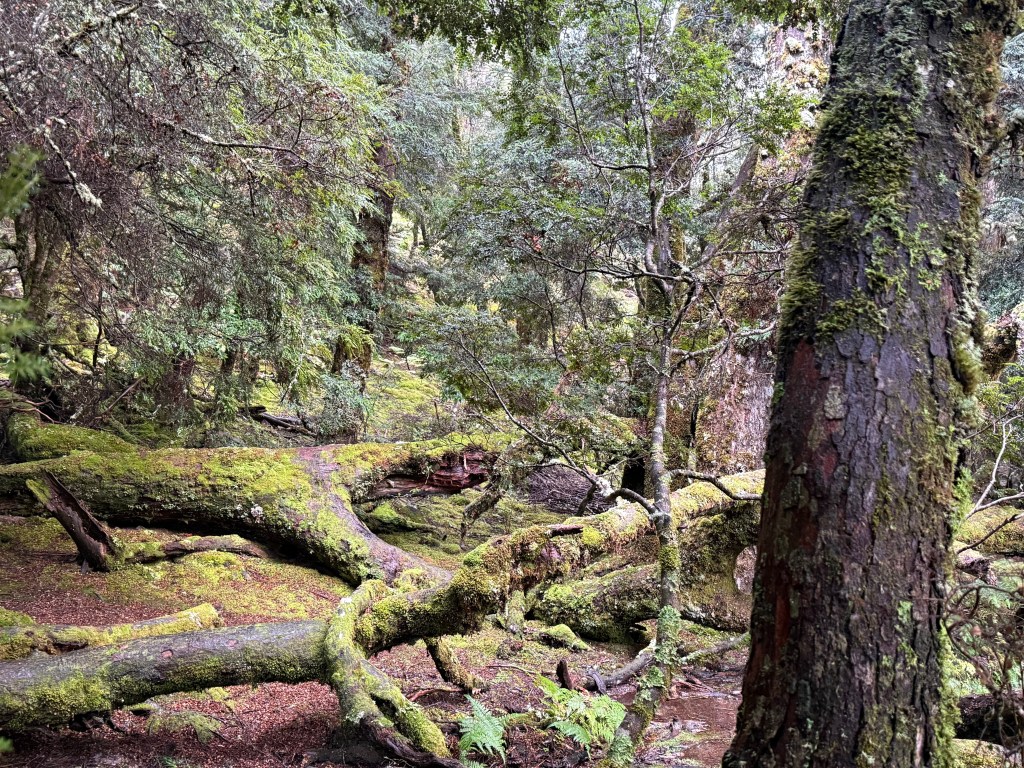
As we got into the mountains it became state forest or national park with stately gumtrees and many more bends in the road than we expected.
Along the drive north the people at the Cradle Highlander cabins texted to confirm we could familiarise ourselves with what they offered. It was part of a possible future travel article.
They kept asking about our estimated time of arrival. We wondered what that was about.
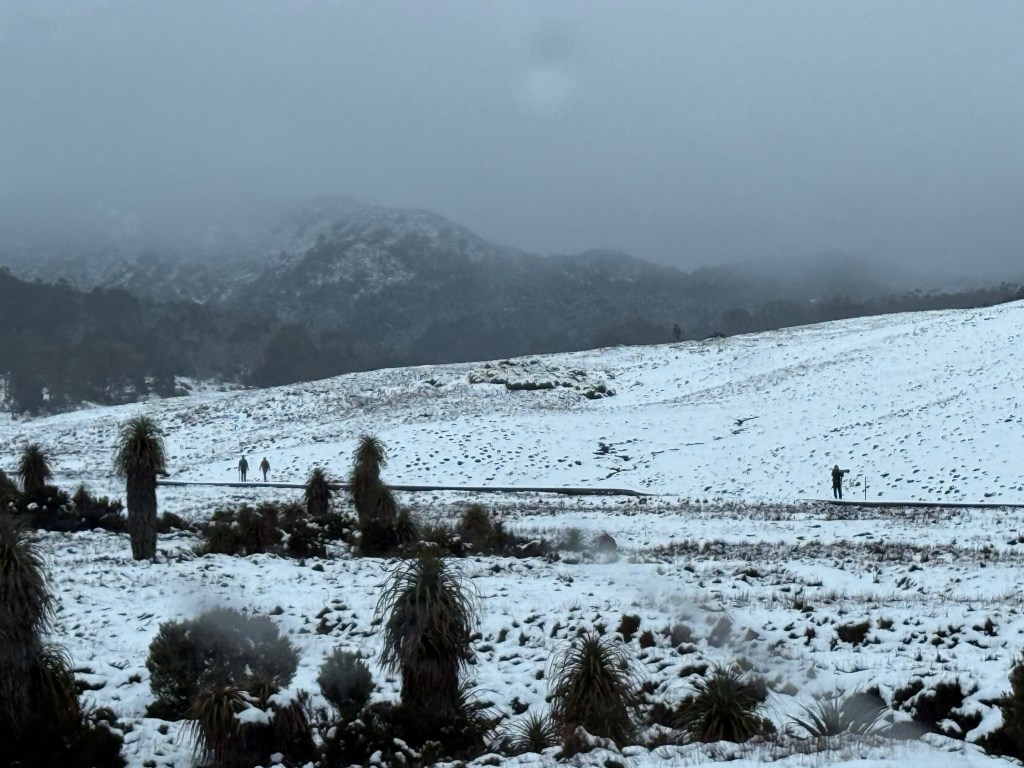
Cradle Mountain-Lake St Clair National Park is part of the great trek through the highlands of Tasmania. I think it’s a six-day walk, where they stop at shelters but generally rely on hiking tents to experience the wildness of this region.
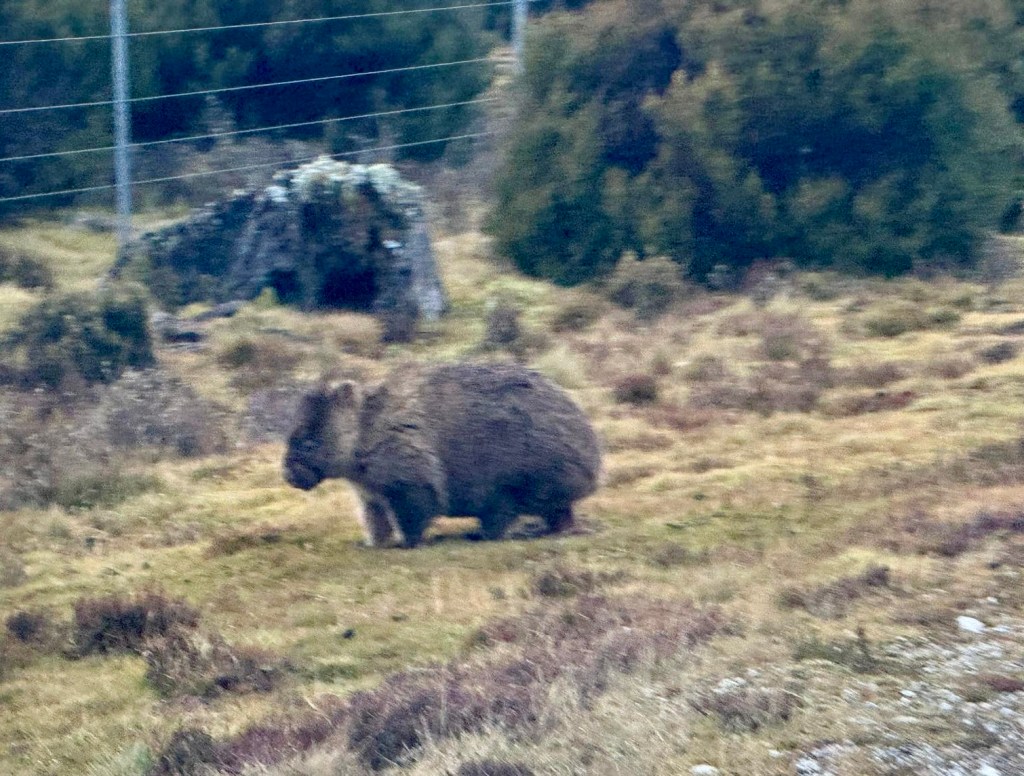
Just as we reached the turn-off into the national park itself we spotted a wombat feeding on grasses beside the road.
The area is known for them, but to see one like this was something special. So we got what photos we could with phones before the beautiful creature snuck away into the forestry.
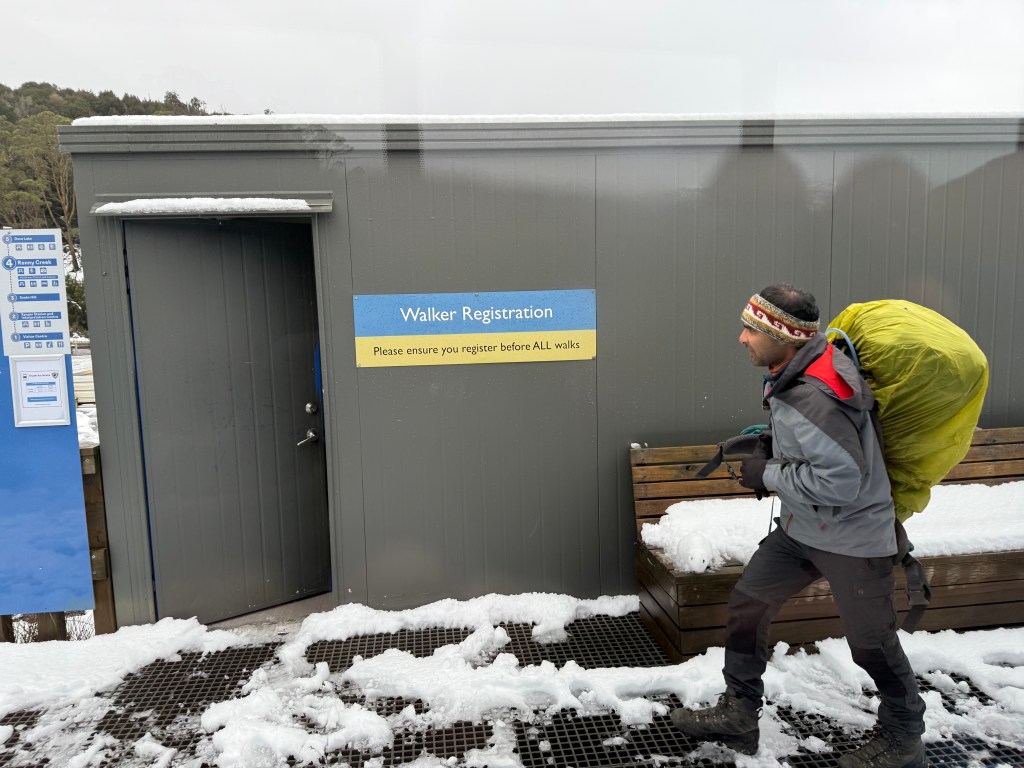
We found the Cradle Highlander lodge opposite the information centre so it was convenient to get a pass into the national park.
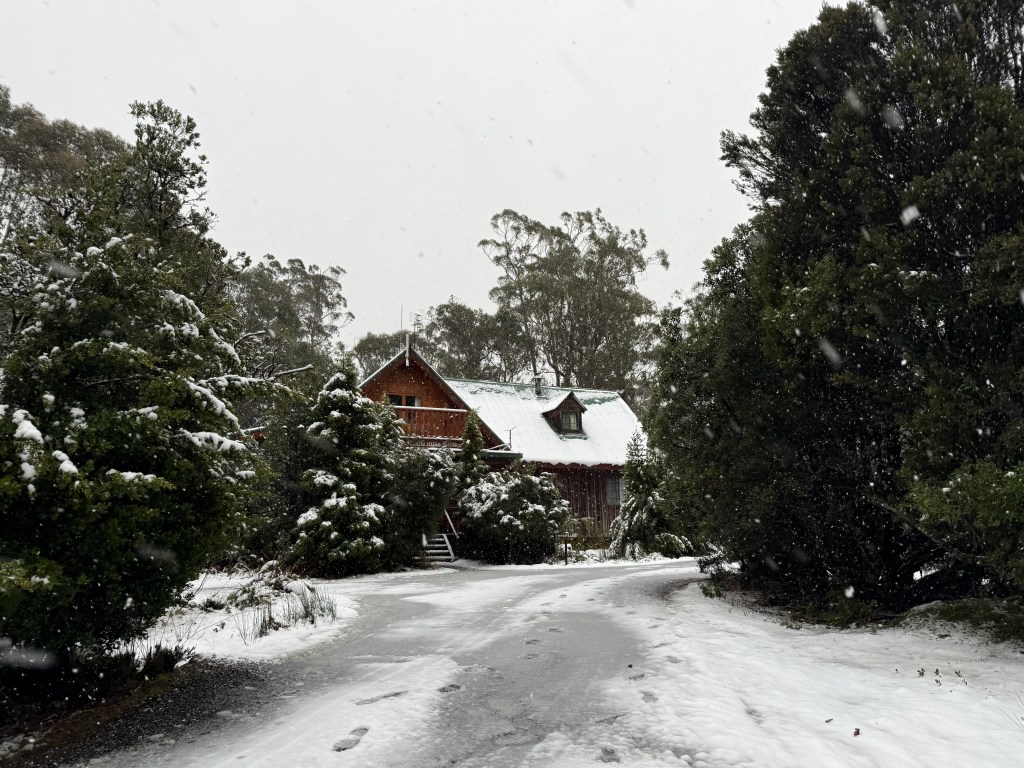
It was a curving little driveway of 100m or so up through the trees to this beautiful log cabin for reception.
As we pulled up and got out of the car, some flakes of snow had started to fall.
It was really welcoming inside the warmth of the office and the greeting was exceptional – that’s Tasmania for you.
The girls explained where the cabin was and what to do in regard to lunch or dinner if we wanted. There is a general store but also a couple of good hotels or mountain lodges.
Then there was a map of the places to see, and what was involved with going into the park: You catch a bus from the information centre or further up at the ranger station which takes everyone into the park area.
It’s much safer than having day visitors driving on the narrow national park roads.
It was expected to snow during the night, we were told, but that it would “all be gone tomorrow” as it was the first fall of the season.
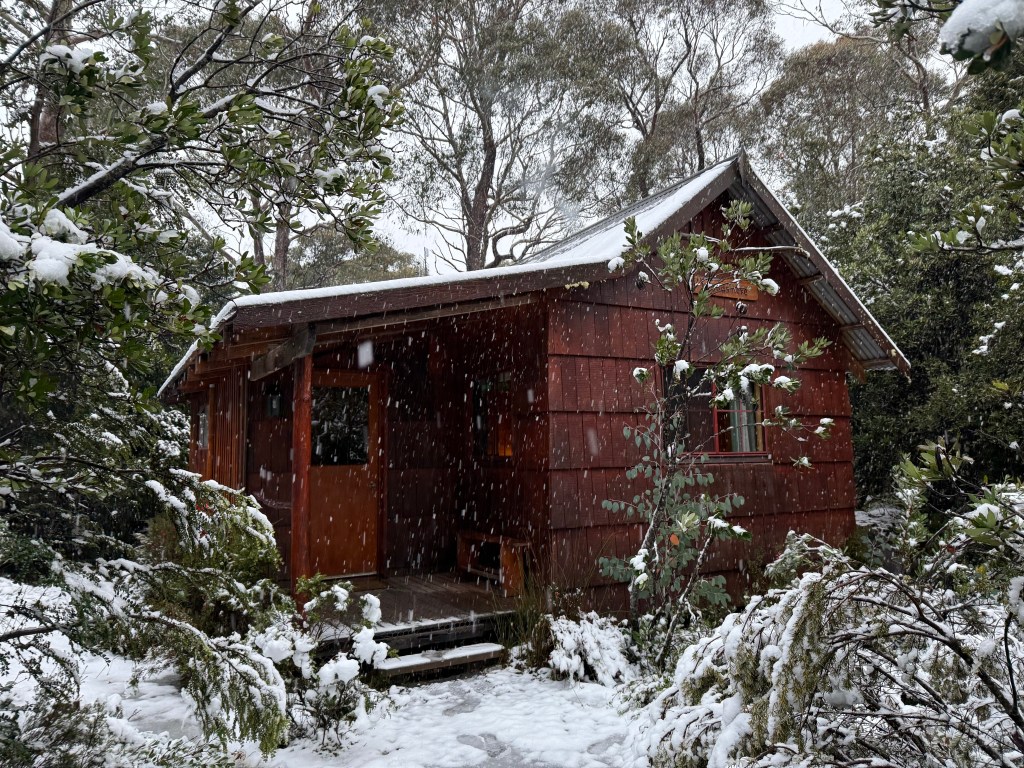
The cabin staff took us another 50m or so to the cabin and by then the snow was quite thick – but just softly falling.
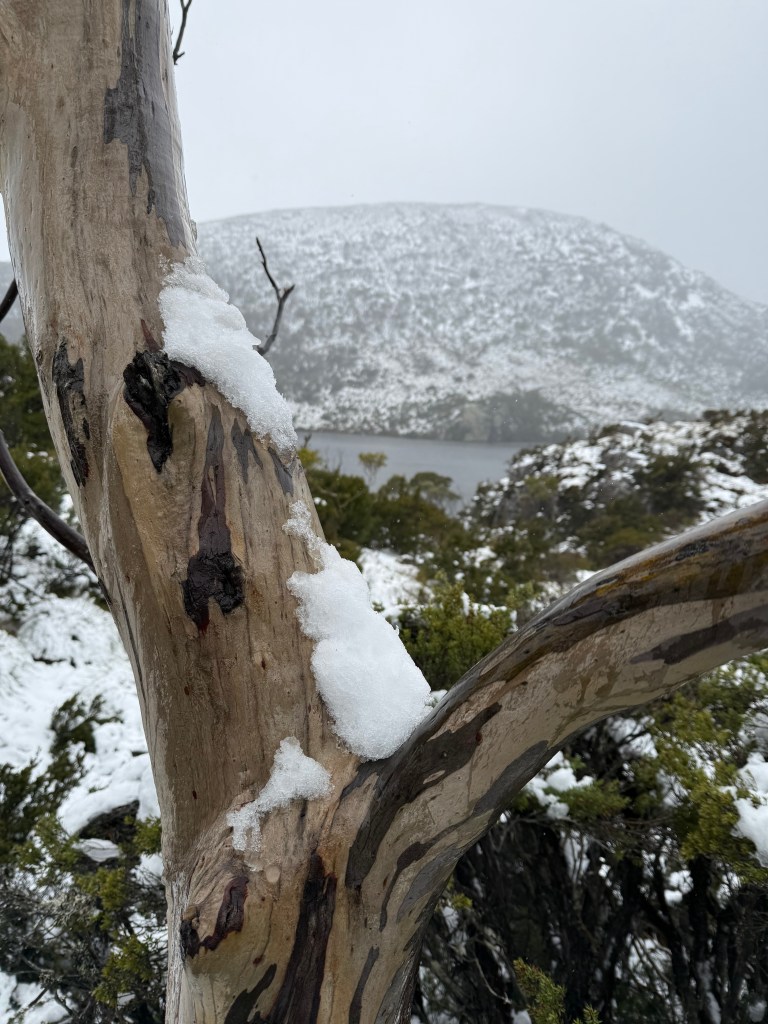
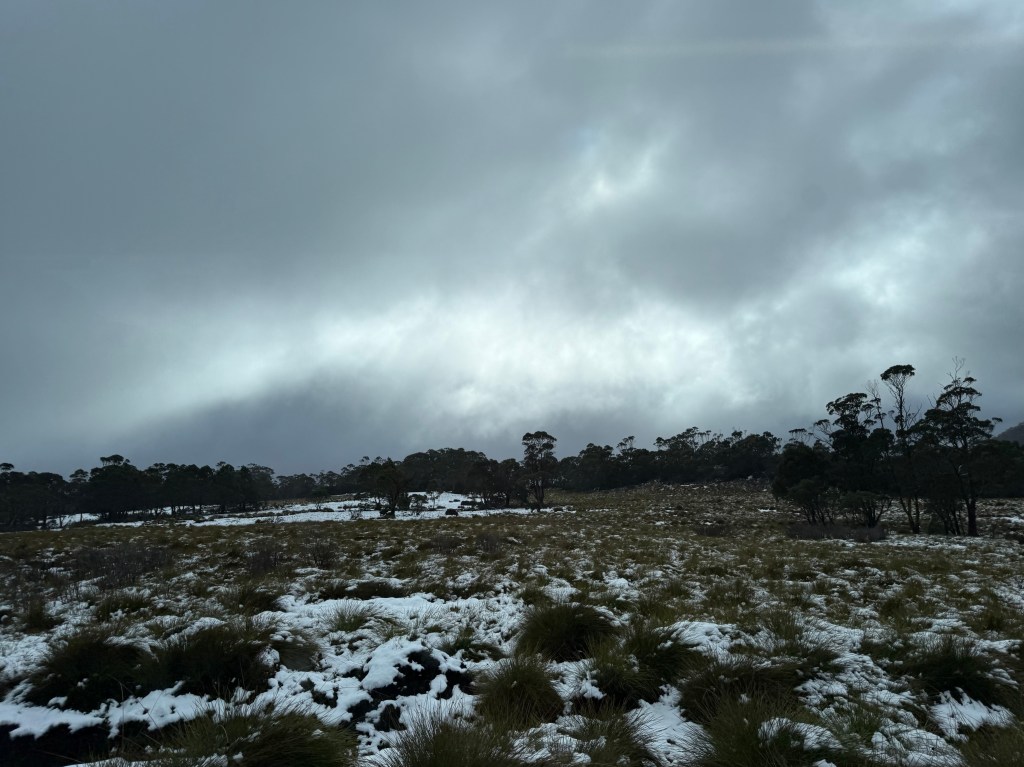
What an incredible moment – just as you arrive at this fairytale setting there’s snow on your clothes, and it’s starting to get a few inches deep in the sheltered areas around the steps, on the roofs, and the branches of the trees.
So we pushed into the cabin and there was the reason the receptionists were checking our time of arrival so often. The fire was blazing and the cabin very warm and inviting.
They had wanted to make sure the cabin was ready for us to inspect.
This was truly amazing. A log cabin in the snow … who would have thought. And we had been in sub-tropical Queensland that morning.
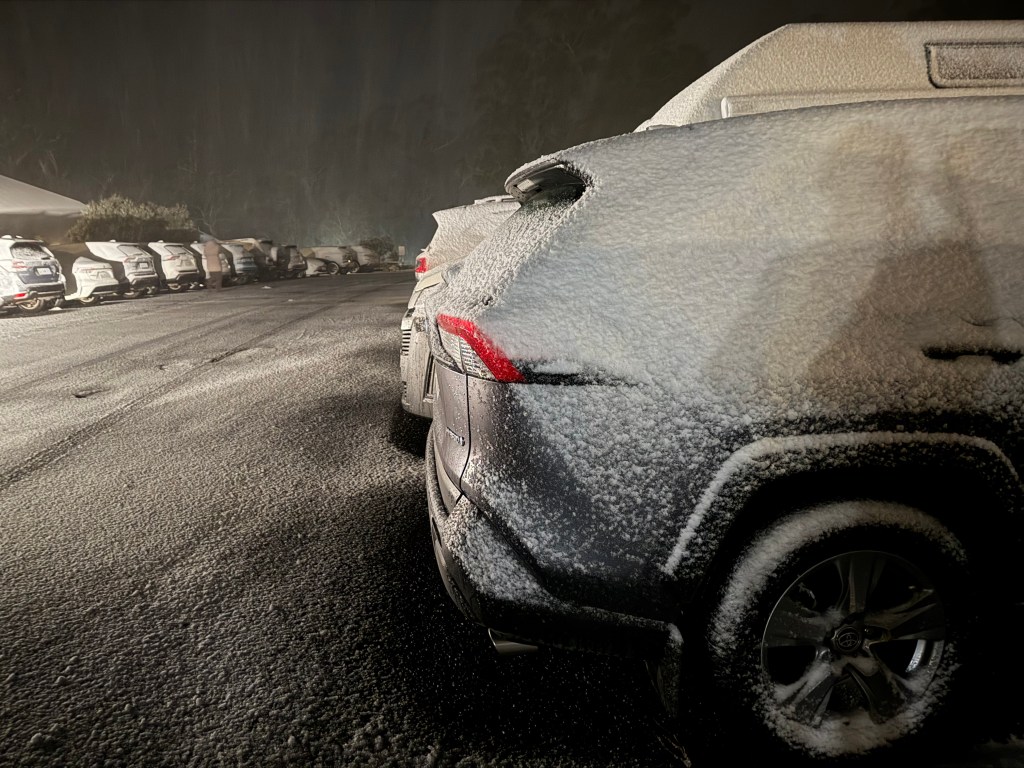
The national park buses take you to the picturesque Dove Lake. They make stops along the way to drop off and pick up hikers at the various trails.
At Dove Lake there is a relatively easy track around the water or embark on more adventurous treks.
The snow put paid to that for us. Instead, phones out to record the different outlooks, and the way the snow blanketed bushes as well as rested in the forks of the trunks of the gum trees.
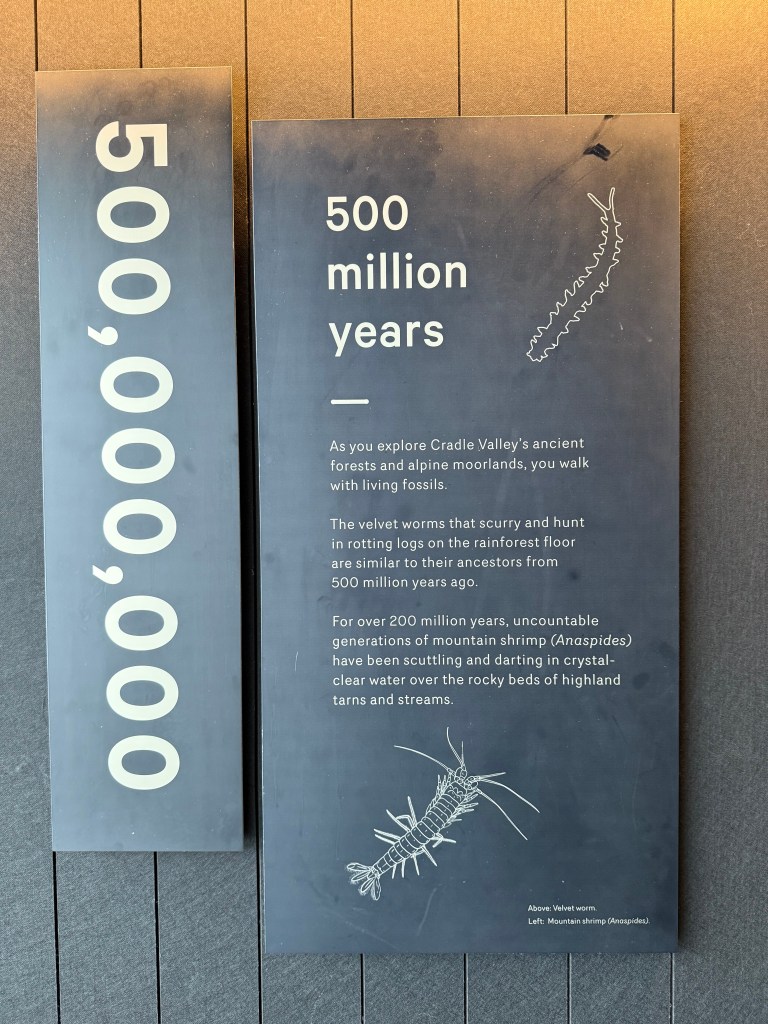
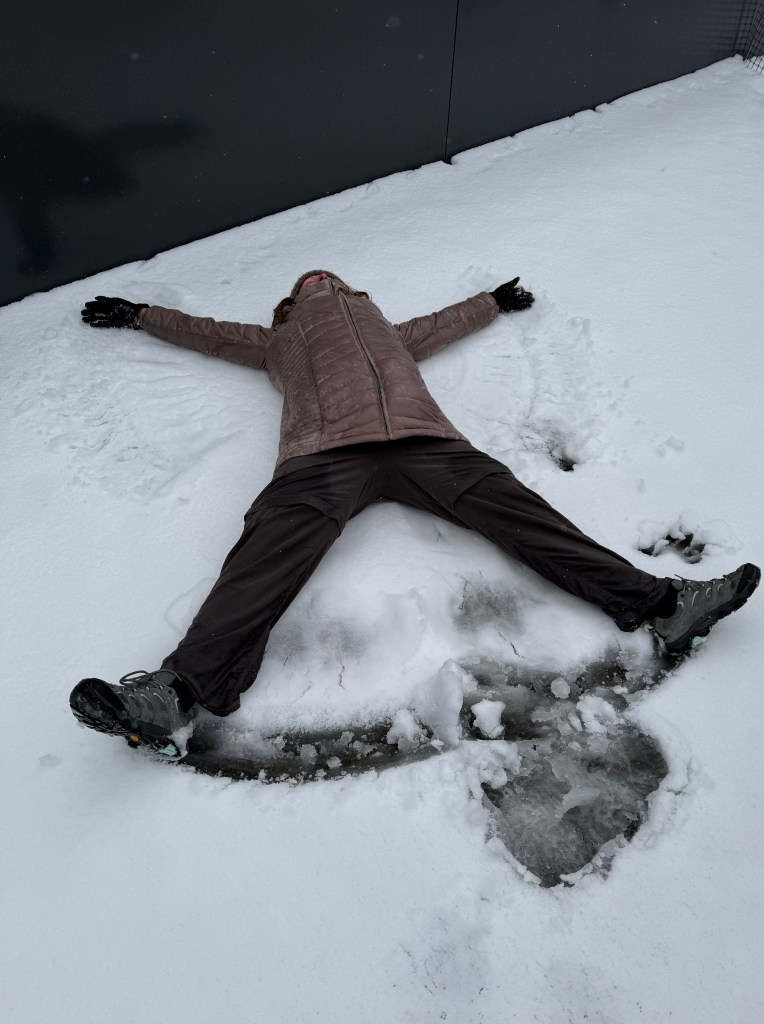
There was time to do snow angels and make snow balls … yet also time to sit and reflect on the enormity of it all. A landscape 500 million years in the making.
By the time we made it back to the car the snow was quite heavy.
There is the Altitude restaurant in Cradle Mountain Lodge and the Highland restaurant at Peppers Cradle Mountain Lodge.
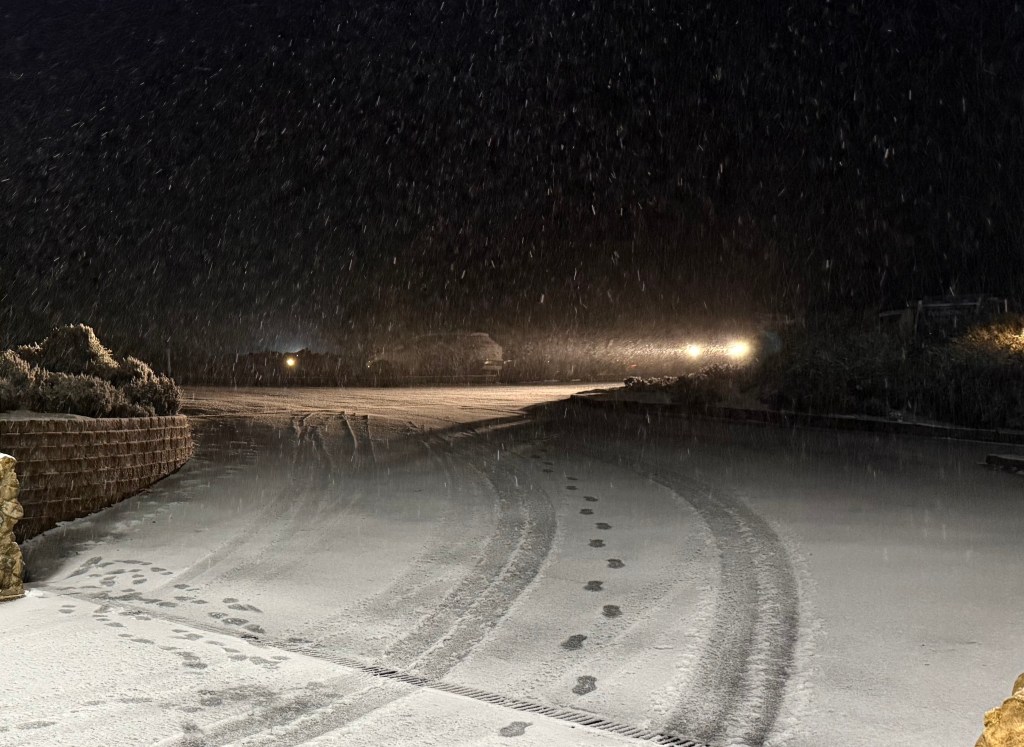
There were memories of skiing in Victoria many years ago as we drove the mile or so to the Altitude restaurant.
A big open fire and a table just to the side … a good meal and a bottle of Tasmanian red wine from the Devonport area.
Then, pushing out through the main doors, it was a matter of finding the car for the drive back down the mountain. It was still snowing and covering the road, the roof of the lodge … and the car.
It was so funny trying to find it – they all looked the same under this blanket of white.
It was a moment shared … the solitude of snow. The silence of the night – broken by the headlights of other cars.
So, how do we negotiate fresh snow on the roads?
It can’t be that bad. Others are doing it.
Thankfully we were late leaving the lodge and no-one else was out … we must have travelled at 5km for those few miles back to main road.
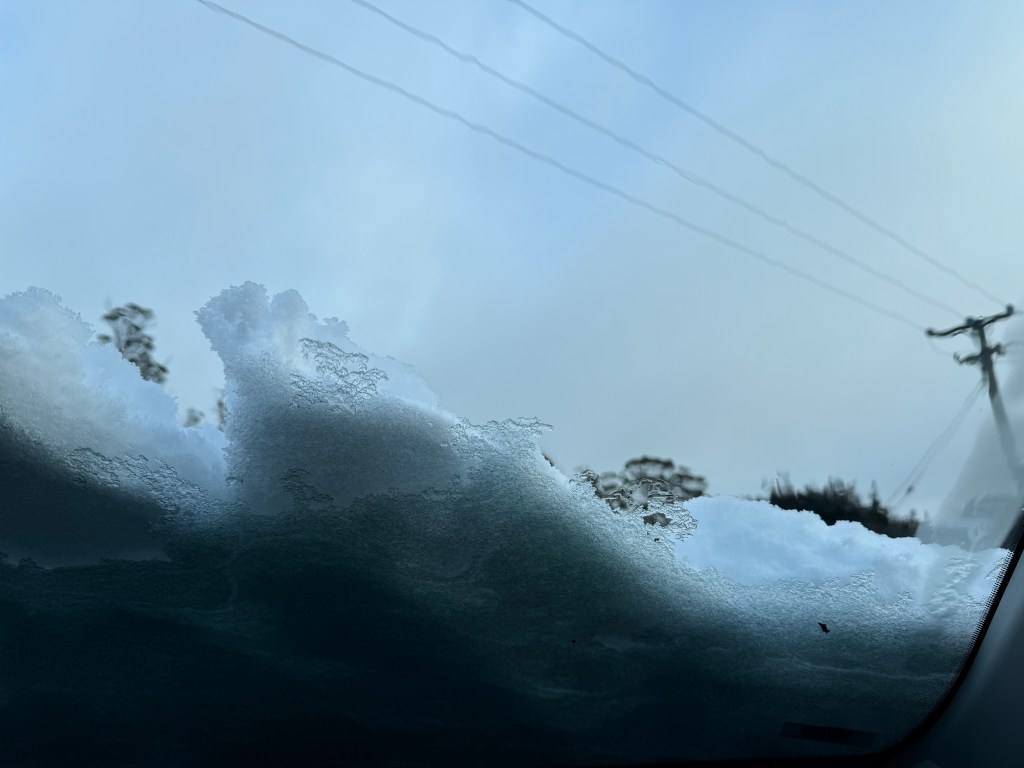
The funny thing with snow is you don’t really need windscreen wipers that much … it just sort of floats over the windscreen.
It was great to get inside our converted milk shed. Grab a couple of hours sleep and be up early to catch the riders as they were about to complete the first 40km leg after the midnight start.
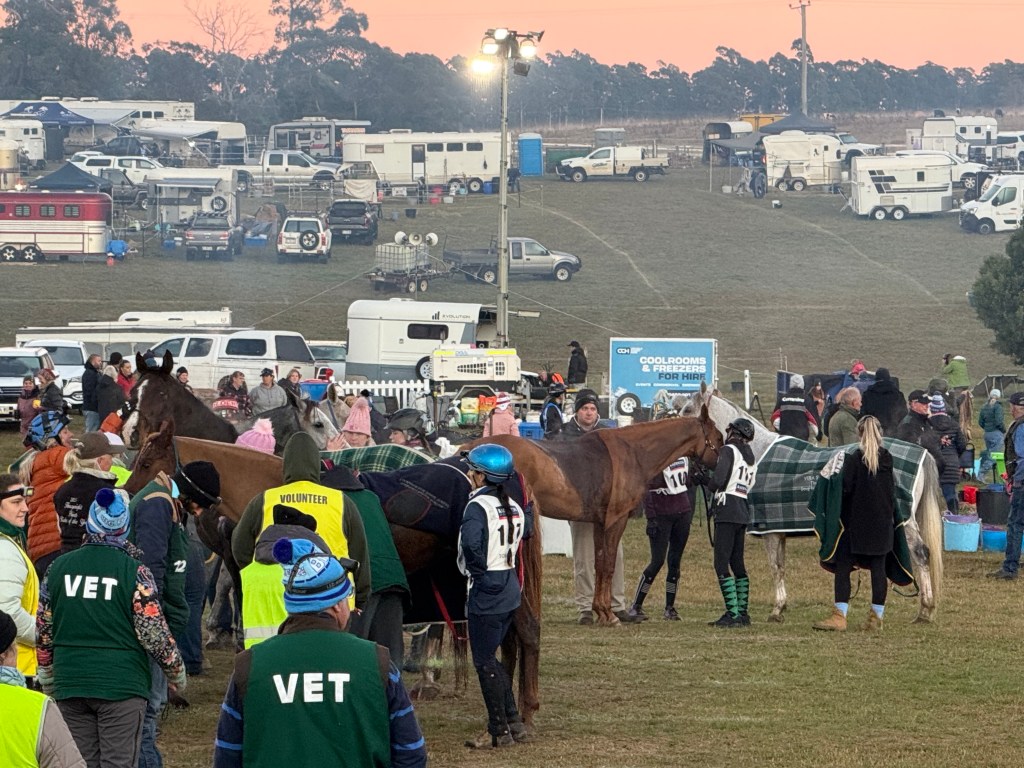
It’s a magnificent sight to see them return to the ride base. The hot breath of riders and horses in the frosty conditions.
The steam from the wood-fired boilers built to keep the water warm enough for the horses to drink.
Time for riders to grab something to eat and a hot cup of tea or coffee, and rest up for 20 minutes before setting out again.
It would be almost sunrise before they finish the second leg.

 leavearly